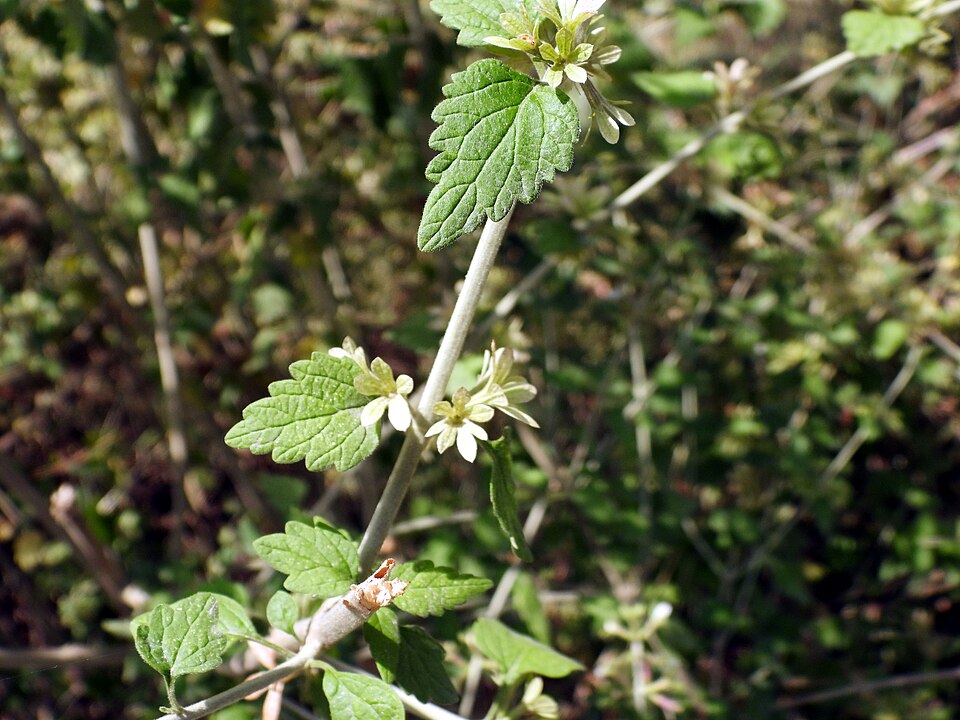
Lycopus uniflorus
L.
Bugleweed, Northern bugleweed
iNaturalist· cc-by
(c) aarongunnar, some rights reserved (CC BY), uploaded by aarongunnar
iNaturalist· cc-by
(c) aarongunnar, some rights reserved (CC BY), uploaded by aarongunnar
iNaturalist· cc-by-nc-nd
(c) Janet Nelson, some rights reserved (CC BY-NC-ND), uploaded by Janet Nelson
Description
Lycopus uniflorus is a PERENNIAL growing to 0.3 m (1ft). See above for USDA hardiness. It is hardy to UK zone 5. The species is hermaphrodite (has both male and female organs) and is pollinated by Bees, flies. Suitable for: light (sandy), medium (loamy) and heavy (clay) soils. Suitable pH: mildly acid, neutral and basic (mildly alkaline) soils. It can grow in semi-shade (light woodland) or no shade. It prefers moist or wet soil.
Edible Uses
Root - raw or cooked. The roots were a staple food for some native North American Indian tribes. The crisp white tubers can be eaten raw in salads or cooked in soups etc. When boiled for a short time they are said to make an agreeable vegetable, somewhat like Chinese artichokes (Stachys affinis).
Medicinal Uses
Antitussive Sedative. The whole plant is antitussive and sedative.
Distribution
N. America - Newfoundland to British Columbia, North Carolina, Nebraska and Oregon
Where It Grows
TEMPERATE ASIA: Japan, Kamchatka, Khabarovsk, Korea, Kuril Islands, Manchuria, Primorye, Sakhalin,Amur. NORTHERN AMERICA: Alaska, Alberta, Arkansas, British Columbia, California, Colorado, Connecticut, Idaho, Illinois, Iowa, Kansas, Kentucky, Labrador, Maine, Manitoba, Maryland, Michigan, Minnesota, Missouri, Montana, Nebraska, New Hampshire, New York, Newfoundland, North Carolina, North Dakota, Northwest Territories, Ontario, Quebec, Rhode Island, Saskatchewan, Tennessee, Vermont, Virginia, Wyoming, Yukon,
Cultivation
We have very little information on this species and do not know if it will be hardy in Britain, though judging by its native range it should succeed outdoors in many parts of the country. This species might be no more than a synonym for L. virginicus, a species known to be hardy in Britain. The following notes are based on the general needs of the genus. Tolerates most soil types so long as they are wet. Succeeds in damp meadows or in wet places by ponds or streams.
Propagation
Seed - sow spring or autumn in a cold frame. Prick out the seedlings into individual pots when they are large enough to handle and grow them on in the greenhouse for their first year. Plant them out into their permanent positions in early summer. Division in spring or autumn. Larger clumps can be replanted direct into their permanent positions, though it is best to pot up smaller clumps and grow them on in a cold frame until they are rooting well. Plant them out in the spring.