Platycarya strobilacea
Siebold. & Zucc.
Hua ziang shu
iNaturalist· cc-by-nc-sa
(c) mutolisp, some rights reserved (CC BY-NC-SA)
iNaturalist· cc-by-sa
(c) harum.koh, some rights reserved (CC BY-SA), uploaded by harum.koh
iNaturalist· cc-by-nc
(c) kevin_cheng, some rights reserved (CC BY-NC)
Summary
Source: WikipediaPlatycarya strobilacea is a species of flowering plant in the family Juglandaceae, formerly treated as comprising the single living species in Platycarya, though a second living species Platycarya longzhouensis is now recognized. It is native to eastern Asia in China, Vietnam, Korea, and Japan. It is a deciduous tree growing to 15 m tall. The leaves are usually pinnate, 15–30 cm long with 7–15 leaflets (rarely simple, or with up to 23 leaflets), the terminal leaflet present; the leaflets are 3–11 cm long and 1.5–3.5 cm broad. The flowers are catkins; the male (pollen) catkins are 2–15 cm long, the female catkins 2.5–5 cm long at maturity, hard and woody, superficially resembling a conifer cone with spirally arranged scales. Galloyl pedunculagin can be found in P. strobilacea.
Description
A shrub or tree. It can be 15-25 m high. It spreads 10 m wide. The bark is yellow-brown with cracks along it. The leaves are 8-30 cm long. The leaf stalk is 1.2-9.2 cm long. There are 1-15 leaflets. The side leaflets do not have leaf stalks. The leaflets taper to a point. The flower spike has female flowers at the base and male flowers at the tip. The female section is 1-3 cm long and the male section is 1-3.5 cm long. There are also male spikes 2-15 cm long. The fruit are like cones and 4 cm long. The nutlets are oval and 3-6 mm long by 3-6 mm wide.
Edible Uses
Young leaves can be eaten cooked. This plant is regarded as a famine food, used only when other options are unavailable.
Medicinal Uses
None known
Distribution
It is native to E. Asia. In China it grows in mixed forests on mountain slopes between 400-1400 m altitude. It can be higher. It needs well-drained soil. It suits hardiness zones 5-9.
Where It Grows
Asia, Australia, Central Asia, China, Indochina, Japan, Korea, SE Asia, Tajikistan, Vietnam,
Cultivation
Requires a deep moist humus-rich loam and a sunny sheltered position. Trees are hardy to about -12°c in Britain, but they are not usually a success in our climate, preferring a warm dry continental climate. A tree in Hampshire is growing and fruiting well. A tree at Kew flowered heavily in the hot summer of 1989.
Propagation
Seed is best sown as soon as ripe in a cold frame. Stored seed requires a period of cold stratification. Prick seedlings out into individual pots when large enough to handle and grow on in the greenhouse for at least the first winter. Plant out into permanent positions in late spring or early summer after the last expected frosts, and consider providing frost protection for at least the first winter outdoors. Layering is also possible.
Other Uses
A black dye obtained from the fruits is used for dyeing cloth. A black dye from the bark is used for dyeing nets, and likely contains tannin which also helps preserve them. The root is very fragrant when burned and is used in baths. The wood makes good fuel.
Notes
There is one Platycarya species.
Synonyms
References (5)
- Abh. Math.-Phys. Cl. Koenigl. Bayer. Akad. Wiss. 3:742, t. 5. 1843
- Coombes, A.J., 2000, Trees. Dorling Kindersley Handbooks. p 185
- Cundall, P., (ed.), 2004, Gardening Australia: flora: the gardener's bible. ABC Books. p 1057
- Plants for a Future database, The Field, Penpol, Lostwithiel, Cornwall, PL22 0NG, UK. http://www.scs.leeds.ac.uk/pfaf/
- Lu Anmin, Stone, D.E., Grauke, L.J., Juglandaceae. Flora of China.
More from Juglandaceae
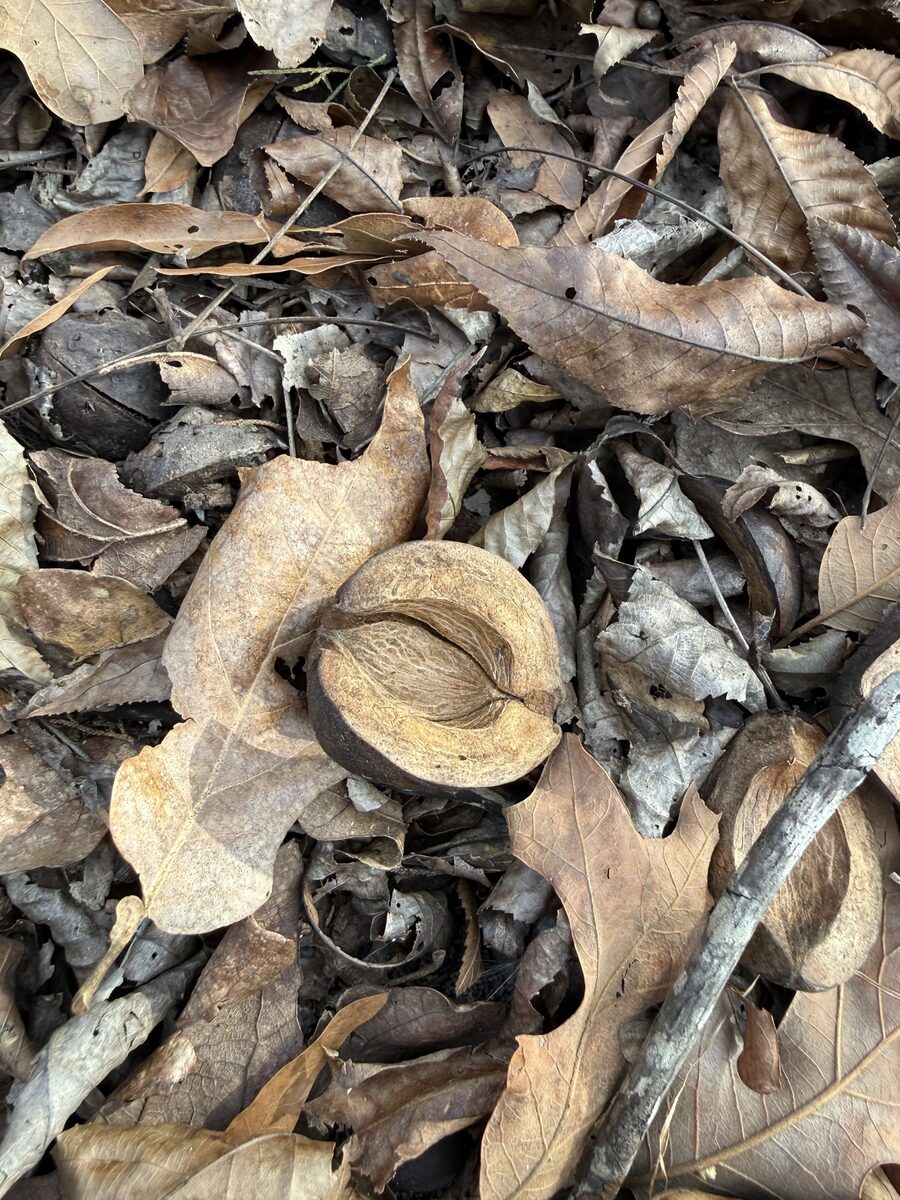
Carya carolinae-septentrionalis - (Ashe.)Engelm.&Graebn.
Southern Shagbark, Southern shagbark hickory
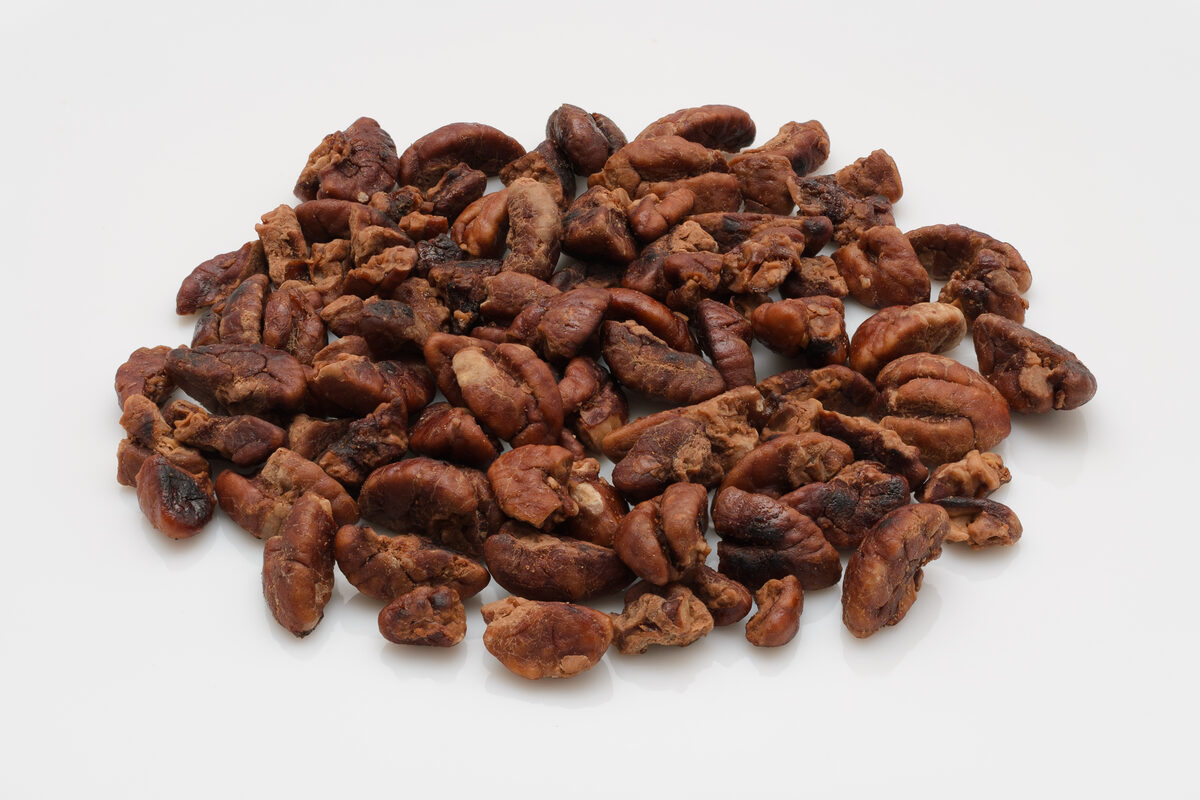
Carya cathayensis
Chinese Hickory
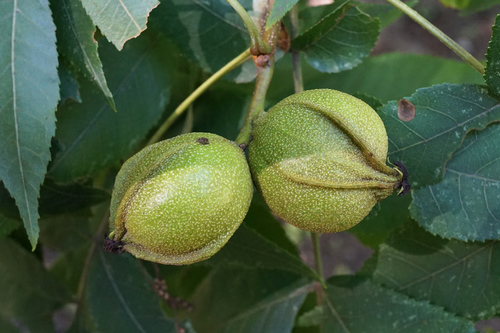
Carya cordiformis
Bitternut, Swamp hickory, Bitternut hickory
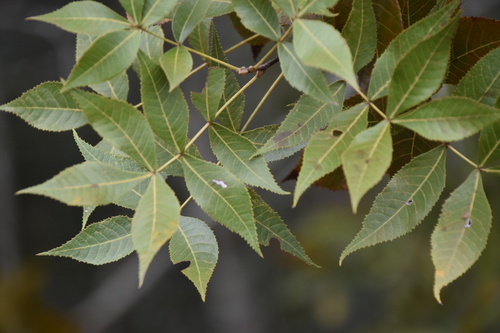
Carya floridana
Scrub hickory, Scrub pecan
Carya glabra
Pignut, Redheart Hickory, Sweet pignut, Broom hickory, False shagbark hickory, Hognut broom hickory
Carya glabra megacarpa - (Sarg.)Sarg.
Coastal Pignut Hickory