Juglans steyermarkii
W. E. Manning
gbif· cc-by-nc
Field Museum of Natural History - Botany Department | NSF/Mellon - GPI
gbif· cc-by-nc
Field Museum of Natural History - Botany Department | NSF/Mellon - GPI
gbif· cc-by-nc
Field Museum of Natural History - Botany Department
Description
A tree. It grows 17 m high. The young twigs have dense hairs. The leaves are alternate and large. They are 60 cm long and 30 cm wide. There are 16-18 leaflets each 17 cm long and 8 cm wide. The fruit are pear shaped and wrinkled. They are 4 cm across. They have reddish hairs.
Edible Uses
Seed - raw or cooked. A relatively small amount of flesh in the seedcase.
Distribution
It is a tropical plant. It grows in valleys up to 1,200 m above sea level.
Where It Grows
Central America, Guatemala,
Cultivation
A plant of moderate elevations in the tropics, growing in areas of good rainfall.
Other Uses
The fruits and barks of most, if not all, members of this genus are rich in tannins. The wood of most members of this genus is valued for its toughness, hardness and durability. The wood is probably of value. We do not have any more information for this species, but the general description for the wood of the tropical members of this genus is as follows:- The heartwood is chocolate-brown and generally darker than the North American black walnut (Juglans nigra), sometimes with a purplish cast; it is sharply demarcated from the whitish sapwood. The texture is rather coarse; the grain is straight to irregular; luster is high; odour and taste are mild but distinctive. The wood dries very slowly, wet zones persist, and severe honeycombing and collapse may occur in stock thicker than 10cm x 10cm. The wood works well, cutting cleanly with hand and machine tools and taking an excellent finish. It also peels and slices readily but the veneers are also reported to dry slowly. It is used for decorative veneers, furniture, cabinet work, interior finish, and other applications similar to the North American black walnut.
More from Juglandaceae
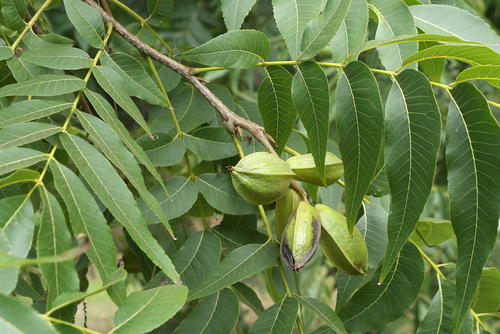
Carya illinoinensis
Pecan
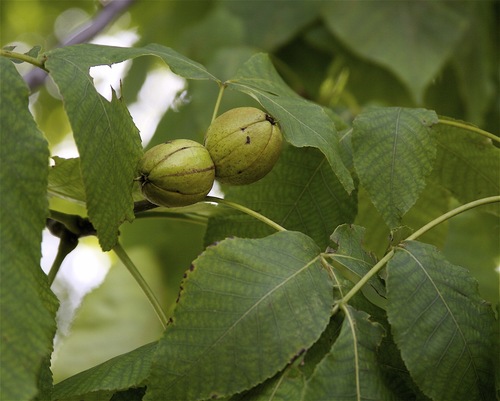
Carya laciniosa
Big Shellbark hickory, Kingnut Hickory
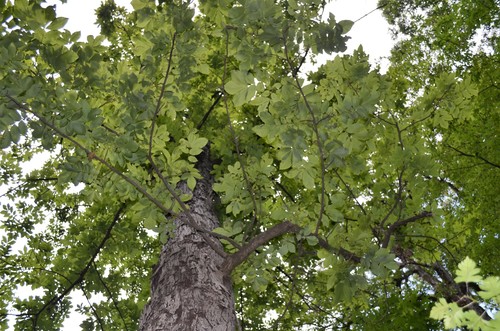
Carya myristiciformis
Nutmeg hickory, Bitter water hickory
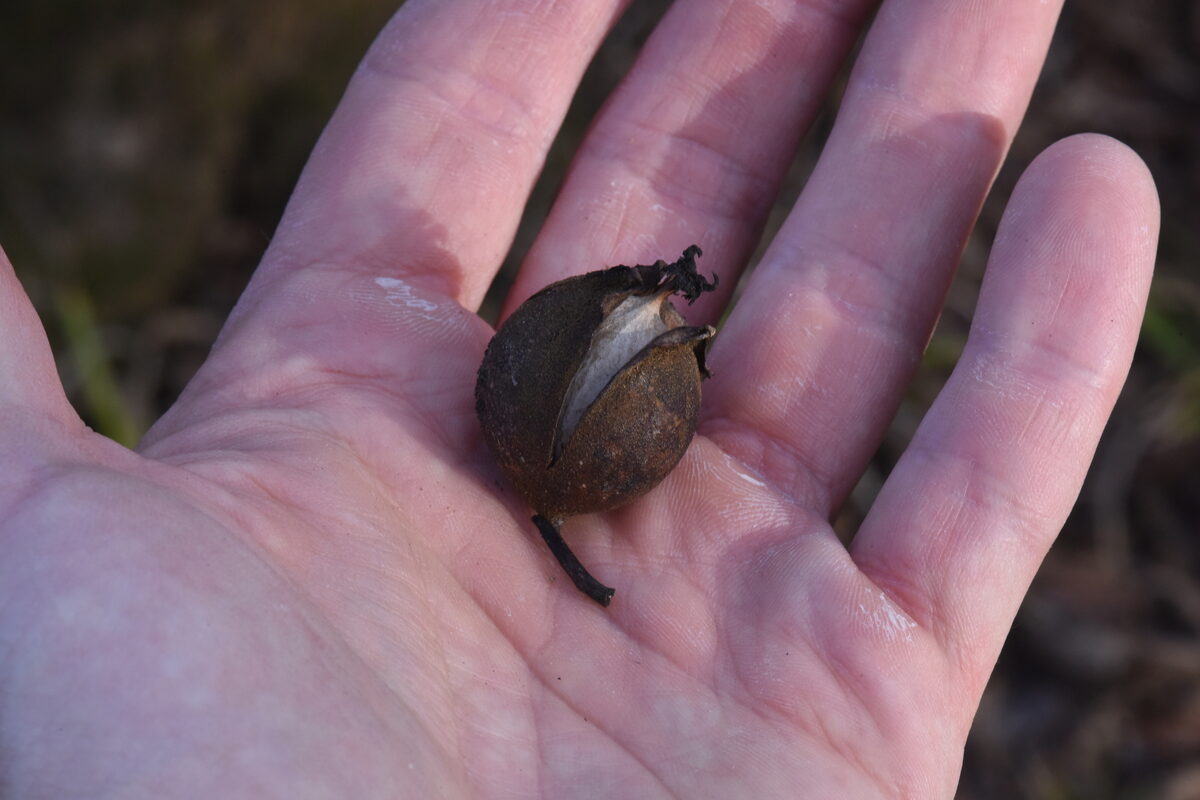
Carya ovalis - (Wangenh.)Sarg.
Sweet Pignut
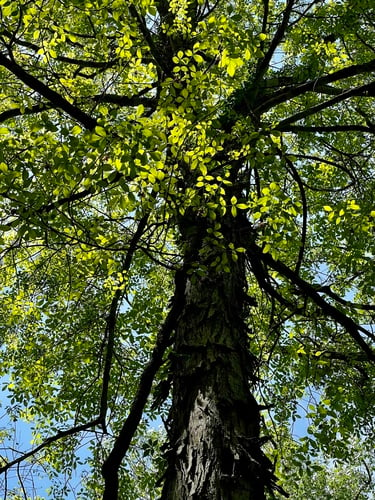
Carya ovata
Shagbark hickory, Shellbark hickory, Upland hickory
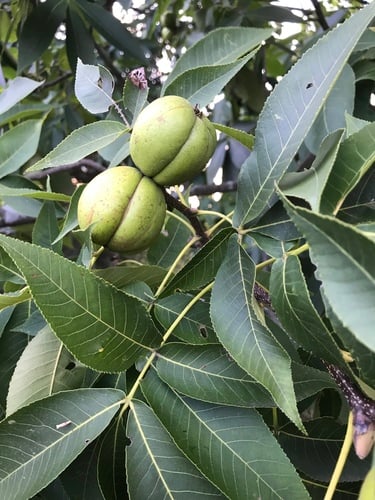
Carya ovata var. australis
Southern shagbark, Caroline hickory