Planchonella laurifolia
(A. Rich.) Pierre
Blush Coondoo
wikimedia· cc0
Poyt448 Peter Woodard (via Wikimedia Commons)
Description
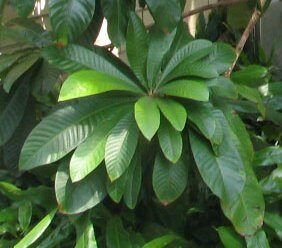
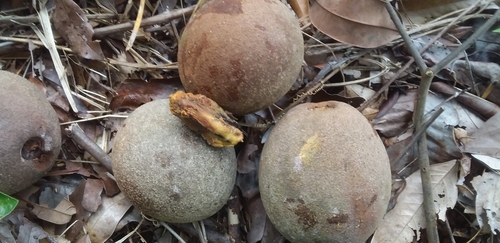
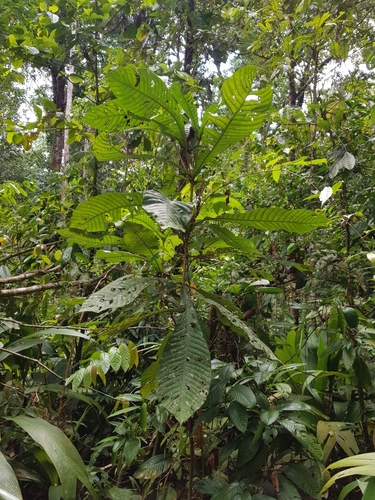
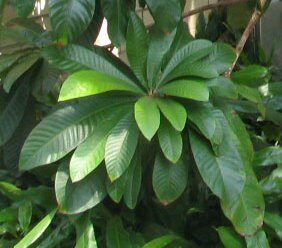
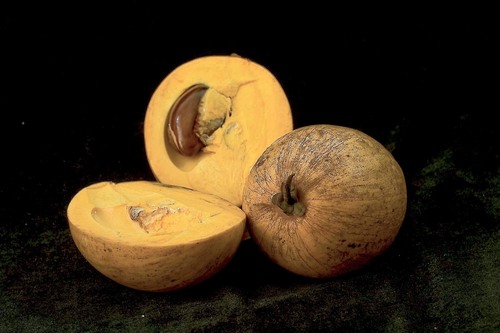
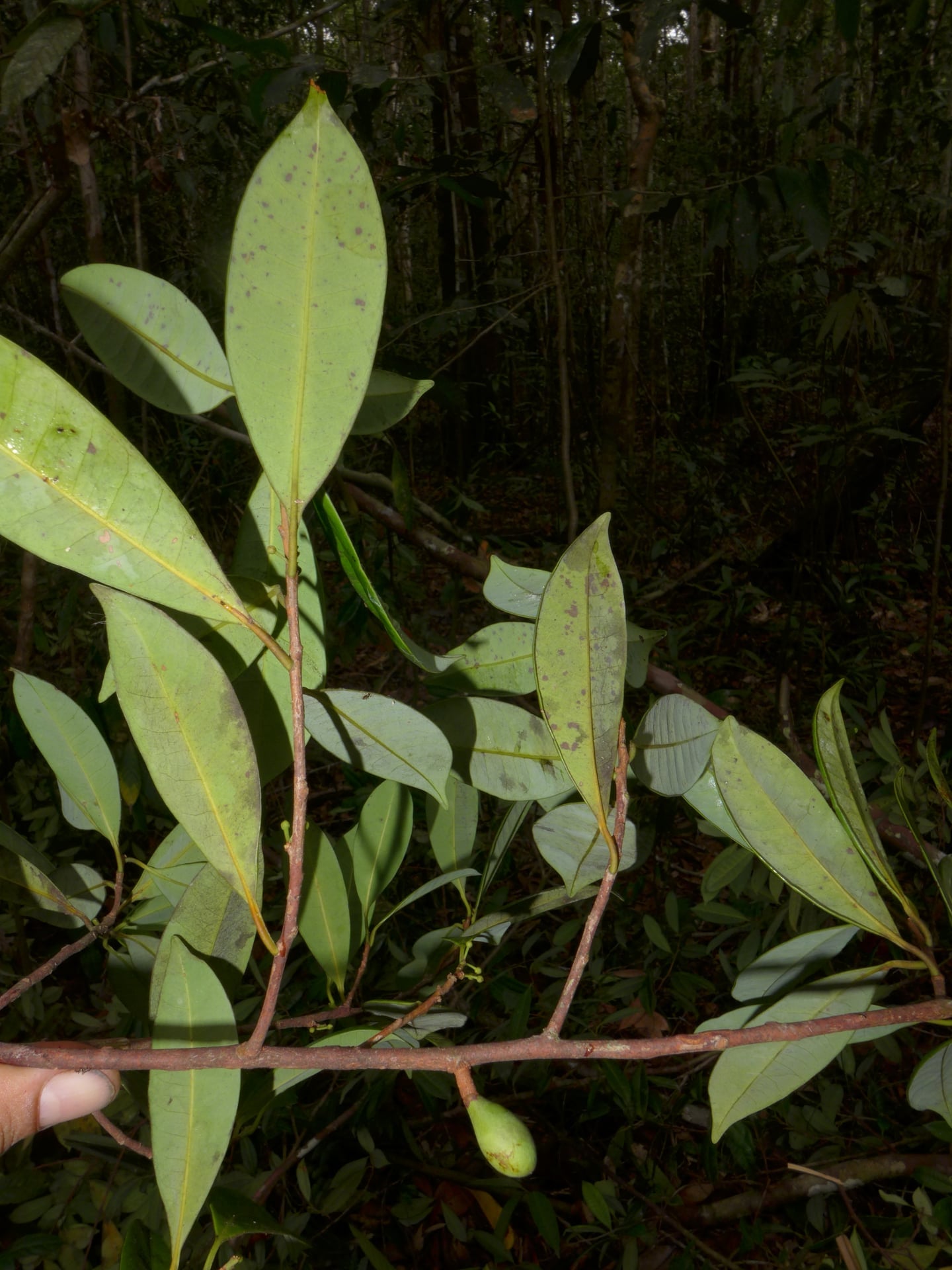
A tall tree. It grows 15-25 m high and spreads 10-15 m wide. The bark is brown and comes off in large pieces. This makes a pattern on the trunk. The young growth is hairy. The leaves are 9-20 cm long by 3-7.5 cm wide. They are oval and crowded near the ends of small branches. They are leathery and dark green dull above but shiny underneath. The flowers are 0.4 cm long and greenish. They are hairy. They occur in clusters in the axils of leaves. The fruit are berries 1-2.2 cm long by 0.5-1 cm wide. They are black. There is one seed which is 1-1.5 cm long. It is brown and shiny.
Edible Uses
The black berries are edible.
Distribution
It grows in coastal districts in NE Australia in warm temperate regions. They grow near rainforest. They need well drained soil. The can tolerate light frost.
Where It Grows
Australia*,
Cultivation
Plants can be grown from fresh seed and cuttings of firm young growth.
Notes
There are about 100 Planchonella species. They are mostly in Asia and the Pacific.
Synonyms
References (5)
- Bodkin, F., 1991, Encyclopedia Botanica. Cornstalk publishing, p 808
- Elliot, W.R., & Jones, D.L., 1997, Encyclopedia of Australian Plants suitable for cultivation. Vol 7. Lothian. p 357
- Jones D, L, 1986, Ornamental Rainforest Plants in Australia, Reed Books, p 238
- Townsend, K., 1994, Across the Top. Gardening with Australian Plants in the tropics. Society for Growing Australian Plants, Townsville Branch Inc. p 316
- Williams, J.B., Harden, G.J., and McDonald, W.J.F., 1984, Trees and shrubs in rainforests of New South Wales and Southern Queensland. Univ. of New England, Armidale. p 92