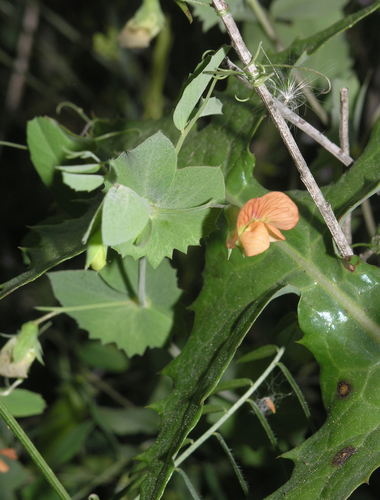
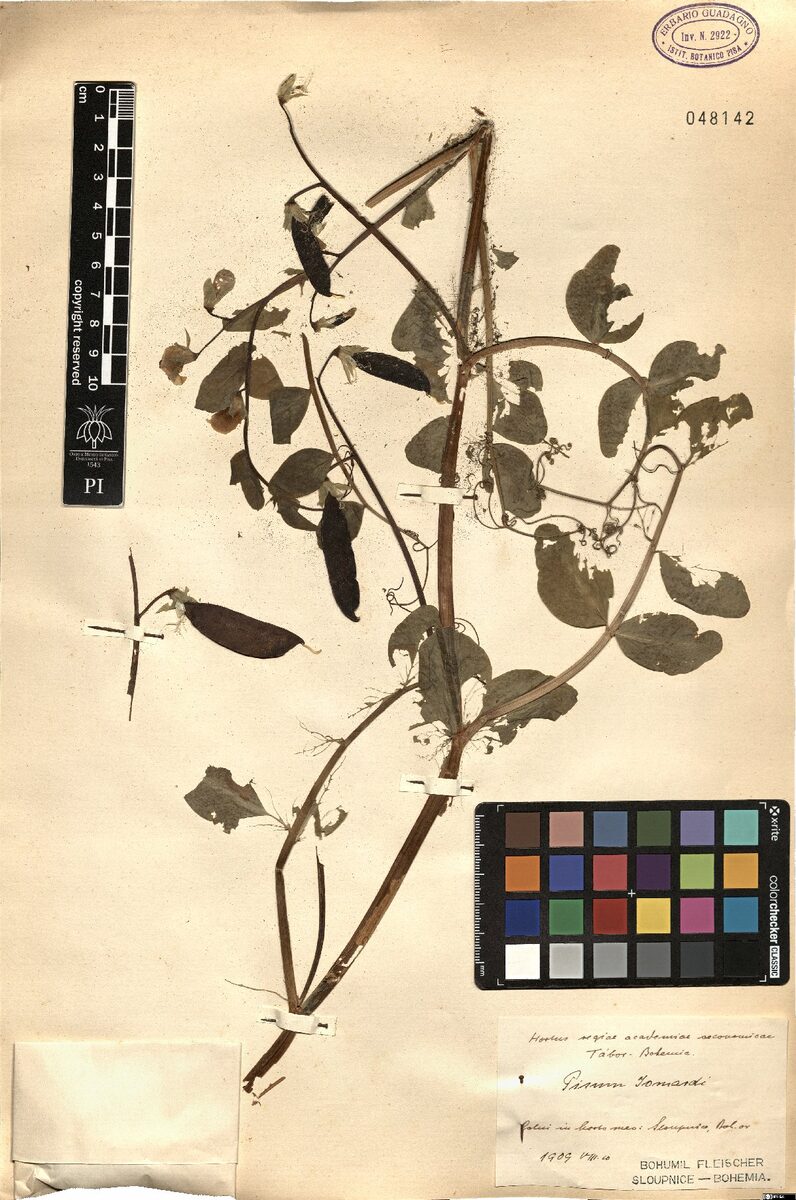
Pisum sativum var. macrocarpon
Ser.
Sugar snap peas, Edible-podded peas
gbif· cc-by-nc
Desert Botanical Garden Herbarium (DES-)
gbif· cc-by-nc
University of Vermont
gbif· cc-by-nc
University of Vermont
Description
A commercially cultivated temperate herb in the pea family with broad, flat, edible pods. The plant produces crisp, crunchy, sweet pods that are eaten when young.
Edible Uses
Young pods are eaten raw for their crisp, sweet, succulent flavor. Both pods and seeds are edible.
Traditional Uses
The pods are crisp, crunchy, sweet and succulent. Only young pods are used.
This uses section is brief — help expand it
Distribution
It is a temperate plant.
Where It Grows
Asia, Australia, Britain, China, Europe, France, Japan, Netherlands, North America, Tasmania, USA,
Other Information
It is a commercially cultivated vegetable.
Synonyms
Probably now Pisum sativum Macrocarpum group
Also Known As
Ho lan tau, Saya endo
References (8)
- Creasy, R., 2000, The Edible Asian Garden. Periplus p 50
- Cundall, P., (ed.), 2004, Gardening Australia: flora: the gardener's bible. ABC Books. p 1054
- A. P. de Candolle, Prodr. 2:368. 1825
- Kays, S. J., and Dias, J. C. S., 1995, Common Names of Commercially Cultivated Vegetables of the World in 15 languages. Economic Botany, Vol. 49, No. 2, pp. 115-152
- Schneider, E., 2001, Vegetables from Amaranth to Zucchini: The essential reference. HarperCollins. p 478
Show all 8 references Hide references
- Solomon, C., 2001, Encyclopedia of Asian Food. New Holland. p 212
- USDA, ARS, National Genetic Resources Program. Germplasm Resources Information Network - (GRIN). [Online Database] National Germplasm Resources Laboratory, Beltsville, Maryland. Available: www.ars-grin.gov/cgi-bin/npgs/html/econ.pl (10 April 2000)
- Wiersema, J. H. & Leon, B., 2013, World Economic Plants. A Standard Reference CRC Press. 2nd Ed. p 537