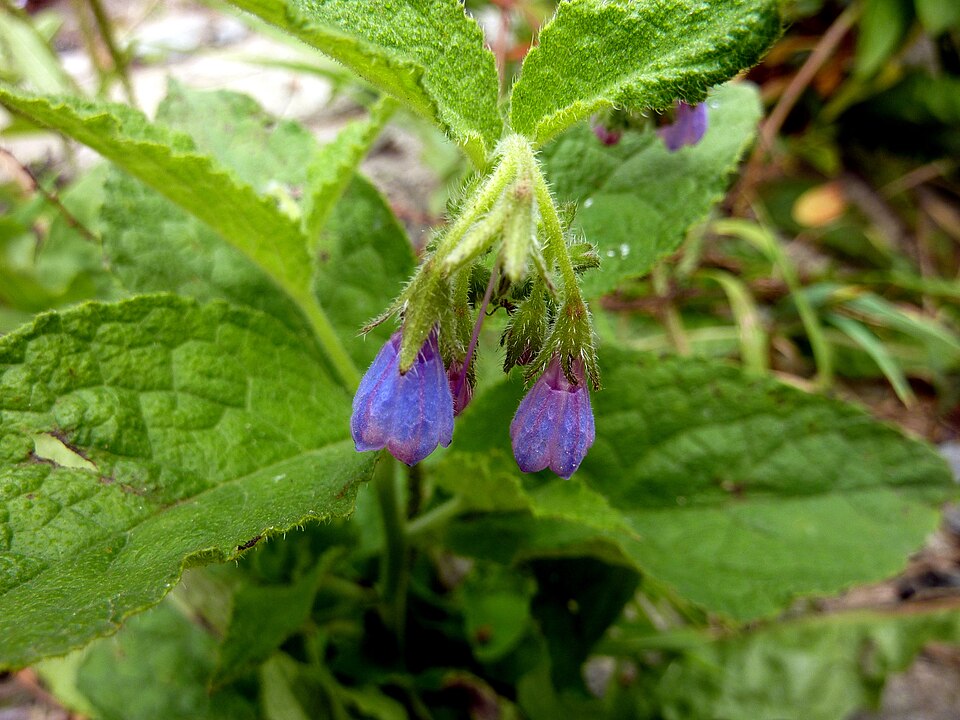
Anchusa officinalis
L.
Alkanet, Bugloss, Anchu
iNaturalist· cc-by-sa
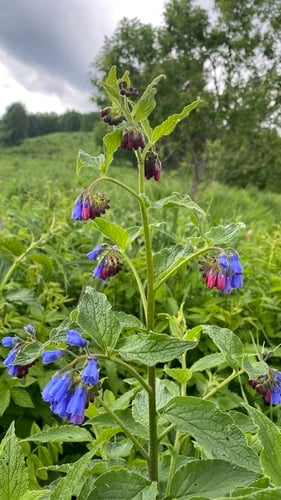
(c) Gilles San Martin, some rights reserved (CC BY-SA), uploaded by Gilles San Martin
iNaturalist· cc-by-nc
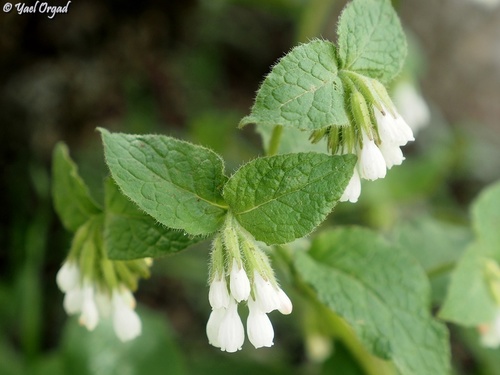
(c) Lina Paškevičiūtė, some rights reserved (CC BY-NC), uploaded by Lina Paškevičiūtė
iNaturalist· cc-by-nc
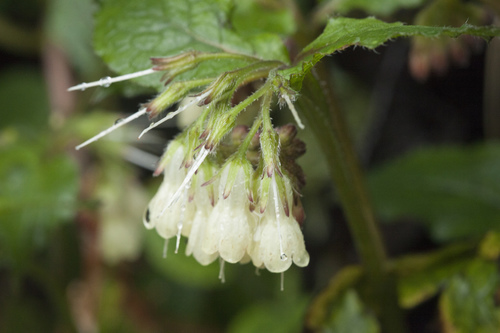
(c) Lina Paškevičiūtė, some rights reserved (CC BY-NC), uploaded by Lina Paškevičiūtė
Summary
Source: WikipediaAnchusa officinalis, also knowns as common bugloss or common alkanet, is a species of flowering plant in the borage family. It is native to Europe and small parts of western Asia, but has been escaped from cultivation to grow in additional locations in Europe and the Americas. The flowers are noted for their popularity with bumblebees due to a large nectar flow. The plants have been used in traditional medicines, but were falling out of favor by the early 1800s. They are still planted in gardens for their popularity with bees and their blue flowers.
Description
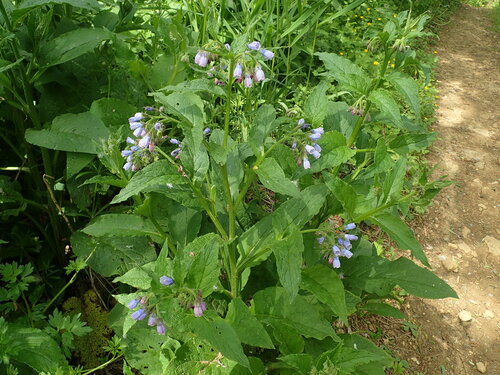
A medium sized herb. It is rough and bristly and keeps growing from year to year. The stems are erect and branched. The leaves are long and sword shaped. They are 10-20 mm wide. The lower leaves have stalks. The flowers are bluish-red or violet. They have a white centre. They are 7-15 mm across. They are in long coiled cymes. The fruit are cone shaped small nuts.
Edible Uses
Leaves and young shoots are cooked and used like spinach. Flowers can be cooked or used as a garnish. The red dye extracted from the roots can also be used to colour oils and fats.
Traditional Uses
The boiled leaves are used as a substitute for cabbage. The young shoots are eaten in soup and salad. A conserve is made out of the flowers. They are also used as a vegetable. The roots have been used as a red food colouring.
Medicinal Uses
All parts of the plant are demulcent and expectorant. They are used externally to treat cuts, bruises, and phlebitis, and internally to treat coughs and bronchial catarrh. A homeopathic remedy made from the plant is used in the treatment of stomach and duodenal ulcers.
Distribution
A temperate plant. It grows on the banks and roadsides. It is resistant to drought and frost.
Where It Grows
Albania, Argentina, Asia, Australia, Britain, China, Czech Republic, Estonia, Europe*, France, Germany, Greece, Hungary, Italy, Mediterranean, Poland, Scandinavia, South America, Sweden, Tasmania, Turkey, Türkiye,
Cultivation
Succeeds in most soils, preferring a sunny position. Prefers a fertile well-drained soil. The flowers are a rich source of nectar and are very attractive to bees. The dry leaves emit a rich musky fragrance, rather like wild strawberry leaves drying.
Propagation
Sow seed in spring in pots of sandy soil. An overnight temperature drop aids germination, which typically occurs in 1–4 weeks at 21°C. Prick seedlings into individual pots once large enough and plant out during summer. Seed can also be sown in an outdoor seedbed in July and transplanted to final positions in early autumn — plants grown this way will be larger and flower earlier than those sown in spring.
Other Uses
A red dye is obtained from the roots.
Notes
There are about 25-35 Anchusa species.
Also Known As
Imikas, Mesilill, Pilat lekarsky, Tongues
References (15)
- Bircher, A. G. & Bircher, W. H., 2000, Encyclopedia of Fruit Trees and Edible Flowering Plants in Egypt and the Subtropics. AUC Press. p 27
- Blamey, M and Grey-Wilson, C., 2005, Wild flowers of the Mediterranean. A & C Black London. p 386
- Bodkin, F., 1991, Encyclopedia Botanica. Cornstalk publishing, p 79
- Bremness, L., 1994, Herbs. Collins Eyewitness Handbooks. Harper Collins. p 145
- Denes, A., et al, 2012, Wild plants used for food by Hungarian ethnic groups living in the Carpathian Basin. Acta Societatis Botanicorum Poloniae 81 (4): 381-396
Show all 15 references Hide references
- Facciola, S., 1998, Cornucopia 2: a Source Book of Edible Plants. Kampong Publications, p 51
- Hedrick, U.P., 1919, (Ed.), Sturtevant's edible plants of the world. p 55
- Hermandez Bermejo, J.E., and Leon, J. (Eds.), 1994, Neglected Crops. 1492 from a different perspective. FAO Plant Production and Protection Series No 26. FAO, Rome. p 264
- Heywood, V.H., Brummitt, R.K., Culham, A., and Seberg, O. 2007, Flowering Plant Families of the World. Royal Botanical Gardens, Kew. p 66
- Hibbert, M., 2002, The Aussie Plant Finder 2002, Florilegium. p 27
- Lukasz, L., 2016, Wild Edible Plants Traditionally Used in Poland.
- Morley, B. & Everard, B., 1970, Wild Flowers of the World. Ebury press. Plate 20
- Plants for a Future database, The Field, Penpol, Lostwithiel, Cornwall, PL22 0NG, UK. http://www.scs.leeds.ac.uk/pfaf/
- Simkova, K. et al, 2014, Ethnobotanical review of wild edible plants used in the Czech Republic. Journal of Applied Botany and Food Quality 88, 49-67
- Sp. pl. 1:133. 1753