Piper caducibracteum
C. DC.
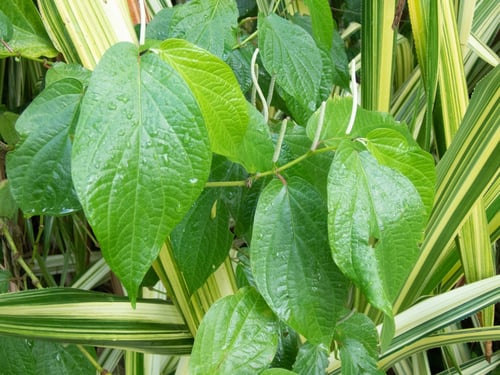
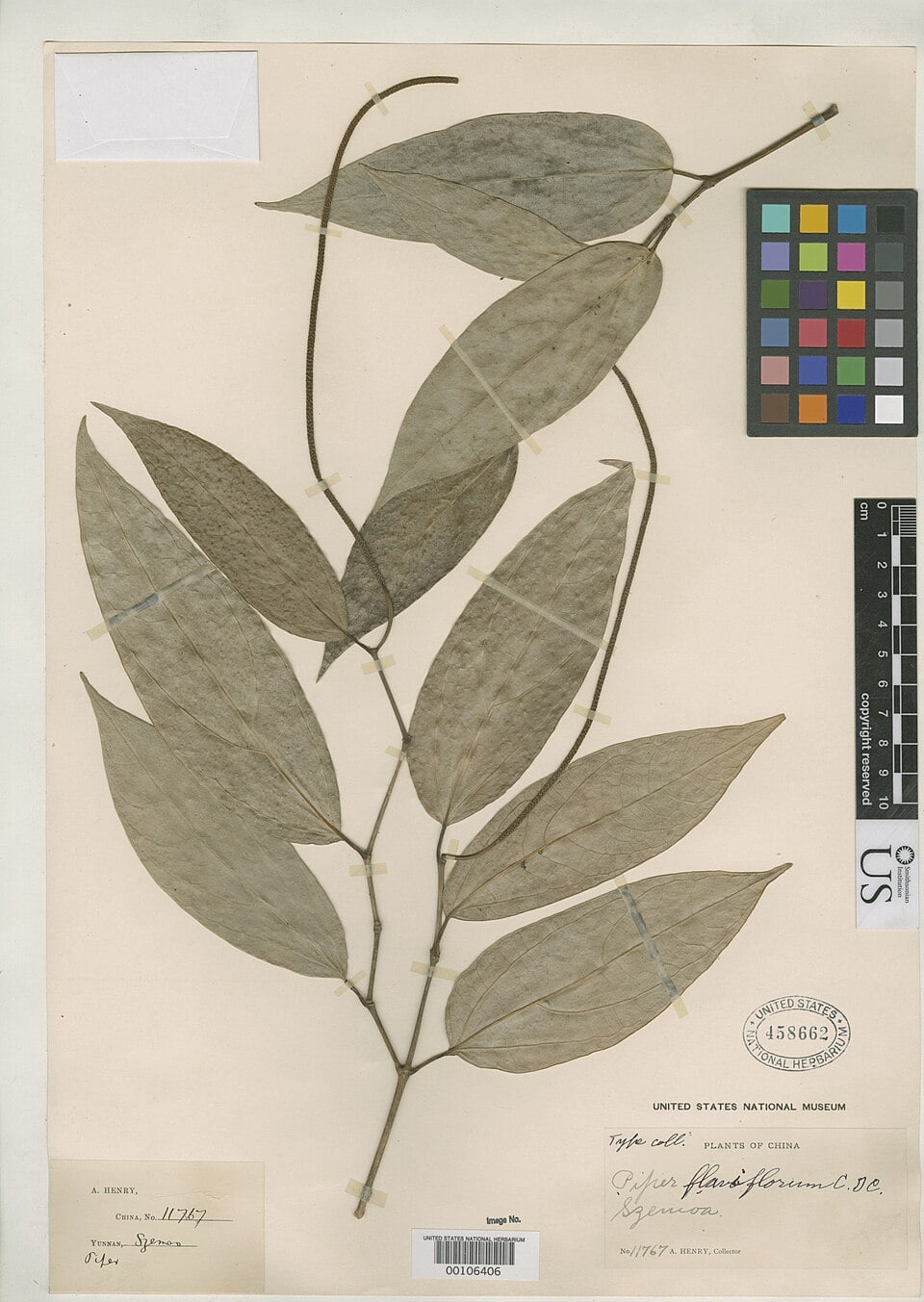
Pepper leaf
gbif· cc0
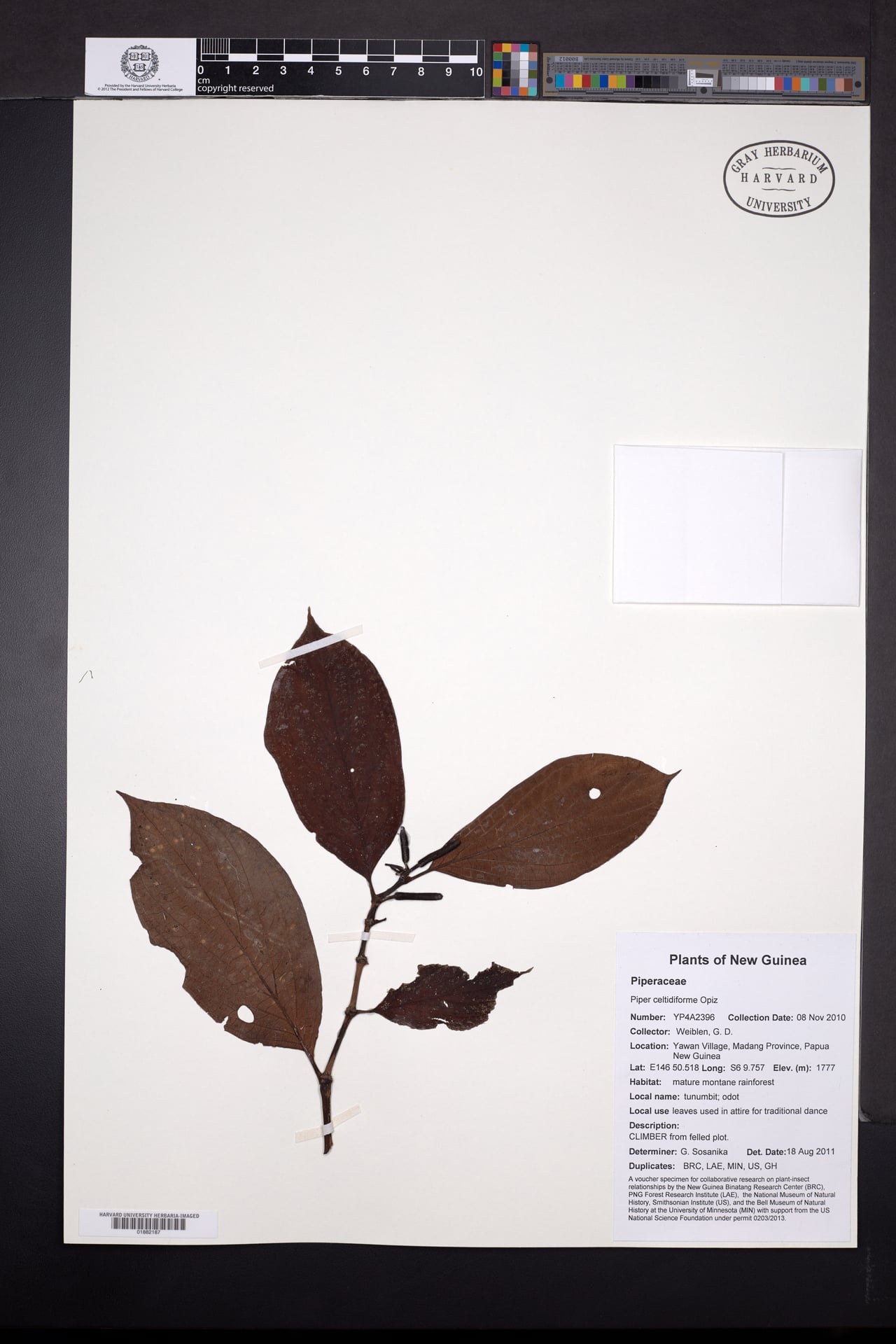
President and Fellows of Harvard College
gbif· cc0
President and Fellows of Harvard College
Description
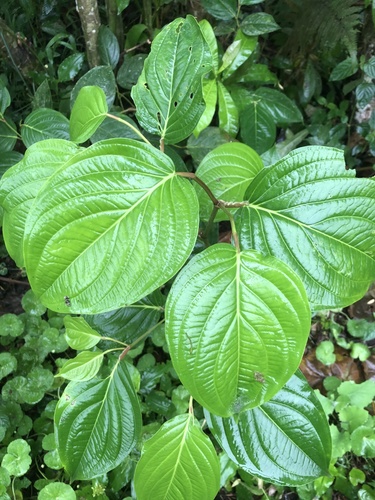
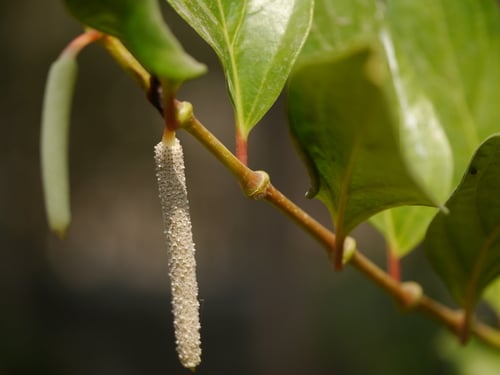
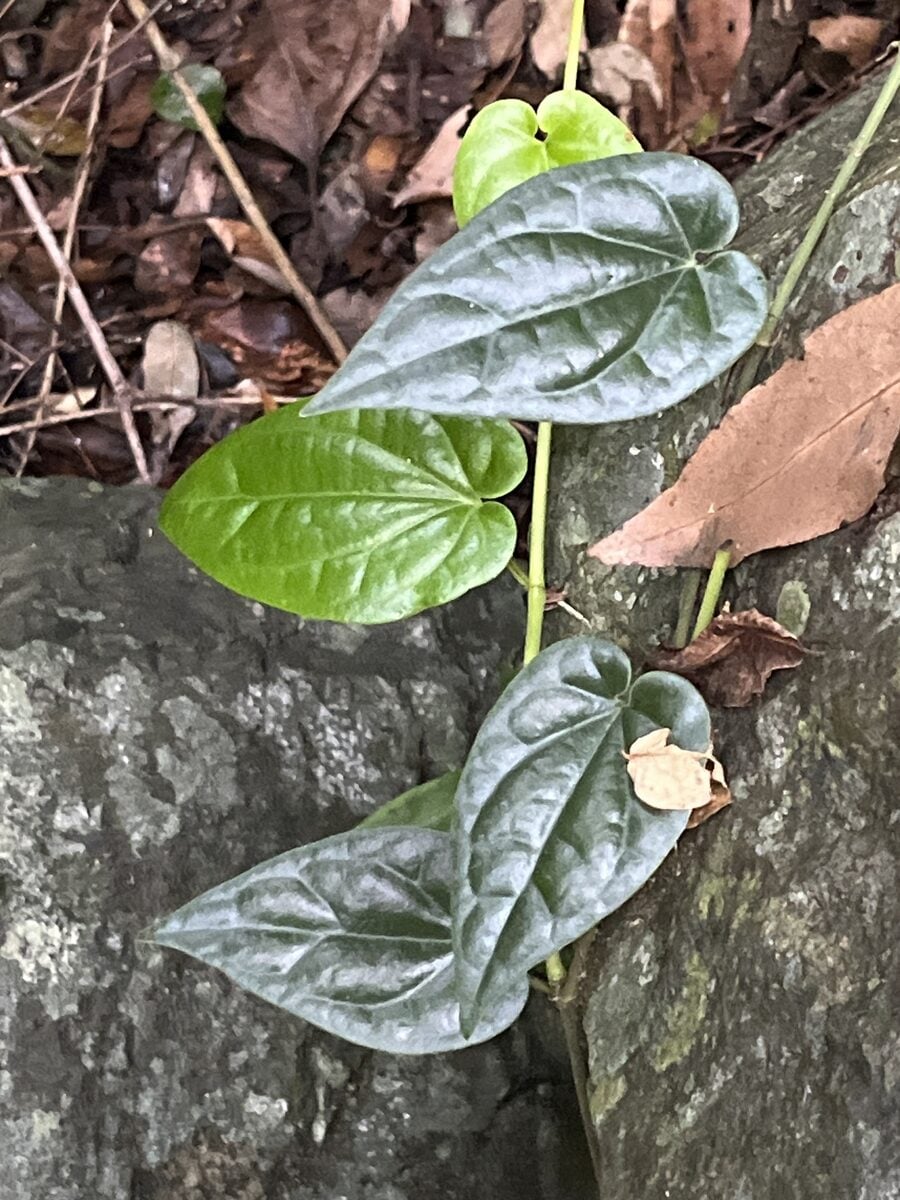
A tropical climbing plant in the pepper family (Piperaceae) with young leaves used as a culinary herb.
This description is brief — help expand it
Edible Uses
The fresh or dried bark, the petioles and the young leaves can be used as a substitute for the leaf of Piper betle in a masticatory with betel nut (Areca spp.). The leaves of this species are preferred by some people. This use is detailed below:- A mixture of betel leaves and other ingredients is used as a masticatory, which acts as a gentle stimulant and is taken after meals to sweeten the breath. The ingredients of the betel mixture (quid) can vary widely per country or region. The three basic ingredients are often the betel leaf, the seed ('nut') from the areca palm (Areca catechu L.) and lime, produced by burning seashells or slabs of limestone. In the Moluccas and certain regions of Papua New Guinea, the betel leaf is replaced by the inflorescence of Piper siriboa. Other possible ingredients include gambier (Uncaria gambir), tobacco, palm sugar and various spices, such as cardamom (Elettaria cardamomum) and clove (Syzygium aromaticum). The various mixtures provide a wide range of different tastes. Chewing the quid discolours teeth and stains saliva, mouth and lips red. It results in copious salivation, so users have to spit frequently. Chewing betel quids can lead to cancers in the mouth and on the tongue.
Traditional Uses
Young leaves are used as a spice or flavouring.
This uses section is brief — help expand it
Distribution
A tropical plant.
Where It Grows
Asia, Malaysia, SE Asia,
Cultivation
Scrambling plants form new roots where their leaf axils touch the ground. A dioecious species - both male and female forms need to be grown if fruit and seed are required.
Propagation
Seed - Cuttings 30 - 45cm long, taken from the tips of vertical shoots. Cuttings usually have 3 - 5 nodes and are planted with the lowest 2 nodes buried in the soil. The cuttings are planted in nurseries or, more commonly, directly in the field, where they are planted close together in pits or long mounds. When the cuttings begin to sprout and creep along, they are tied to the support
Notes
There are between 1000-2000 Piper species. They are mostly in the tropics.
References (4)
- Burkill, I.H., 1966, A Dictionary of the Economic Products of the Malay Peninsula. Ministry of Agriculture and Cooperatives, Kuala Lumpur, Malaysia. Vol 2 (I-Z) p 1766
- Martin, F.W. & Ruberte, R.M., 1979, Edible Leaves of the Tropics. Antillian College Press, Mayaguez, Puerto Rico. p 99
- E. D. Merrill, Interpr. Herb. amboin. 183. 1917
- World Checklist of Useful Plant Species 2020. Royal Botanic Gardens, Kew