Pinus virginiana
Mill.
Scrub pine, Ai song, Virginia pine
iNaturalist· cc-by
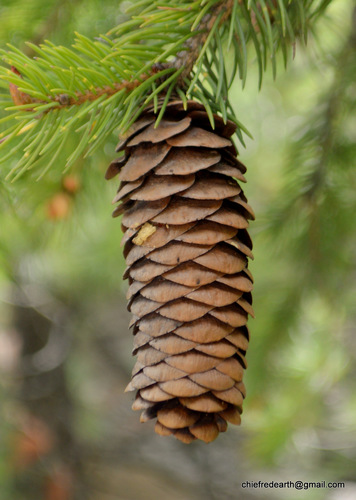
(c) Kristine Paulus, some rights reserved (CC BY)
iNaturalist· cc-by-sa
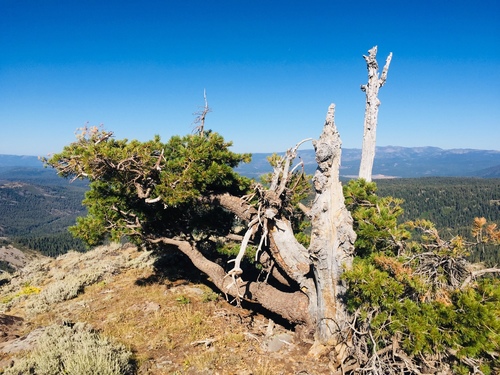
(c) Famartin, some rights reserved (CC BY-SA)
iNaturalist· cc-by-sa
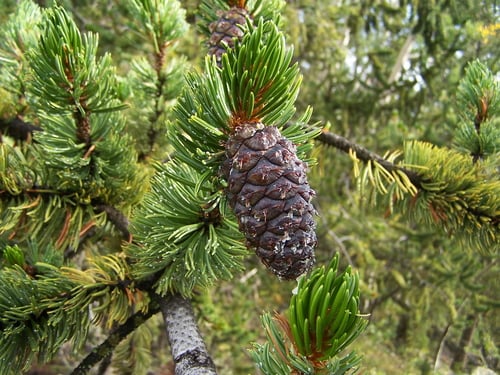
(c) Famartin, some rights reserved (CC BY-SA)
Summary
Source: WikipediaPinus virginiana, the Virginia pine, scrub pine, Jersey pine, possum pine, is a medium-sized tree, often found on poorer soils from Long Island in southern New York south through the Appalachian Mountains to western Tennessee and Alabama. The usual size range for this pine is 5.5 to 18 metres. However, it can grow larger under optimum conditions. The trunk can be as large as 20 inches in diameter. This tree prefers a well-drained loam or clay, but will also grow on substandard, sandy soil, where it remains small and stunted. The typical life span is 65 to 90 years. The short (4–8 cm), yellow-green needles are paired in fascicles and are often twisted. Pinecones are 4–7 cm long and may persist on the tree for many years, often (though not always) releasing their seeds in the second year. In growth habit, some trees may be inclined with twisted trunks. This pine is useful for reforesting and provides nourishment for wildlife. Its other main use is on Christmas tree farms, despite having sharp-tipped needles and yellowish winter color. It can also provide wood pulp and lumber. Like some other southern yellow pines, Virginia pine lumber case hardens. That is, it becomes very hard over time during wood drying. Wood from Virginia pine is not normally considered to resist rot unless treated with preservatives.
Description
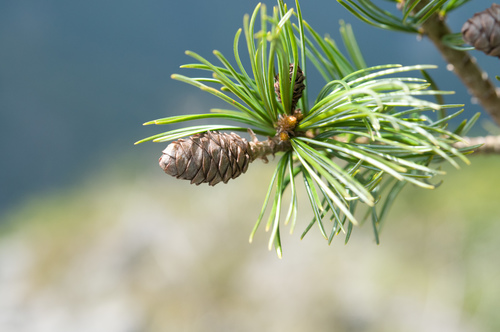
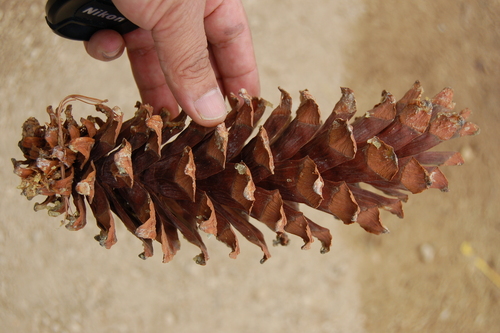
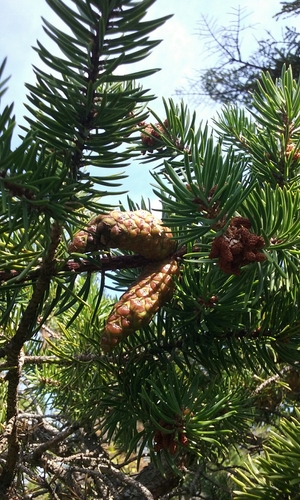
A tree up to 20 m tall. The trunk is 50 cm across. The bark is grey brown. It becomes scaly and has plated layers. The crown can be rounded or flattened. The young branches have red or purple tinges. There are 2 needles per bundle. They are deep to pale yellow-green. They are strongly twisted. They are 2-8 cm long by 1-1.5 mm wide. The seed cones have short stalks. They are oval when open and dull red brown. Seeds are pale brown and with darker mottles. They are 4-7 mm across.
Edible Uses
The seeds are rich in oil with a resinous flavour but are very small and fiddly to use — only about 4mm long — and can be eaten raw or cooked. The leaves can be brewed into a tea. A vanillin flavouring is also obtained as a by-product of resins released from the pulpwood.
Medicinal Uses
The turpentine obtained from the resin is antiseptic, diuretic, rubefacient, and vermifuge. Taken internally, it is a valuable remedy for kidney and bladder complaints; applied as a rub or steam bath, it treats rheumatic conditions. It benefits the respiratory system and helps with diseases of the mucous membranes and complaints including coughs, colds, influenza, and TB. Externally, it treats skin complaints, wounds, sores, burns, and boils, applied as liniment plasters, poultices, herbal steam baths, and inhalers. An infusion of the leaves has been used to treat high fevers, and an infusion of the buds has been used to expel worms from the body.
Known Hazards
The wood, sawdust and resins from various species of pine can cause dermatitis in sensitive people.
Distribution
It is a temperate plant. It is cultivated in China. It grows in the USA near Missippi from 30-760 m altitude. It suits hardiness zones 4-9.
Where It Grows
Australia, China, North America, USA,
Cultivation
Thrives in a light well-drained sandy or gravelly loam. Dislikes poorly drained moorland soils. Established plants tolerate drought. Succeeds in very acid soils in the wild. Often used in reforestation projects that are aimed at reclaiming exhausted soils in N. America. This species is not very hardy in Britain. Trees are very slow growing in this country, apart from the first few years, and rarely make more than a bush on a stem. Trees are short-lived in the wild, they can produce cones when 5 years old, though 8 - 10 years is the average. Large crops are followed by 1 - 2 years of low seed production. The cones take 2 years to mature, then open and shed their seed whilst still attached to the tree. The empty cones persist on the trees for 3 - 4 years. Plants are strongly outbreeding, self-fertilized seed usually grows poorly. They hybridize freely with other members of this genus. Leaf secretions inhibit the germination of seeds, thereby reducing the amount of plants that can grow under the trees. Plants in this genus are notably susceptible to honey fungus.
Propagation
Sow seed in individual pots in a cold frame as soon as it is ripe, or in late winter if not. A short stratification of 6 weeks at 4°C can improve germination of stored seed. Plant seedlings into their permanent positions as soon as possible and protect them for their first winter or two. Because plants have a very sparse root system, early planting is important for good establishment. Trees should be planted out when quite small — between 30 and 90cm — though we typically plant them at around 5–10cm tall. A thorough weed-excluding mulch aids establishment well. Larger trees check badly and may put on little growth for several years, which also harms root development and wind resistance. Cuttings work only when taken from trees less than 10 years old. Use single leaf fascicles with the base of the short shoot; disbudding the shoots a few weeks before taking cuttings can help. Cuttings are normally slow to grow away.
Other Uses
A tan or green dye is obtained from the needles. The needles release terpene when washed by rain, which negatively affects the germination of some plants, including wheat. Oleo-resins are present in all pine tissues but are often not commercially extracted; they are obtained by tapping the trunk or by destructive distillation of the wood, with trees from warmer areas generally yielding more. Turpentine makes up an average of 20% of the oleo-resin and is separated by distillation for use as a solvent for waxes, in varnish, and medicinally. Rosin, the residue after turpentine removal, is used on violin bows and in sealing wax and varnish. Pitch from the resin is used for waterproofing and as a wood preservative. The wood is coarse-grained, light, soft, weak, and brittle, but durable in contact with soil; it weighs 33lb per cubic foot and is used mainly for pulp, occasionally as lumber in rough construction, or as fuel.
Production
Cones take 2 years to mature.
Notes
There are over 100 species of Pinus.
References (5)
- Cundall, P., (ed.), 2004, Gardening Australia: flora: the gardener's bible. ABC Books. p 1051
- Fu Liguo, Li Nan, Mill, R.R., Pinaceae. Flora of China.
- Gard. dict. ed. 8: Pinus no. 9. 1768
- Little, E.L., 1980, National Audubon Society Field Guide to North American Trees. Alfred A. Knopf. p 298
- Plants for a Future database, The Field, Penpol, Lostwithiel, Cornwall, PL22 0NG, UK. http://www.scs.leeds.ac.uk/pfaf/