Pinus armandii
Franchet
Chinese white pine, Armand's pine, David's pine
iNaturalist· cc-by
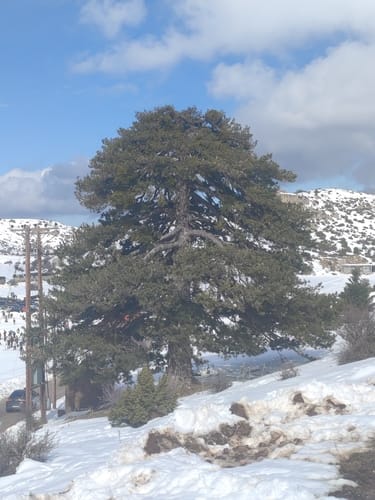
(c) Cheng-Tao Lin, some rights reserved (CC BY)
iNaturalist· cc-by
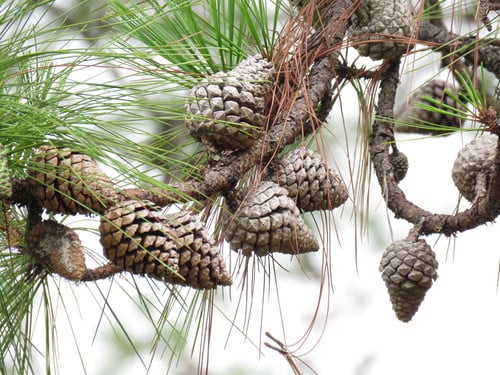
(c) Cheng-Tao Lin, some rights reserved (CC BY)
iNaturalist· cc-by-nc
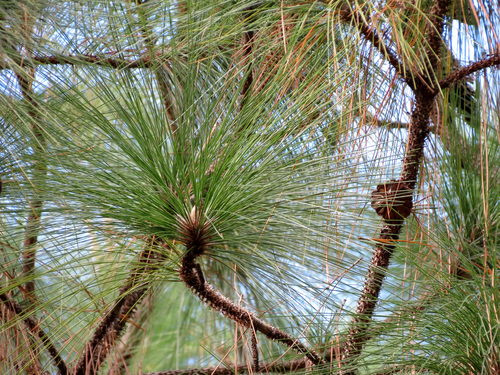
(c) 徐承隆, some rights reserved (CC BY-NC)
Summary
Source: WikipediaPinus armandii, the Chinese white pine or Armand's pine, is a species of pine native to China, occurring from southern Shanxi west to southern Gansu and south to Yunnan, with outlying populations in Anhui and on Taiwan. It grows at altitudes of 2200–3000 m in Taiwan, and it also extends a short distance into northern Burma. In Chinese it is known as "Mount Hua pine" (华山松). It grows at 1,000–3,300 m altitude, with the lower altitudes mainly in the northern part of the range. It is a tree reaching 35 m (115 ft) height, with a trunk up to 1 m (3 ft 3 in) in diameter.
Description
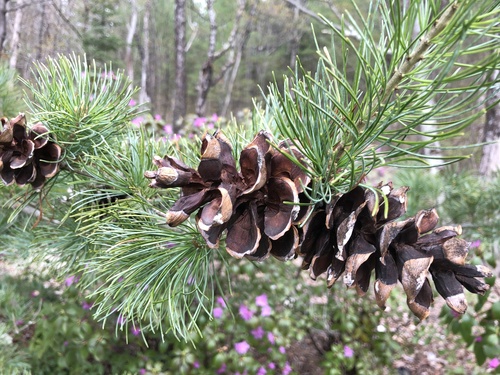
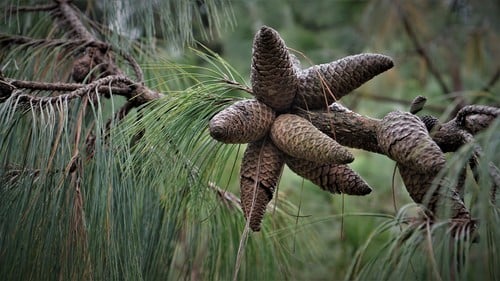
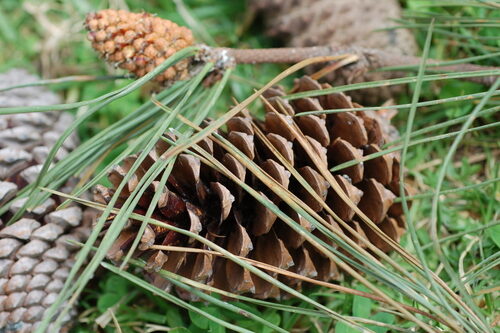
A large tree. It grows 18 m high and spreads 6 m wide. The branches are horizontal and spread out wide. The leaves are green and 15 cm long. The cones are oval and hang down. They are yellow-brown.
Edible Uses
The seeds can be eaten raw or cooked and are esteemed as a great delicacy. They are up to 13mm x 11mm, rich in oil, and have a slightly resinous flavour. A vanillin flavouring is also obtained as a by-product of resins released from the pulpwood.
Traditional Uses
The seeds are eaten raw and also cooked in stir fried dishes. The very young leaves are eaten.
This uses section is brief — help expand it
Medicinal Uses
Turpentine from pine resin is antiseptic, diuretic, rubefacient, and vermifuge. Taken internally it is a valuable treatment for kidney and bladder complaints, and is used both internally and as a rub and steam bath for rheumatic conditions. It benefits the respiratory system and is useful for diseases of the mucous membranes and complaints such as coughs, colds, influenza, and TB. Externally it treats skin complaints, wounds, sores, burns, and boils, applied as liniment plasters, poultices, herbal steam baths, and inhalers.
Known Hazards
The wood, sawdust and resins from various species of pine can cause dermatitis in sensitive people.
Distribution
It grows in warm temperate and high altitude zones in China. It grows in Yunnan. It suits hardiness zones 5-7. Arboretum Tasmania.
Where It Grows
Asia, Australia, China, India, Japan, Korea, Myanmar, SE Asia, Taiwan, Tasmania, Tibet, Vietnam,
Cultivation
Thrives in a light well-drained sandy or gravelly loam. Dislikes poorly drained moorland soils. Established plants tolerate drought. This species grows well in Britain. The best growth in this country is found in Sussex, trees also grow well in Ireland. Annual increases in height are normally moderate but the best trees have been increasing by 60cm a year. Increase in girth can be as high as 5cm a year. A plant at Kew, accession no 000-69.10663, was bearing a good crop of cones in 2000. Plants are strongly outbreeding, self-fertilized seed usually grows poorly. They hybridize freely with other members of this genus. Leaf secretions inhibit the germination of seeds, thereby inhibiting the growth of other plants below the tree. Plants in this genus are notably susceptible to honey fungus. An evergreen.
Propagation
Sow seed in individual pots in a cold frame as soon as it is ripe, or in late winter if not possible. A short stratification of 6 weeks at 4°c can improve germination of stored seed. Plant seedlings into permanent positions as soon as possible and protect them for the first winter or two. Plants have a very sparse root system and establish best when moved young — ideally between 30 and 90cm tall, though we plant them out at around 5–10cm tall. A thorough weed-excluding mulch helps them establish well. Larger transplants check badly and may put on little growth for several years, which also impairs root development and wind resistance. Cuttings work only when taken from trees less than 10 years old. Use single leaf fascicles with the base of the short shoot; disbudding the shoots a few weeks before taking cuttings can help. Cuttings are normally slow to establish.
Other Uses
A tan or green dye is obtained from the needles. The needles contain terpene, released when rain washes over them, which inhibits germination of some plants including wheat. Oleo-resins occur in all pine tissues but are not always present in quantities that make extraction economically worthwhile. Resins are obtained by tapping the trunk or by destructive distillation of the wood; trees from warmer regions generally yield more. Turpentine makes up an average of 20% of the oleo-resin and is separated by distillation, with uses as a solvent for waxes, in varnish-making, and medicinally. Rosin, the residue after turpentine removal, is used by violinists and in sealing wax and varnish. Pitch from the resin is used for waterproofing and as a wood preservative. The wood is soft, and the timber is used for construction, railway sleepers, furniture, and wood fibre.
Production
In Yunnan the seeds are available for harvest in September and October.
Other Information
The seeds are sold commercially. They are enjoyed. It is a cultivated food plant.
Notes
There are over 100 species of Pinus.
Synonyms
Also Known As
Huang song, Seitu, Situo, Songzi, Su mu tou, Yu-sung
References (14)
- Ambasta, S.P. (Ed.), 2000, The Useful Plants of India. CSIR India. p 456
- Arora, R. K., 2014, Diversity in Underutilized Plant Species - An Asia-Pacific Perspective. Bioversity International. p 96
- Cundall, P., (ed.), 2004, Gardening Australia: flora: the gardener's bible. ABC Books. p 1046
- Facciola, S., 1998, Cornucopia 2: a Source Book of Edible Plants. Kampong Publications, p 169
- Geng, Y., et al, 2016, Traditional knowledge and its transmission of wild edibles used by the Naxi in Baidi Village, northwest Yunnan province. Journal of Ethnobiology and Ethnomedicine. 12:10
Show all 14 references Hide references
- Hu, Shiu-ying, 2005, Food Plants of China. The Chinese University Press. p 277
- Jackes, D. A., Edible Forest Gardens
- Ju, Y., et al, 2013, Eating from the wild: diversity of wild edible plants used by Tibetans in Shangri-la region, Yunnan, China, Journal of Ethnobiology and Ethno medicine 9:28
- Kang, Y., et al, 2014, Wild food plants used by the Tibetans of Gongba Valley (Zouqu country, Gansu, China) Journal of Ethnobiology and Ethnomedicine 10:20
- Nouv. Arch. Mus. Hist. Nat. ser. 2, 7:95, 96, t. 12. 1884
- Plants for a Future database, The Field, Penpol, Lostwithiel, Cornwall, PL22 0NG, UK. http://www.scs.leeds.ac.uk/pfaf/
- Tanaka,
- Wickens, G.E., 1995, Edible Nuts. FAO Non-wood forest products. FAO, Rome. p176
- Zhang, L., et al, 2016, Ethnobotanical study of traditional edible plants used by the Naxi people during droughts. Journal of Ethnobiology and Ethnomedicine. 12:39