Pinus sylvestris
L.
Scots Pine
iNaturalist· cc-by-nc
(c) vyatka, some rights reserved (CC BY-NC), uploaded by vyatka
iNaturalist· cc-by-nc
(c) june, some rights reserved (CC BY-NC), uploaded by june
iNaturalist· cc-by-sa
(c) anemoneprojectors (no internet at the moment), some rights reserved (CC BY-SA)
Summary
Source: WikipediaPinus sylvestris, the Scots pine (UK), Scotch pine (US), Baltic pine, or European red pine is a species of tree in the pine family Pinaceae that is native to Eurasia. It can readily be identified by its combination of fairly short, blue-green leaves and orange-red bark.
Description
An evergreen tree. It grows 15-30 m high and spreads 7.5-9 m wide. The young bark is reddish-brown. It develops a tall clean trunk. The leaves are twisted in pairs. They are grey or blue-green. The needles are 3-14 cm long by 1-2 mm wide. They are stiff and have a sharp point. The edges have fine teeth. Male flowers grow at the base of the shoot. Crimson female flowers are in pairs at the end of the current year's growth. The cones are green and ripen to pale grey or red-brown. They are 8 cm long. They often occur in clusters of 2 or 3. They point back along the stem. The seed are released slowly during winter and the following spring. The seeds are very dark brown and 2-4 mm long. The seed cone scales are 4 sided and raised. Some varieties have been described based on the colour of the winter buds and the thickness of the needles.
Edible Uses
The inner bark can be dried and ground into a powder for use in making bread, often mixed with oatmeal. It is considered a famine food, used only when other options are unavailable. A vanillin flavouring is also obtained as a by-product of resins released from the pulpwood.
Traditional Uses
The cones have been used to flavour beer and wine. The inner bark is dried and used as a flour additive. It is also used in soups. The leaves and twigs yield an essential oil used in the food industry to flavour drinks, frozen dairy food, and baked goods. The young shoots are covered with sugar to make syrup. They are also used for jam. The young needles are dried and ground and used as a famine food together with rye, barley and pea flour.
Medicinal Uses
Scots pine has a wide range of medicinal uses, valued particularly for its antiseptic action and its positive effects on the respiratory system. It should not be used by people prone to allergic skin reactions, and the essential oil should not be taken internally except under professional supervision. The turpentine from the resin is antirheumatic, antiseptic, balsamic, diuretic, expectorant, rubefacient, and vermifuge — useful in treating kidney, bladder, and rheumatic complaints, diseases of the mucous membranes, and respiratory conditions. Externally it is applied as liniment plasters and inhalers. The leaves and young shoots, harvested in spring and dried for later use, are antiseptic, diuretic, and expectorant. Taken internally, they have a mildly antiseptic effect in the chest and help treat rheumatism and arthritis. They can be added to bathwater for fatigue, nervous exhaustion, sleeplessness, and skin irritations, and used as an inhalant for chest complaints. The essential oil from the leaves treats asthma, bronchitis, other respiratory infections, and digestive disorders such as wind. An essential oil from the seed has diuretic and respiratory-stimulant properties, and the seeds are used to treat bronchitis, tuberculosis, and bladder infections. A decoction of the seeds can be applied externally to help suppress excessive vaginal discharge. The plant is used in Bach flower remedies — the prescribing keywords are 'Self-reproach', 'Guilt feelings', and 'Despondency'. The essential oil is also used in aromatherapy, with the keyword 'Invigorating'.
Known Hazards
The wood, sawdust and resins from various species of pine can cause dermatitis in sensitive people.
Distribution
It is a temperate plant. It is frost hardy. It occurs naturally in mountainous areas in the northern temperate regions. In China it grows in river basins and on dry rocky slopes between 400-1600 m altitude in N China. They are intolerant of shade. It suits hardiness zones 2-9. Arboretum Tasmania. Hobart Botanical Gardens. St Mary's church Hagley.
Where It Grows
Albania, Andorra, Australia, Austria, Balkans, Belarus, Bosnia, Britain, Bulgaria, Canada, Central Asia, China, Czech Republic, Estonia, Europe, Falklands, Finland, France, Georgia, Germany, Hungary, Ireland, Italy, Kazakhstan, Korea, Latvia, Lithuania, Luxembourg, Macedonia, Mediterranean, Mongolia, Netherlands, New Zealand, North America, Norway, Poland, Portugal, Romania, Russia, Scandinavia, Serbia, Siberia, Slovenia, Spain, Sweden, Switzerland, Tasmania, Turkey, Türkiye, Ukraine, USA, Yugoslavia,
Cultivation
Thrives in a light well-drained sandy or gravelly loam. Trees grow well on poor dry sandy soils. Fairly shade tolerant. Prefers a light acid soil, becoming chlorotic at a pH higher than 6.5. Trees can succeed for many years on shallow soils over chalk. Tolerates chalk for a while, but trees are then short-lived. Tolerates some water-logging. Dislikes poorly drained moorland soils. Established plants tolerate drought. Very wind resistant, tolerating maritime exposure. Tolerates atmospheric pollution. Fairly long-lived, to 200 years or more and quite fast growing, but trees are very slow growing in wet soils. Young trees can make new growth of 1 metre a year though growth slows down rapidly by the time the tree is 18 metres tall. This species is extensively used in cool temperate forestry as a timber tree. Plants are strongly outbreeding, self-fertilized seed usually grows poorly. They hybridize freely with other members of this genus. Cones take two seasons to ripen. Plants are easily killed by fire and cannot regenerate from the roots. A good food plant for the caterpillars of several species of butterflies. This tree has over 50 species of associated insects. Leaf secretions inhibit the germination of seeds, thereby reducing the amount of plants that can grow under the trees. There are several named forms selected for their ornamental value. Plants in this genus are notably susceptible to honey fungus.
Propagation
Sow seed in individual pots in a cold frame as soon as it is ripe, or in late winter if not. A short stratification of 6 weeks at 4°C can improve germination of stored seed. Plant seedlings into their permanent positions as soon as possible and protect them for their first winter or two. Because plants have a very sparse root system, early planting is important for good establishment. Trees should be planted out when quite small — between 30 and 90cm — though we typically plant them at around 5–10cm tall. A thorough weed-excluding mulch aids establishment well. Larger trees check badly and may put on little growth for several years, which also harms root development and wind resistance. Cuttings work only when taken from trees less than 10 years old. Use single leaf fascicles with the base of the short shoot; disbudding the shoots a few weeks before taking cuttings can help. Cuttings are normally slow to grow away.
Other Uses
A tan or green dye comes from the needles, and a reddish-yellow dye is obtained from the cones. The needles release terpene when washed by rain, which inhibits the germination of some plants including wheat. The tree yields resin and turpentine; oleo-resins are obtained by tapping the trunk or by destructive distillation of the wood. Trees from warmer areas generally yield more. Turpentine constitutes an average of 20% of the oleo-resin and is separated by distillation, with uses including as a solvent for waxes, in varnish, and medicinally. Rosin, the residue after turpentine is removed, is used on violin bows and in sealing wax and varnish. Pitch from the resin is used for waterproofing and as a wood preservative. An essential oil from the leaves is used in perfumery and medicine. A fibre from the inner bark is used to make ropes. The highly resinous roots burn well and can substitute for candles. Leaves are used as a packing material; fibrous material stripped from them fills pillows, cushions, and serves as packing. The tree is wind-resistant and fairly fast-growing, making it suitable for shelterbelts including in maritime exposure. The wood is light, soft, not strong, elastic, durable, and resin-rich; it is used in construction, furniture, and paper manufacture, and makes a good though somewhat smoky fuel.
Production
Seed production begins at 10-15 years with good crops every 3-6 years.
Other Information
It is cultivated.
Notes
There are over 100 species of Pinus.
Synonyms
Also Known As
Furu, Mand, Pedai, Pedaja, Pettai, Pusis, Ou zhou chi song, Rdeči bor, Sancam, Scotch Pine, Sasna, Siberian Pine, Sosna
References (37)
- Brickell, C. (Ed.), 1999, The Royal Horticultural Society A-Z Encyclopedia of Garden Plants. Convent Garden Books. p 803
- Christanell, A., et al, 2010, The Cultural Significance of Wild Gathered Plant Species in Kartitsch (Eastern Tyrol, Austria) and the Influence of Socioeconomic Changes on Local Gathering Practices. Chapter 3 in Ethnobotany in the New Europe. Berghahn Books.
- Coombes, A.J., 2000, Trees. Dorling Kindersley Handbooks. p 74
- Cundall, P., (ed.), 2004, Gardening Australia: flora: the gardener's bible. ABC Books. p 1051
- Denes, A., et al, 2012, Wild plants used for food by Hungarian ethnic groups living in the Carpathian Basin. Acta Societatis Botanicorum Poloniae 81 (4): 381-396
Show all 37 references Hide references
- Ertug, F, Yenen Bitkiler. Resimli Türkiye Florası -I- Flora of Turkey - Ethnobotany supplement
- Facciola, S., 1998, Cornucopia 2: a Source Book of Edible Plants. Kampong Publications, p 171
- Farrar, J.L., 1995, Trees of the Northern United States and Canada. Iowa State University press/Ames p 62
- Fu Liguo, Li Nan, Mill, R.R., Pinaceae. Flora of China.
- Girard, N. J., 2020, Sustainable Foraging of Wild Edible Plants in Norway. A Biocultural Approach. M. Sc. thesis Norwegian University. p 37
- Harris, E & J., 1983, Field Guide to the Trees and Shrubs of Britain. Reader's Digest. p 243
- Hedrick, U.P., 1919, (Ed.), Sturtevant's edible plants of the world. p 499
- Hibbert, M., 2002, The Aussie Plant Finder 2002, Florilegium. p 235
- http://www.botanic-gardens-ljubljana.com/en/plants
- Huxley, A. (Ed.), 1977, The Encyclopedia of the Plant Kingdom. Chartweil Books. p 130
- Irving, M., 2009, The Forager Handbook, A Guide to the Edible Plants of Britain. Ebury Press p 359
- Janaćković, P. et al, 2019, Traditional knowledge on plant use from Negotin Krajina (Eastern Serbia): An ethnobotanical study. Indian Journal of Traditional Knowledge Vol 18 (1), pp 25-33
- Joyce, D., 1998, The Garden Plant Selector. Ryland, Peters and Small. p 172
- Kalle, R. & Soukand, R., 2012, Historical ethnobotanical review of wild edible plants of Estonia (1770s-1960s) Acta Societatis Botanicorum Poloniae 81(4):271-281
- Kolosova, V., et al, 2020, Foraging in Boreal Forest: Wild Food Plants of the Republic of Karelia, NW Russia. Foods 2020, 9, 1015; p 18
- Little, E.L., 1980, National Audubon Society Field Guide to North American Trees. Alfred A. Knopf. p 297
- Łukasz Łuczaj and Wojciech M Szymański, 2007, Wild vascular plants gathered for consumption in the Polish countryside: a review. J Ethnobiol Ethnomedicine. 3: 17
- Luczaj, L. et al, 2013, Wild edible plants of Belarus: from Rostakinski's questionnaire of 1883 to the present. Journal of Ethnobiology and Ethnomedicine 9:21
- Pieroni, A. & Soukand, R., 2018, Forest as Stronghold of Local Ecological Practice: Currently Used Wild Food Plants in Polesia, Northern Ukraine. Economic Botany, XX(X) pp. 1-21
- Prakofjewa, J., et al, 2023, Boundaries Are Blurred: Wild Food Plant Knowledge Circulation across the Polish-Lithuanian-Belarusian Borderland. Biology 2023, 12, 571.
- Pruse, B., et al, 2021, Active Wild Food Practices among Culturally Diverse Groups in the 21st Century across Latgale, Latvia. Biology 2021, 10, 551.
- Redzic, S. J., 2006, Wild Edible Plants and their Traditional Use in the Human Nutrition in Bosnia-Herzegovina. Ecology of Food and Nutrition, 45:189-232
- SAYCE,
- Sfikas, G., 1984, Trees and shrubs of Greece. Efstathiadis Group. Athens. p 42
- Shikov, A. N. et al, 2017, Traditional and Current Food Use of Wild Plants Listed in the Russian Pharmacopoeia. Frontiers in Pharmacology. Vol. 8 Article 841
- Soukand, R., et al, 2017, Multi-functionality of the few: current and past uses of wild plants for food and healing in Liubań region, Belarus. Journal of Ethnobiology and Ethnomedicine (2017) 13:10
- Sp. pl. 2:1000. 1753
- Svanberg, I. et al, 2012, Uses of tree saps in northern and eastern parts of Europe. Acta Societatis Botanicorum Poloniae 81 (4): 343-357
- Upson, R., & Lewis R., 2014, Updated Vascular Plant Checklist and Atlas for the Falkland Islands. Falklands Conservation and Kew.
- Vari, A., et al, 2020, Berries, greens, and medicinal herbs—mapping and assessing wild plants as an ecosystem service in Transylvania (Romania). Journal of Ethnobiology and Ethnomedicine (2020) 16:13
- Wiersema, J. H. & Leon, B., 2013, World Economic Plants. A Standard Reference CRC Press. 2nd Ed. p 534
- World Checklist of Useful Plant Species 2020. Royal Botanic Gardens, Kew
More from Pinaceae
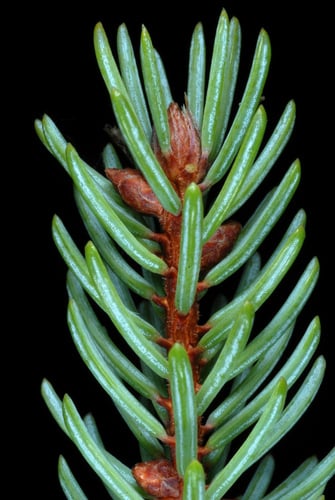
Picea mariana
Black spruce, Bog spruce, Swamp spruce
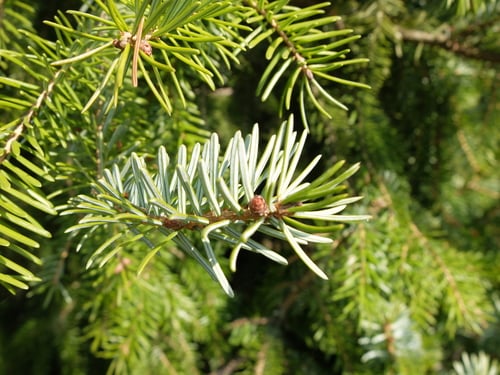
Picea omorika
Serbian spruce
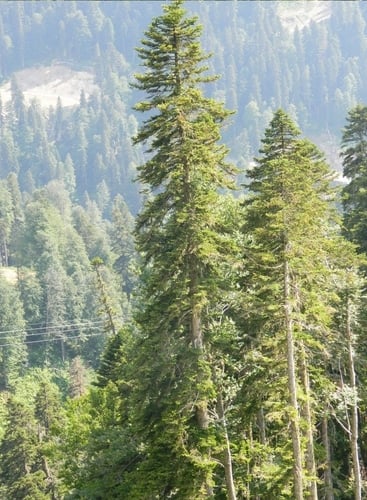
Picea orientalis
Caucasian spruce, Oriental spruce
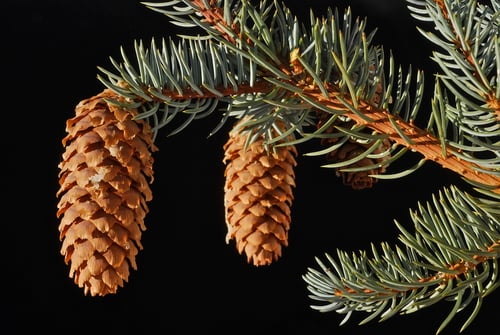
Picea pungens
Blue spruce, Colorado spruce, Silver spruce
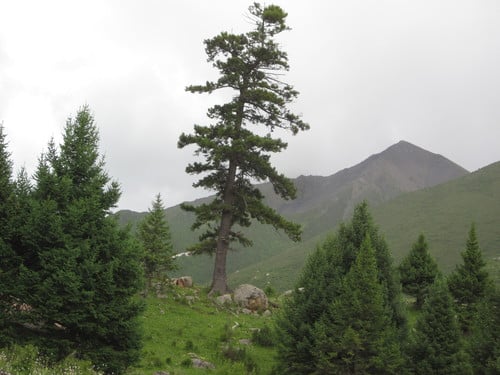
Picea purpurea
Purple-coned spruce, Zi guo yun shan
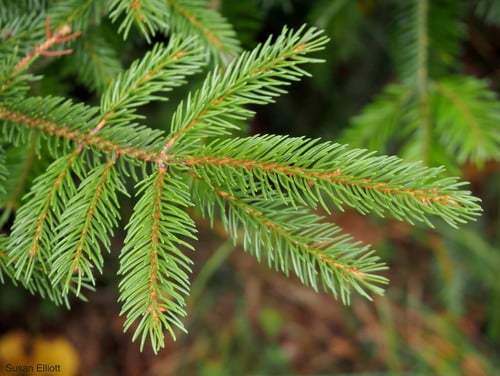
Picea rubens
Red spruce, Eastern spruce, Yellow spruce, He-balsam