Pinus sabiniana
Douglas ex D. Don
Digger pine, Gray pine
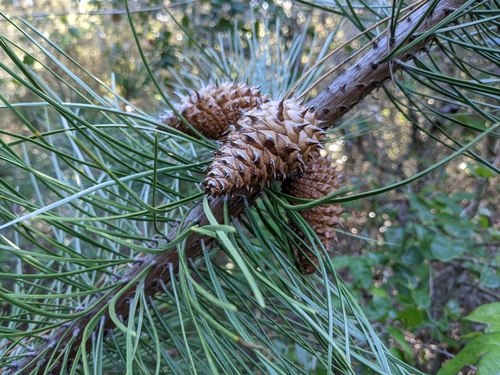
iNaturalist· cc-by-nc
(c) Helen Hancock, some rights reserved (CC BY-NC)
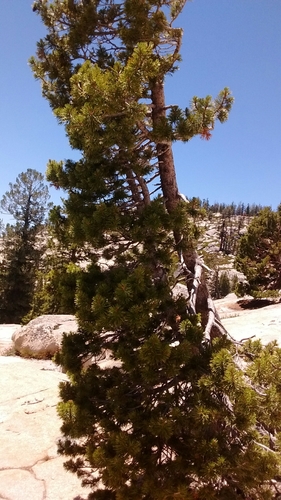
iNaturalist· cc-by-nc
(c) Susanna, some rights reserved (CC BY-NC)
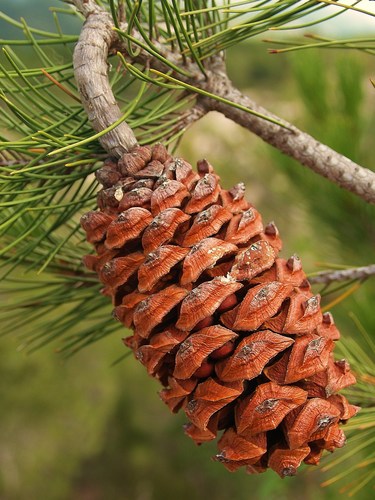
iNaturalist· cc-by-nc
(c) Susanna, some rights reserved (CC BY-NC)
Summary
Source: WikipediaPinus sabiniana (sometimes spelled P. sabineana) is a pine endemic to California in the United States. Its vernacular names include towani pine, foothill pine, gray pine, ghost pine, and bull pine. The name digger pine was historically used but includes a racial slur.
Description
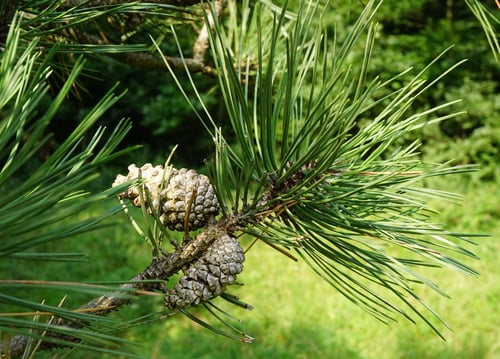
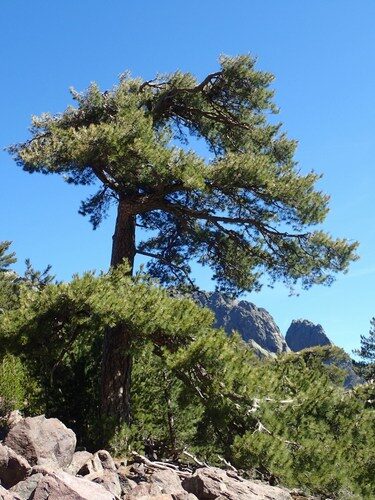
A medium sized tree. It grows 21 m high and spreads 6 m wide. The crown is irregular in shape. The trunk is often forked. The trunk is often free of branches for considerable height. The leaves are grey-green and are drooping. They can be 17-32 cm long. The cones are large up to 15-25 cm long. They can remain on the tree for 7 years after the nuts have fallen. The cones have heavy spikes. The seeds are edible. The seeds are 2 cm long.
Edible Uses
The seeds can be eaten raw or cooked and were an important staple food for local Native Americans. Sweet, large, and only slightly resinous, they are excellent as a food source. Each seed is up to 25mm long and 8mm wide with a thick shell, and contains 28% protein and 51% fatty oil. Green cones, roasted for about 20 minutes, become soft and syrupy in the centre and are much relished by local Indians. The inner bark can be eaten raw or cooked; it can be used fresh, or dried, ground into a powder, and used as a soup thickener or added to cereal flours when making bread. It is considered an emergency food, used only when better options are not available. A gummy exudation from the tree is chewed. The leaves are used as a tea substitute. A vanillin flavouring is obtained as a by-product of resins released from the pulpwood.
Traditional Uses
The seeds are eaten raw or roasted. It can be ground into meal. The soft centre of the green cones is roasted and eaten. The leaves are used for tea.
Medicinal Uses
The turpentine derived from pine resin is antiseptic, diuretic, rubefacient, and vermifuge. Taken internally, it is a valuable remedy for kidney and bladder complaints, and is used both internally and as a rub or steam bath for rheumatic conditions. It also benefits the respiratory system, making it useful against diseases of the mucous membranes and complaints such as coughs, colds, influenza, and TB. Externally, it treats skin complaints, wounds, sores, burns, and boils, and is applied as liniment plasters, poultices, herbal steam baths, or inhalers. The yellow pitch-like gum is used as a protective healing covering for burns and sores. Twigs are used in sweat baths to treat rheumatism: they are laid over hot rocks, the patient lies on them, and water is occasionally sprinkled onto the rocks so that steam and volatile pine oil are continuously released. The patient remains in this environment for 8–10 hours, sweating profusely, and is said to invariably be able to move without pain afterwards.
Known Hazards
The wood, sawdust and resins from various species of pine can cause dermatitis in sensitive people.
Distribution
It is a temperate plant. It is drought tolerant. It can grow in cold climates down to -7°C. It does best with hot dry summers. It suits hardiness zones 7-11. Hobart Botanical gardens.
Where It Grows
Asia, Australia, Britain, Europe, India, North America, Tasmania, USA,
Cultivation
Thrives in a light well-drained sandy or gravelly loam. Succeeds in a heavy clay soil. Dislikes poorly drained moorland soils and shade. Established plants tolerate drought. This species is not hardy in the colder areas of the country, it tolerates temperatures down to between -5 and -10°c. The digger pine thrives in Britain. It is fast growing when young with annual height increases of 60cm not uncommon, but the trees are normally short-lived in cultivation. An open, round-topped tree, remarkable for the sparseness of its foliage. The cones are 15 - 25cm long, they open and shed their seed whilst still attached to the tree. Plants are strongly outbreeding, self-fertilized seed usually grows poorly. They hybridize freely with other members of this genus. This species is closely related to P. coulteri. The digger pine is cultivated on a small scale for timber in Europe. Leaf secretions inhibit the germination of seeds, thereby reducing the amount of plants that can grow under the trees. Plants in this genus are notably susceptible to honey fungus. Pine seeds are typically harvested in late summer to early autumn, usually from August to October (Northern Hemisphere), when cones begin to open and release seeds. Pine trees usually flower in spring, typically from March to June (Northern Hemisphere), depending on the species and climatic conditions. Growth rates vary significantly among pine species, but many can be considered fast-growing, reaching heights of 10 to 30 feet (3 to 9 meters) within 5 to 10 years, depending on species and environmental conditions. Pine species are generally not self-fertile; they require cross-pollination between different trees to produce seeds effectively.
Propagation
Sow seed in individual pots in a cold frame as soon as it is ripe, or in late winter if necessary. A short stratification of 6 weeks at 4°C can improve germination of stored seed. Plant seedlings into their permanent positions as soon as possible and protect them through their first winter or two. Because plants have a very sparse root system, early transplanting is important for good establishment. Trees should be moved to their final positions when small — between 30 and 90cm — though in practice planting out at around 5–10cm tall works well, provided a thorough weed-excluding mulch is used. Larger transplants establish poorly, putting on little growth for several years, which also compromises root development and wind resistance. Cuttings can be taken, but this method only works on trees less than 10 years old. Use single leaf fascicles with the base of the short shoot attached. Disbudding the shoots a few weeks before taking cuttings can improve success. Cuttings are generally slow to grow away.
Other Uses
The tree yields an essential oil called 'Abietine' — colourless with the odour of oranges — obtained by distilling the resinous juices. A tan or green dye is obtained from the needles. The needles contain terpene, which is released by rain and negatively affects the germination of some plants, including wheat. Oleo-resins are present in all pine species but are often insufficient for economical extraction; they are obtained by tapping the trunk or by destructive distillation of the wood, with warmer-region trees giving higher yields. Turpentine makes up an average of 20% of the oleo-resin and is separated by distillation for use as a solvent, in varnish-making, and medicinally. The remaining rosin is used on violin bows and in sealing wax and varnish. Pitch from the resin is used for waterproofing and wood preservation, and has also been used as an adhesive for mending pottery. Twigs and rootlets are used as sewing material for coiled and twined baskets. The wood is light, soft, not strong, close-grained, and brittle. Though a poor lumber, it is a good firewood that generates considerable heat when properly seasoned.
Production
It is fairly fast growing and fairly short lived.
Notes
There are over 100 species of Pinus.
Synonyms
Also Known As
California foothill pine, Bull Pine, Gray Pine. The term "digger pine" is no longer commonly used because it is considered a derogatory, racial slur against Native American peoples who historically gathered the tree’s seeds. The tree is now officially referred to as gray pine, foothill pine, or ghost pine(Pinus sabiniana). Reasons for the Name Change and Disuse: Offensive Terminology: "Digger" was a pejorative term used by 19th-century settlers to describe Native Americans in California, based on their practice of foraging for food. Renaming Efforts: Organizations and botanists, including the Native Plant Society, have moved to replace the name to show respect and avoid using slurs.
References (23)
- Ambasta, S.P. (Ed.), 2000, The Useful Plants of India. CSIR India. p 459
- Beckstrom-Sternberg, Stephen M., and James A. Duke. "The Foodplant Database." http://probe.nalusda.gov:8300/cgi-bin/browse/foodplantdb.(ACEDB version 4.0 - data version July 1994)
- Bocek, B. R., 1984, Ethnobotany of Costanoan Indians, California, Based on Collections by John P. Harrington. Economic Botany 38(2): 240-255
- Brickell, C. (Ed.), 1999, The Royal Horticultural Society A-Z Encyclopedia of Garden Plants. Convent Garden Books. p 803
- Ciesla, W.M., 1998, Non-wood forest products from conifers. Non-wood forest products 12, FAO, Rome, p 72
Show all 23 references Hide references
- Cundall, P., (ed.), 2004, Gardening Australia: flora: the gardener's bible. ABC Books. p 1050
- Elias, T.S. & Dykeman P.A., 1990, Edible Wild Plants. A North American Field guide. Sterling, New York p 193
- Esperanca, M. J., 1988. Surviving in the wild. A glance at the wild plants and their uses. Vol. 1. p 308
- Facciola, S., 1998, Cornucopia 2: a Source Book of Edible Plants. Kampong Publications, p 171
- Glowinski, L., 1999, The Complete Book of Fruit Growing in Australia. Lothian. p 134
- Hall, N. et al, 1972, The Use of Trees and Shrubs in the Dry Country of Australia, AGPS, Canberra. p 398
- Hedrick, U.P., 1919, (Ed.), Sturtevant's edible plants of the world. p 498
- Hibbert, M., 2002, The Aussie Plant Finder 2002, Florilegium. p 235
- Kermath, B. M., et al, 2014, Food Plants in the Americas: A survey of the domesticated, cultivated and wild plants used for Human food in North, Central and South America and the Caribbean. On line draft. p 662
- Krochmal, A. & Krochmal, C., 1982, Uncultivated Nuts of The United States. United States Department of Agriculture Forest Service. p 68
- A. B. Lambert, Descr. Pinus ed. 3, 2: unnumbered page between 144 and 145, t. 80. 1832
- Lyle, S., 2006, Discovering fruit and nuts. Land Links. p 328
- Menninger, E.A., 1977, Edible Nuts of the World. Horticultural Books. Florida p 155
- Moerman, D. F., 2010, Native American Ethnobotany. Timber Press. p 412
- Plants for a Future database, The Field, Penpol, Lostwithiel, Cornwall, PL22 0NG, UK. http://www.scs.leeds.ac.uk/pfaf/
- Phillips, R. & Rix, M., 2002, The Botanical Garden Vol. 1. Trees and Shrubs. MacMillan. p 50
- Saunders, C.F., 1948, Edible and Useful Wild Plants. Dover. New York. p 75
- Wickens, G.E., 1995, Edible Nuts. FAO Non-wood forest products. FAO, Rome. p176