Ananas bracteatus
(Lindley) Schultes
Red pineapple, Ananas bravo
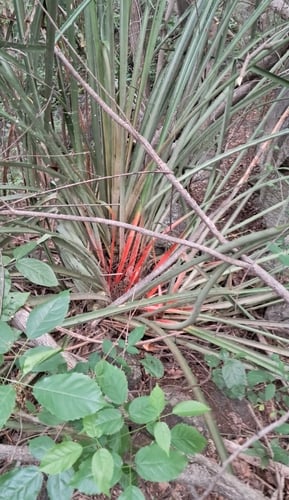
iNaturalist· cc-by-nc
(c) Fernando Federico, some rights reserved (CC BY-NC)
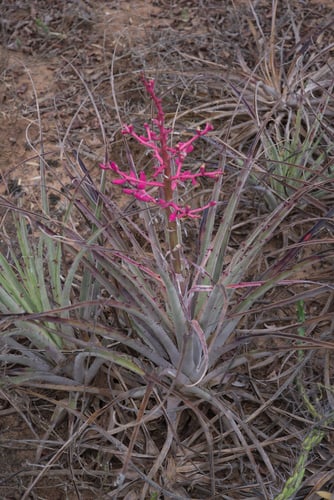
iNaturalist· cc-by-nc
(c) Fernando Federico, some rights reserved (CC BY-NC)
iNaturalist· cc-by-nc
(c) Fernando Federico, some rights reserved (CC BY-NC)
Description
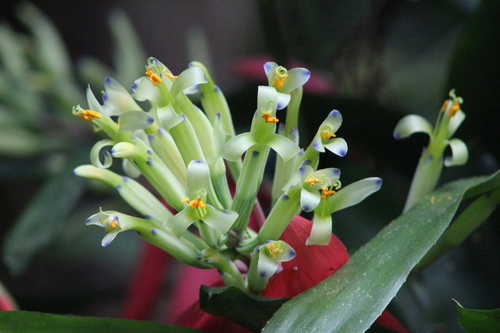
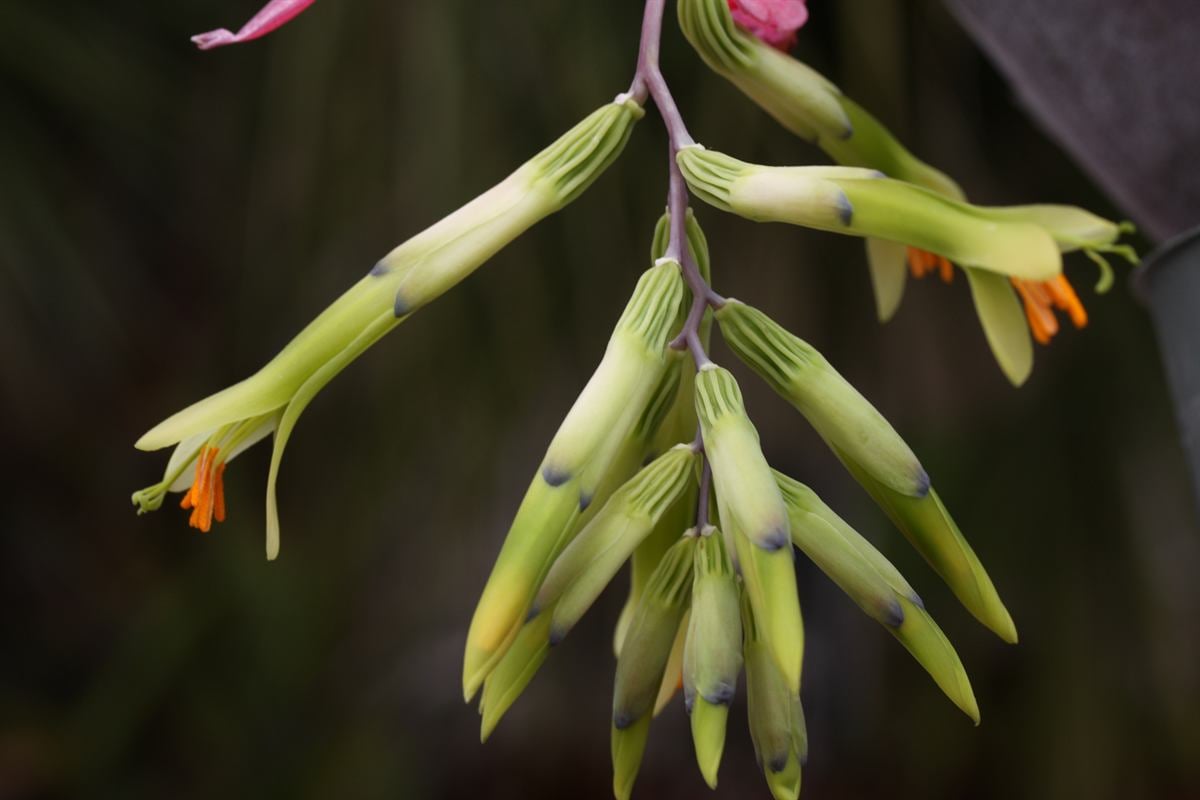
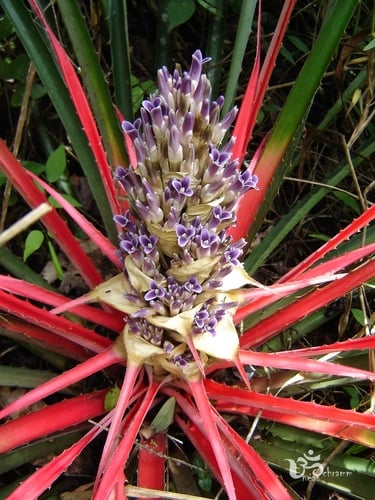
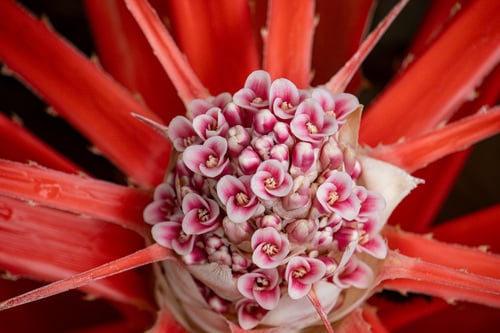
A prickly herb. It grows 90 cm high and spreads 90 cm wide. The leaves have teeth along the edge. It is very similar to pineapple but more prickly and it has seeds. The fruit are juicy and sweet. They are a pinkish-yellow.
Edible Uses
The flesh and juice of the pineapple are used in cuisines around the world. In many tropical countries, pineapple is prepared and sold on roadsides as a snack. It is sold whole or in halves with a stick inserted. Whole, cored slices with a cherry in the middle are a common garnish on hams in the West. Chunks of pineapple are used in desserts such as fruit salad, as well as in some savory dishes, including Hawaiian pizza, or as a grilled ring on a hamburger. Traditional dishes that use pineapple include hamonado, afritada, kaeng som pla, and Hawaiian haystack. Crushed pineapple is used in yogurt, jam, sweets, and ice cream. The juice of the pineapple is served as a beverage, and it is also the main ingredient in cocktails such as piña colada and in the drink tepache. In the Philippines, a traditional jelly-like dessert called nata de piña has also been produced since the 18th century. It is made by fermenting pineapple juice with the bacteria Komagataeibacter xylinus. Pineapple vinegar is an ingredient found in both Honduran and Filipino cuisine, where it is produced locally. In Mexico, it is usually made with peels from the whole fruit, rather than the juice; however, in Taiwanese cuisine, it is often produced by blending pineapple juice with grain vinegar. The European Union consumed 50% of the global total for pineapple juice in 2012–2016. The Netherlands was the largest importer of pineapple juice in Europe. Thailand, Costa Rica and the Netherlands are the major suppliers to the European Union market in 2012–2016. Countries consuming the most pineapple juice in 2017 were Thailand, Indonesia and the Philippines, having a combined consumption of 47% of the world total. The consumption of pineapple juice in China and India is low compared to their populations.
Traditional Uses
The fruit pulp is eaten raw and also used for drinks. The cooked outer layer is used for drinks.
This uses section is brief — help expand it
Medicinal Uses
Pineapple fruits and peels contain diverse phytochemicals, among which are polyphenols, including gallic acid, syringic acid, vanillin, ferulic acid, sinapic acid, coumaric acid, chlorogenic acid, epicatechin, and arbutin. Present in all parts of the pineapple plant, bromelain is a mixture of proteolytic enzymes. It is present in stem, fruit, crown, core, leaves of pineapple itself. Bromelain is under preliminary research for treatment of a variety of clinical disorders, but has not been adequately defined for its effects in the human body, although studies have shown anti-inflammatory effects." Add new citations to this new phrase. Bromelain may be unsafe for some users, such as in pregnancy, allergies, or anticoagulation therapy. Having sufficient bromelain content, raw pineapple juice may be useful as a meat marinade and tenderizer. Although pineapple enzymes can interfere with the preparation of some foods or manufactured products, such as gelatin-based desserts or gel capsules, their proteolytic activity responsible for such properties may be degraded during cooking and canning. The quantity of bromelain in a typical serving of pineapple fruit is probably not significant, but specific extraction can yield sufficient quantities for domestic and industrial processing.
Distribution
A warm temperate plant. It needs a sunny location and well-drained soil. It is damaged by drought and frost. In Argentina it grows from sea level to 700 m above sea level. It suits hardiness zones 9-10.
Where It Grows
Amazon, Argentina, Australia, Bolivia, Brazil*, Colombia, Ecuador, Guianas, Hawaii, Pacific, Paraguay, Peru, South America, Suriname, USA,
Cultivation
Plants are grown by division.
Production
Fruit weigh about 1 kg. One plant can produce up to 6 fruit in 3 years.
Other Information
It is cultivated.
Notes
There are about 7 Ananas species.
Synonyms
Also Known As
Anana, Caraguata, Carauata, Chiviya, Grata de cerca, Nana, Nanas, Pina
References (22)
- Bircher, A. G. & Bircher, W. H., 2000, Encyclopedia of Fruit Trees and Edible Flowering Plants in Egypt and the Subtropics. AUC Press. p 26 (Also as Ananas fritzmuelleri)
- Bodkin, F., 1991, Encyclopedia Botanica. Cornstalk publishing, p 78
- Bol. Tecn. Inst. Agron. N. 1:16, figs. 2, 3. 1943 (As Ananas fritzmuelleri)
- Brack, P., et al, 2020, Frutas nativas do Rio Grande do Sul, Brasil: riqueza e potencial alimentício. Native fruits of Rio Grande do Sul, Brazil: richness and potential as food. Rodriguésia 71: e03102018.
- Coppens d'Eeckenbrugge, G., F.Leal and M.F.Duval. 1997. Germplasm resources of pineapple. Hort. Rev., 21: 133-175. (Also as Ananas fritzmuelleri)
Show all 22 references Hide references
- Cundall, P., (ed.), 2004, Gardening Australia: flora: the gardener's bible. ABC Books. p 149
- Hibbert, M., 2002, The Aussie Plant Finder 2002, Florilegium. p 27
- INFOODSUpdatedFGU-list.xls
- Kermath, B. M., et al, 2014, Food Plants in the Americas: A survey of the domesticated, cultivated and wild plants used for Human food in North, Central and South America and the Caribbean. On line draft. p 62
- Kinupp, V. F., 2007, Plantas alimenticias nao-convencionais da regiao metropolitana de Porto Alegre, RS, Brazil p 70
- Kinupp, V. F. & Bergman, I., 2008, Protein and minerals of native species, potential vegetables and fruits. Cienc.Tecnol. Aliment. Vol. 28 No. 4 Campinas Oct/Dec.
- Leal, M. L. et al, 2018, Knowledge, use, and disuse of unconventional food plants. Journal of Ethnobiology and Ethnomedicine (2018) 14:6
- Lyle, S., 2006, Discovering fruit and nuts. Land Links. p 64
- Lopez-Diago, D. & Garcia, N., 2021, Wild edible fruits of Colombia. Biota ColomBiana 22 (2) p 33
- Martin, F. W., et al, 1987, Perennial Edible Fruits of the Tropics. USDA Handbook 642 p 84
- Pickersgill, B., 1979, Pineapple, in Simmonds N.W.,(ed), Crop Plant Evolution. Longmans. London. p 15 (Also as Ananas fritzmuelleri)
- Roa, J. A. G. & Boada, D. S. G., 2018, Fundación para el Fortalecimiento de la Fruticultura y Plantas Alimenticias no Convencionales en Colombia.
- Smith, L. B. & R. J. Downs, 1979, Bromelioideae (Bromeliaceae), Flora Neotropica, 14(3): 1493--2142 (As Ananas fritzmuelleri)
- Syst. veg. 7(2):1286. 1830
- Torre, de la, L., et al, 2008, Enciclopedia de las Plantas Útiles del Ecuador. Herbario QCA. Pontificia Universidad Católica del Ecuador. p 259
- Wiersema, J. H. & Leon, B., 2013, World Economic Plants. A Standard Reference CRC Press. 2nd Ed. p 50 (As Ananas comosus var. bracteatus)
- www.colecionandofrutas.org