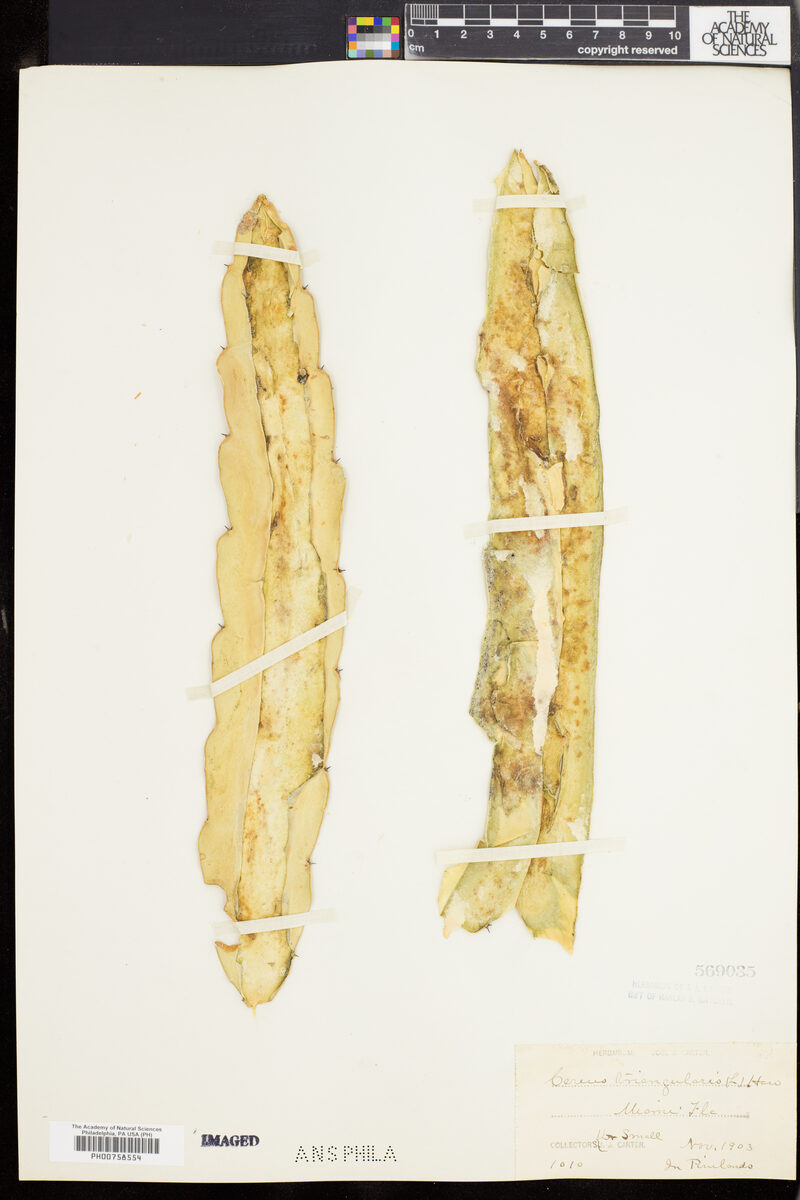
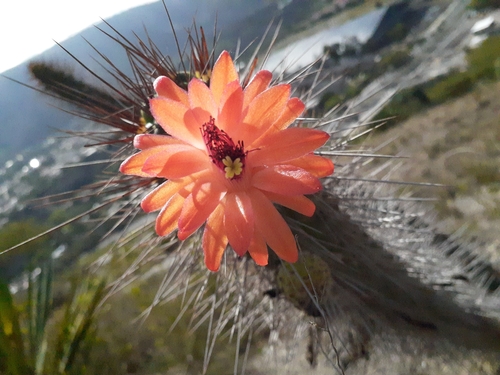
Pilosocereus gounellei
(F. A. C. Weber) Byles & G. D. Rowley
Xiquexique
iNaturalist· cc-by-nc
(c) pedrocallado, some rights reserved (CC BY-NC)
iNaturalist· cc-by-nc
(c) Martin Lowry, some rights reserved (CC BY-NC)
iNaturalist· cc-by-nc
(c) Martin Lowry, some rights reserved (CC BY-NC)
Description
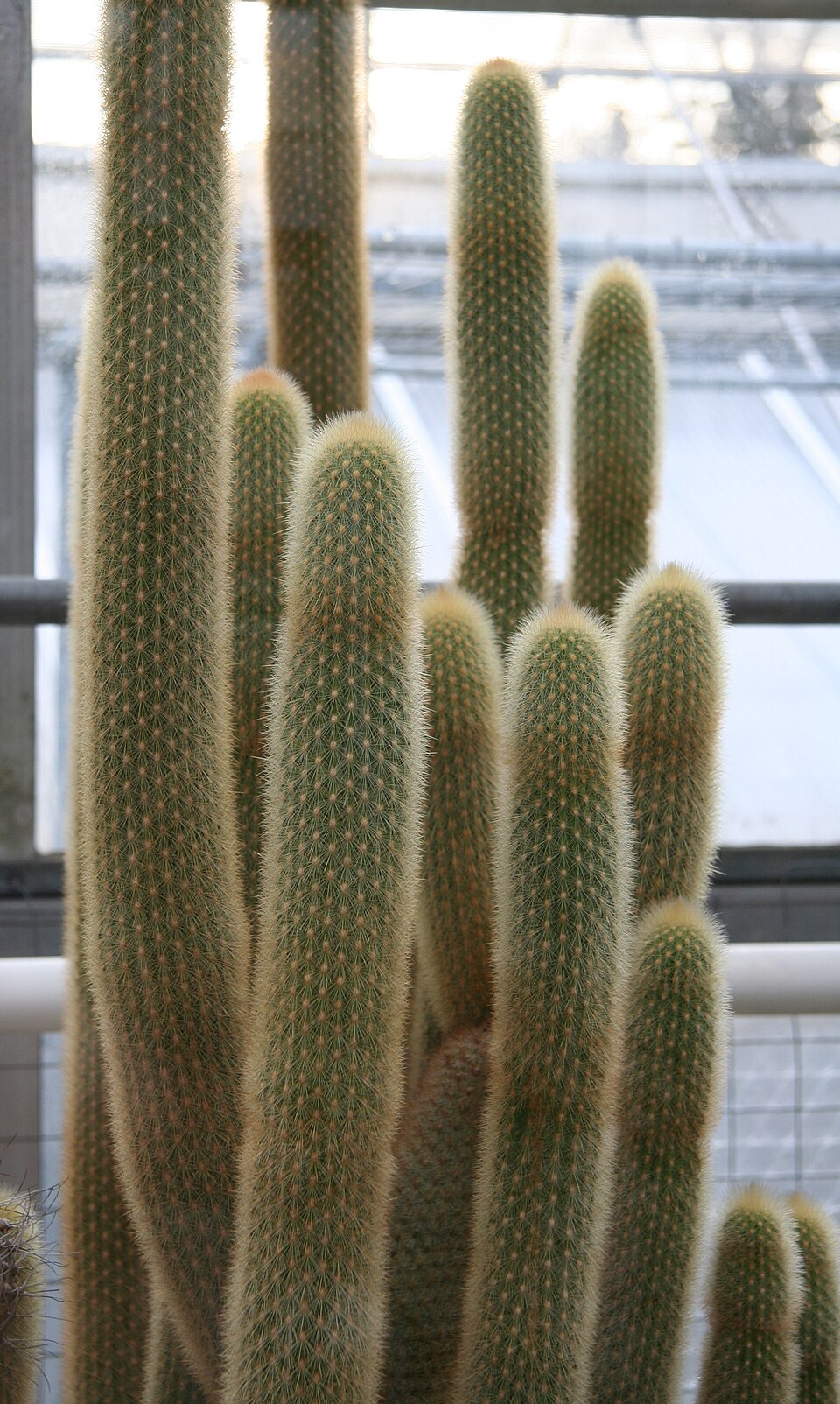
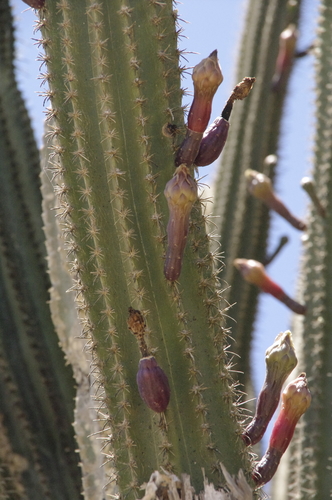
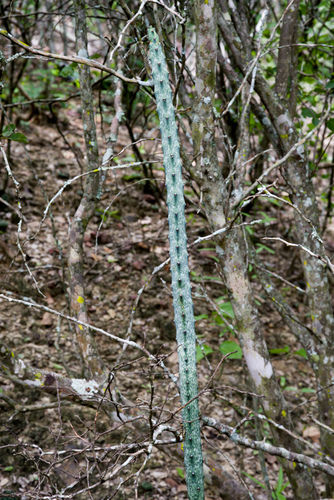
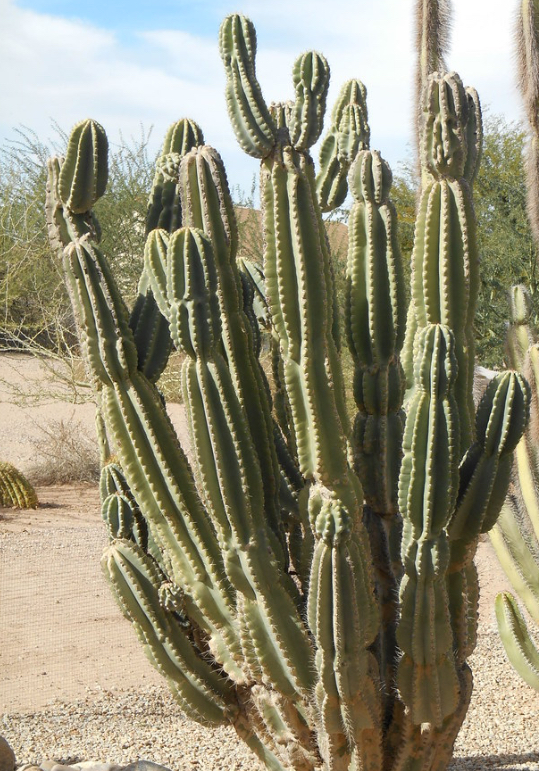
A branched cactus. It is shrubby or almost treelike. It grows 0.5-4 m high. It has several branches from the main stem. The stems are erect but can lie over with age. The stems are 3.7-9 cm across. New stems arise just below the tip and are olive green. There are 8-15 ribs. There are 1-10 central spines and 10-20 spines around it. The flowers have hairs around them. The flowers are funnel shaped. They are 4-9 cm long by 2.5-6 cm wide. The fruit are round. They are 4.5-6 cm across.
Edible Uses
The inner pith of the stem is processed by removing spines and woody sheath, then pulverized and heated over fire for 15 minutes before the woody rind is removed and the pith is ground into flour. The fruit is also edible.
Traditional Uses
The spines and woody sheath of the stem are removed then the inner pith is pulverised and held over the fire for 15 minutes. The woody rind is removed. The pith is then pulverised to produce flour.
Distribution
A tropical plant.
Where It Grows
Brazil*, South America,
Other Information
It is a famine food.
Notes
Chemical composition (pith): Moisture = 89.0%. Protein = 0.73%. Starch = 1.37%. Minerals = 1.75%. Fibre (crude, etc. = 7.15%. Ash (total): CaO = 8.55% (0.15% in pith). Fe203= 0.15% (0.003% in pith).
Synonyms
Also Known As
Alastrado, Chique-chique, Sheeke-sheeke
References (8)
- Anderson, E.F., 2001, The Cactus Family, Timber Press. p 580
- Anderson, M., 2002, The World Encyclopedia of Cacti and Succulents. Hermes House, New York. p 104 (Genus)
- DE Castro,
- de Lucena, et al, 2013, Use and knowledge of Cactaceae in Northeastern Brazil. Journal of Ethnobiology and Ethnomedicine 2013, 9:62
- Fagg, C. W. et al, 2015, Useful Brazilian plants listed in the manuscripts and publications of the Scottish medic and naturalist George Gardner (1812–1849). Journal of Ethnopharmacology 161 (2015) 18–29
Show all 8 references Hide references
- INFOODS:FAO/INFOODS Databases
- Kermath, B. M., et al, 2014, Food Plants in the Americas: A survey of the domesticated, cultivated and wild plants used for Human food in North, Central and South America and the Caribbean. On line draft. p 657
- Nascimento, V. T. D., et al, 2013, Knowledge and Use of Wild Food Plants in Areas of Dry Seasonal Forests in Brazil. Ecology of Food and Nutrition, 52:317–343