Echinocactus platyacanthus
Link & Otto
Giant barrel cactus, Giant viznaga, Large barrel cactus
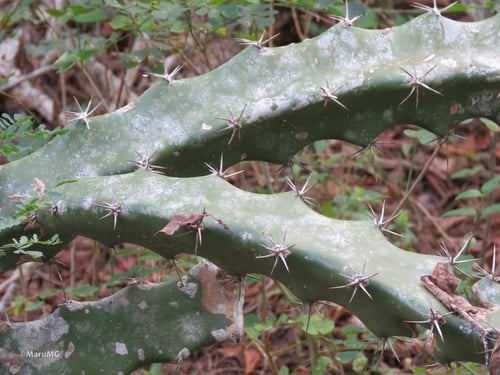
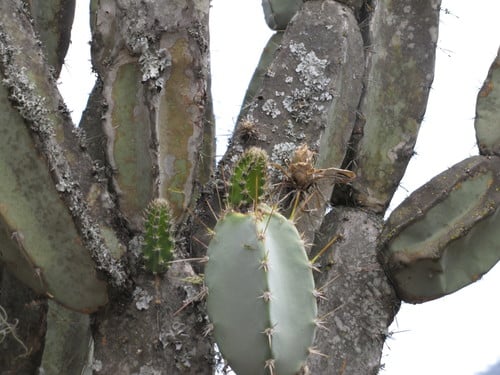
iNaturalist· cc-by-nc
(c) CARLOS VELAZCO, some rights reserved (CC BY-NC), uploaded by CARLOS VELAZCO
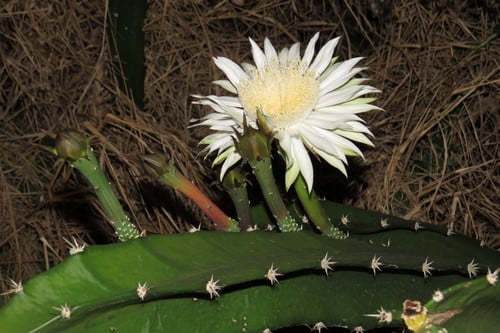
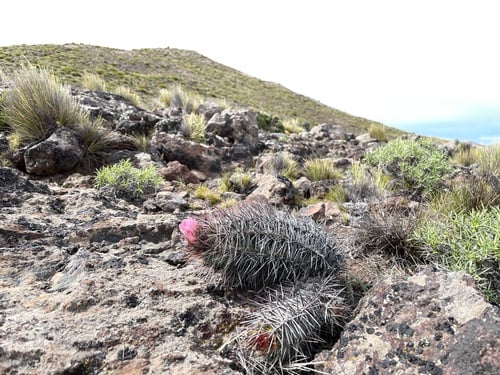
iNaturalist· cc-by-nc
(c) Leticia Soriano Flores, some rights reserved (CC BY-NC)
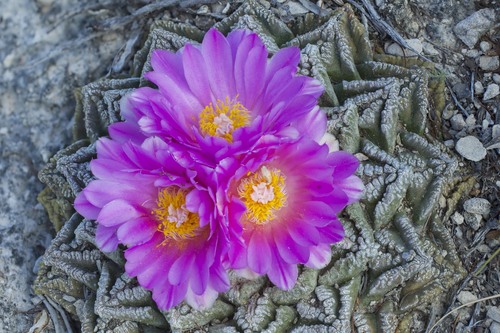
iNaturalist· cc-by-nc
(c) Ricardo Arredondo T., some rights reserved (CC BY-NC)
Summary
Source: WikipediaEchinocactus platyacanthus is a member of the cactus family Cactaceae. It is also known as the giant barrel cactus, golden barrel cactus, giant viznaga, or biznaga de dulce, and its Nahuatl (Aztec) name is huitzli nahual.. It is native to central Mexico in the Chihuahuan Desert. This species is the largest of the barrel cacti. In Mexico, its hairs are often used for weaving; and acitrón, a traditional Mexican candy, is produced by boiling the cactus pith.
Description
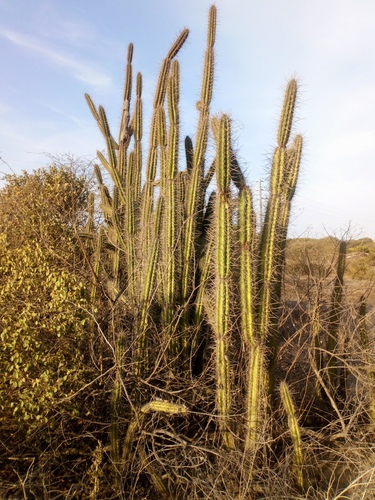
A cactus. It grows 2.4 m tall and spreads 90 cm wide. It has a single stem. It is round when young but then grows like a tall column. It has up to 60 ribs. These have strong spines along them. The spines are 8 cm long. The flowers are yellow-green and 5 cm long by 8 cm across. The fruit are oblong and yellowish. They are 5-7 cm long.
Edible Uses
The stem and fruit are edible.
Distribution
It grows best in light to medium, well-drained soils. It needs an open sunny position. It is resistant to frost and drought. It suits hardiness zones 9-11. Brisbane Botanical gardens.
Where It Grows
Australia, Mexico, North America, USA,
Synonyms
Also Known As
Biznaga burra, Biznaga de dulce, Biznaga Gigante, Burra
References (16)
- Anderson, E.F., 2001, The Cactus Family, Timber Press p 228
- Astrada, E., et al, 2007, Ethnobotany in the Cumbres de Monterrey National Park, Nuevo Leon, Mexico. Journal of Ethnobiology and Ethnomedicine 3:8
- Bodkin, F., 1991, Encyclopedia Botanica. Cornstalk publishing, p 371 (As Echinocactus ingens)
- Casas, A., et al, 2016, Ethnobotany for Sustainable Ecosystem Management: A Regional Perspective in the Tehuacán Valley. In Lira, R.,et al (eds.) Ethnobotany of Mexico. Springer Chp. 8 p 199
- Castillo, del R. F. & Trujillo, S., 1991, Ethnobotany of Ferocactus histrix and Echinocactus playacanthus (Cactaceae) in the Semiarid Central Mexico: Past, Present and Future. Economic Botany, Vol. 45, No. 4, pp. 495-502
Show all 16 references Hide references
- Cundall, P., (ed.), 2004, Gardening Australia: flora: the gardener's bible. ABC Books. p 526
- Estrada-Castillon, E., et al, 2014, Ethnobotany in Rayones, Nuevo Leon, Mexico. Journal of Ethnobiology and Ethnomedicine, 10:62
- Facciola, S., 1998, Cornucopia 2: a Source Book of Edible Plants. Kampong Publications, p 63 (Also as Echinocactus grandis and Echinocactus ingens)
- Hibbert, M., 2002, The Aussie Plant Finder 2002, Florilegium. p 90 (As Echinocactus grandis)
- Kermath, B. M., et al, 2014, Food Plants in the Americas: A survey of the domesticated, cultivated and wild plants used for Human food in North, Central and South America and the Caribbean. On line draft. p 327 (As Echinocactus grandis and Echinocactus ingens)
- Kiple, K.F. & Ornelas, K.C., (eds), 2000, The Cambridge World History of Food. CUP p 1727 (As Echinocactus grandis)
- Kunkel, (As Echinocactus ingens)
- Piedra-Malagón, E. M. et al, 2022, Edible native plants of the Gulf of Mexico Province. Biodiversity Data Journal 10: e80565 p 15
- Segura, S. et al, 2018, The edible fruit species in Mexico. Genet Resour Crop Evol (2018) 65:1767–1793
- Subik, R. & Kunte, L., 2003, The Complete Encyclopedia of Cacti. Rebo International. p 13
- World Checklist of Useful Plant Species 2020. Royal Botanic Gardens, Kew