Echinocereus coccineus
Engelmann
Arizona hedgehog, California hedgehog, Cream-flowered hedgehog, Golden rainbow hedgehog, Mexican claret-cup cactus, White-spined claret-cup cactus
iNaturalist· cc0
no rights reserved, uploaded by Craig Martin
iNaturalist· cc-by-nc
(c) Mart Hughes, some rights reserved (CC BY-NC), uploaded by Mart Hughes
iNaturalist· cc-by-nc
(c) Mart Hughes, some rights reserved (CC BY-NC), uploaded by Mart Hughes
Summary
Source: WikipediaEchinocereus coccineus (scarlet hedgehog cactus) is a species of hedgehog cactus. Its native to Northern and Central America. It grows on full sun, in sandy or rocky well-drained soil. It can survive in hardiness zones 5-9.
Description
A spiny cactus. They form mounds. These can be 1 m across. The stems are 7 cm across and the offsets form clusters 35 cm across. There are 5-12 ribs. The flowers are red. They are funnel shaped.
Edible Uses
The fruits are edible and widely reported as good, but they are not reliably harvestable at scale because many fruits are emptied by ants and fruiting can be erratic. Edible Uses & Rating. Fruits are the primary edible part; treat it as an occasional forager’s bonus rather than a dependable staple. Overall food rating: good fruit quality when you beat the ants, low reliability as a “harvest-class” resource (matching your project framing). Taste, Processing & Kitchen Notes. When intact and fully ripe, hedgehog cactus fruits are commonly described as pleasant and sweet, with scarlet/claret types often singled out as among the best in the genus. Practical handling is dominated by de-spining: spine clusters on Echinocereus fruits tend to detach readily, so careful brushing and minimal handling usually work better than aggressive scraping (which can drive spines into pulp). In real use, the “kitchen note” is simple: always open the fruit to check whether ants have hollowed it out, because an intact-looking fruit can be an empty shell. Seasonality (Phenology). Typically flowers in late spring and fruits from early to mid-summer in much of the Southwest, with timing shifting earlier at low elevations and later at higher elevations (this follows your genus-level note that Echinocereus fruits are generally early–mid summer after spring bloom). Safety & Cautions (Food Use). The core safety issue is mechanical rather than chemical: spines on the fruit and plant can cause injury, and spines may persist even after brushing. A second “safety” issue is conservation—some Echinocereus populations/varieties are protected in parts of their range, so harvest should be avoided where collection is restricted. Harvest & Processing Workflow. Harvest only fruits that are clearly mature and colored, then immediately inspect by splitting or opening; if the interior is dry and hollowed, discard. Gently brush off detachable spine clusters before opening further. Eat fresh as a snack, or scoop pulp and seeds and strain if you want a smoother product, keeping spines out of the edible portion at every step. Cultivar/Selection Notes. In horticulture, scarlet-flowering forms are often selected for flower color and cold tolerance rather than fruit yield. For food value, selection is mostly about finding local colonies that actually set intact fruit despite ants, rather than named cultivars. Look-Alikes & Confusion Risks. Within cactus communities, confusion is more likely among Echinocereus species than with other genera: the diagnostic “package” is ribbed stems plus laterally borne, spiny flowers and spiny fruits. Unlike some Mammillaria (fishhook cacti), Echinocereus central spines are not hooked (a helpful field separator based on your genus notes). Traditional/Indigenous Use Summary. Fruits of several Echinocereus species were traditionally eaten in parts of the Southwest and adjacent regions, they are better viewed as supplemental seasonal fruits rather than major staples because of inconsistent harvestability.
Medicinal Uses
Echinocereus coccineus, commonly known as the Scarlet Hedgehog Cactus or Claret-cup Cactus, has a history of traditional medicinal uses, particularly among Native American tribes in the Southwestern United States. Traditional Medicinal Uses: Heart Medicine: The Navajo used this plant as a heart stimulant. Topical Applications: The pulp of the cactus was used as a poultice to treat wounds or as a cooling agent for skin irritations. Veterinary Use: In some regions, it has been used in local veterinary medicine for treating broken bones. Other Uses: Edible Fruit: The red, strawberry-flavored fruit is edible and was collected by indigenous peoples. Ornamental: It is widely grown in rock gardens due to its bright red-orange flowers. Note of Caution: Some sources indicate that while used medicinally, the plant is also considered poisonous in some contexts or may cause intoxication, so it should be used with caution. It is not a substitute for professional medical advice.
Known Hazards
The core safety issue is mechanical rather than chemical: spines on the fruit and plant can cause injury, and spines may persist even after brushing. A second “safety” issue is conservation—some Echinocereus populations/varieties are protected in parts of their range, so harvest should be avoided where collection is restricted.
Distribution
It is a temperate plant. It can tolerate temperatures down to -10°C if dry. It grows best in light to medium, well drained soils. It needs an open sunny position.
Where It Grows
Australia, Mexico*, North America, USA,
Cultivation
Scarlet hedgehog cactus is an excellent wildlife-and-garden value in the right dry, rocky niche and can provide genuinely tasty fruit, when the season, fruit set, and ants allow. As a foraging target, it is “worth checking” rather than “worth relying on.” Growing Conditions. Full sun to very bright exposure, heat tolerant, and strongly dependent on fast drainage; in cultivation, winter wet is the common failure point for cold-hardy Echinocereus. Habitat & Range. Rocky slopes, desert edges, and open woodland/desert transition settings across portions of the Southwest, with local distribution depending on the taxonomic concept used for this variable complex. Size & Landscape Performance. Typically a low, clustering cactus forming mounds over time; strong ornamental performance when sited dry and sunny, with seasonal flower display as the main landscape feature. Cultivation (Horticulture). Plant in mineral, sharply drained soils; avoid rich irrigation regimes; use slope/berm planting or gritty mixes in colder/wetter climates to keep crowns dry. Pests & Problems. Ants are the defining “problem” for fruit harvest, often excavating fruits to empty shells (your project’s key field observation). In cultivation, rot from winter moisture is a frequent issue; rodents may occasionally damage plants. Identification & Habit. Ribbed, non-jointed stems; plants solitary or clustered; spines in areoles; flowers borne on the side of stems rather than strictly at the apex; fruits spiny and small, becoming dry as they age. Pollinators. Red-flowering hedgehog cacti are commonly serviced by hummingbirds and native bees in the Southwest, with the showy, nectar-rich flowers acting as strong spring resources (pattern consistent with red Echinocereus pollination ecology; claret-cup forms are especially associated with hummingbirds). Scarlet Hedgehog Cactus (Echinocereus coccineus). Family: Cactus family (Cactaceae). Genus: Echinocereus. Common names: Scarlet hedgehog cactus. USDA Hardiness Zones and size: Often grown as a cold-hardy cactus where well drained; a conservative working range is about Zones 6–9, with local forms sometimes hardier in very dry, protected sites; typically about 10–30 cm tall, spreading 20–60+ cm by clustering over time (approximate, highly form- and site-dependent).
Propagation
Seed is the standard route for maintaining genetic diversity; offsets can be rooted where clumping forms produce detachable stems. Seed-grown plants are slower but often more resilient long-term.
Notes
A large genus. There are about 60 Echinocereus species.
Synonyms
Also Known As
Scarlet Hedgehog Cactus (Echinocereus coccineus).
References (7)
- Andersohn, G., 1983, Cacti and Succulents. EP Publishing. p 69
- Anderson, E.F., 2001, The Cactus Family, Timber Press p 233
- Anderson, M., 2002, The World Encyclopedia of Cacti and Succulents. Hermes House, New York. p 63
- Beckstrom-Sternberg, Stephen M., and James A. Duke. "The Foodplant Database." http://probe.nalusda.gov:8300/cgi-bin/browse/foodplantdb.(ACEDB version 4.0 - data version July 1994)
- Bodkin, F., 1991, Encyclopedia Botanica. Cornstalk publishing, p 372
Show all 7 references Hide references
- Moerman, D. F., 2010, Native American Ethnobotany. Timber Press. p 206
- F. A. Wislizenus, Mem. tour N. Mexico 93. 1848
More from Cactaceae
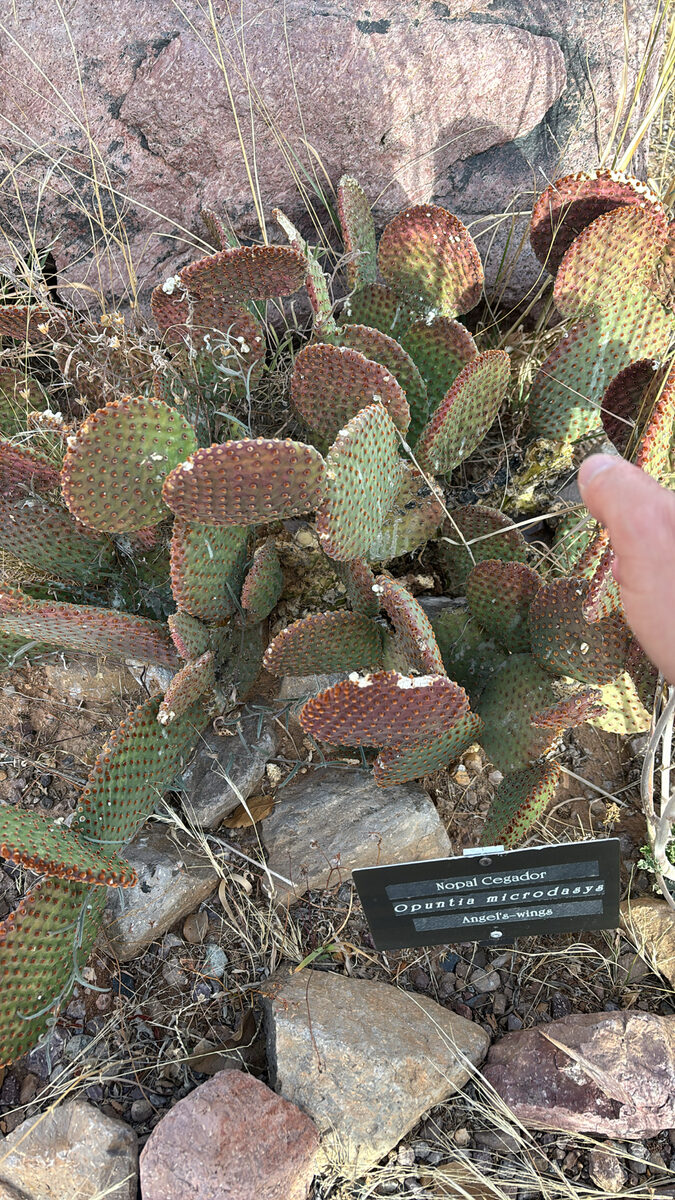
Opuntia microdasys - (Lehm.)Pfeiff.
Bunny Ears, Angel's-wings
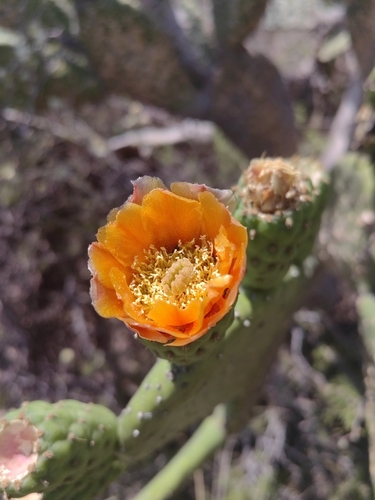
Opuntia paraguayensis
Arumbeva, Arumbe, Palmatoria, Palma
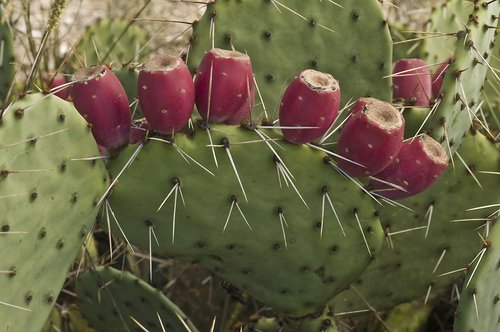
Opuntia phaeacantha var. camanchica
Tulip prickly pear
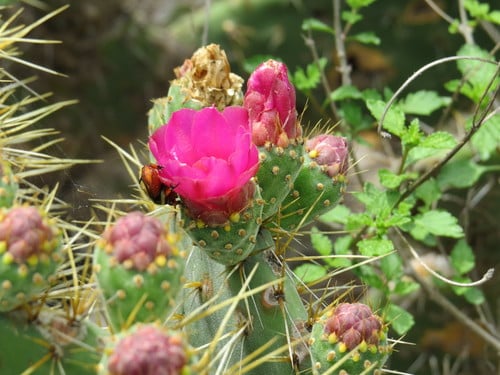
Opuntia pilifera
Nopal
Opuntia polyacantha
Plains Prickly Pear, El Paso pricklypear, Grizzlybear pricklypear, Navajo Bridge pricklypear, Hairsp
Opuntia pottsii
Prickly pear