Pilea glaberrima
(Blume) Blume
Hare gageleto, Gugeo
gbif· cc-by
Royal Botanic Gardens, Kew
gbif· cc-by
Royal Botanic Gardens, Kew
gbif· cc-by
Royal Botanic Gardens, Kew
Description
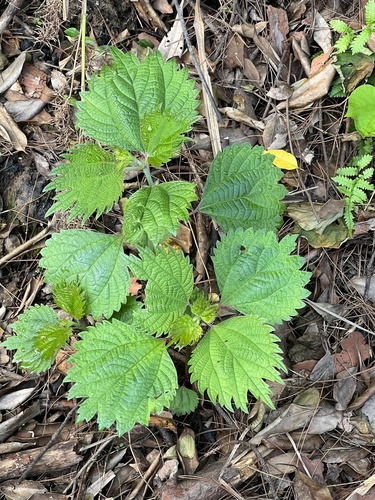
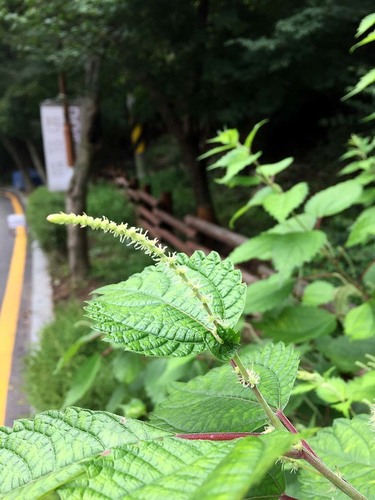
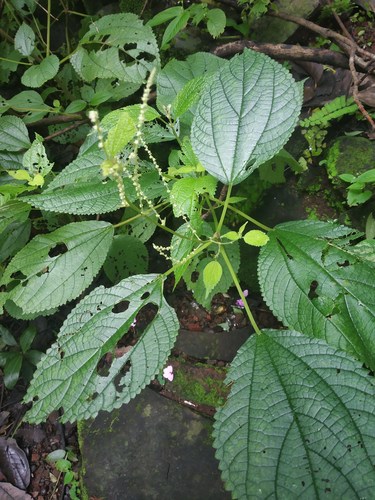
A herb. It grows about 1 m high. The leaves have stalks. The leaves are oval to sword shaped. They taper to the tip. They have 3 veins. They narrow towards the base. The flowers are white or yellow. The fruit is dry and smooth.
Edible Uses
The tender leaves are cooked as a vegetable.
Traditional Uses
The tender leaves are cooked as a vegetable.
This uses section is brief — help expand it
Distribution
A subtropical plant. It grows in Nepal between 300-2000 m altitude. In Indonesia it grows between 1,000-2,000 m above sea level. It grows in moist, rocky places. In Yunnan.
Where It Grows
Asia, Bhutan, China, Himalayas, India, Indochina, Indonesia, Myanmar, Nepal, Northeastern India, SE Asia, Sikkim,
Cultivation
Plants are grown from seed or root offshoots.
Other Information
It is a commercially cultivated vegetable.
Notes
There are about 250 species but 600 Pilea species have been named. They occur in tropical and warm temperate regions. Many in the tropics have not yet been described.
Synonyms
Also Known As
Guge ao, Popohan
References (14)
- Ambasta, S.P. (Ed.), 2000, The Useful Plants of India. CSIR India. p 455
- Arora, R. K., 2014, Diversity in Underutilized Plant Species - An Asia-Pacific Perspective. Bioversity International. p 44
- Dobriyal, M. J. R. & Dobriyal, R., 2014, Non Wood Forest Produce an Option for Ethnic Food and Nutritional Security in India. Int. J. of Usuf. Mngt. 15(1):17-37
- Flora of China @ efloras.org Volume 5
- Kays, S. J., and Dias, J. C. S., 1995, Common Names of Commercially Cultivated Vegetables of the World in 15 languages. Economic Botany, Vol. 49, No. 2, pp. 115-152
Show all 14 references Hide references
- Manandhar, N.P., 2002, Plants and People of Nepal. Timber Press. Portland, Oregon. p 364
- Martin, F.W. & Ruberte, R.M., 1979, Edible Leaves of the Tropics. Antillian College Press, Mayaguez, Puerto Rico. p 223
- Murtem, G. & Chaudhrey, P., 2016, An ethnobotanical note on wild edible plants of Upper Eastern Himalaya, India. Brazilian Journal of Biological Sciences, 2016, v. 3, no. 5, p. 63-81
- Mus. Bot. 2:54. 1856
- Ochse, J. J. et al, 1931, Vegetables of the Dutch East Indies. Asher reprint. p 721
- Srivastava, R. C., 2010, Traditional knowledge of Nyishi (Daffla) tribe of Arunachal Pradesh. Indian Journal of Traditional Knowledge. 9(1):26-37
- Thothathri, K., & Pal, G.D., 1987, Further Contribution to the Ethnobotany of Subansiri District, Aranchal Pradesh. J. Econ. Tax. Bot. Vol. 10 No. 1 pp 149-157
- Wiersema, J. H. & Leon, B., 2013, World Economic Plants. A Standard Reference CRC Press. 2nd Ed. p 527
- World Checklist of Useful Plant Species 2020. Royal Botanic Gardens, Kew