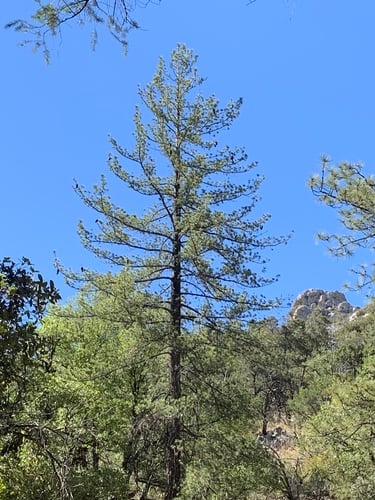
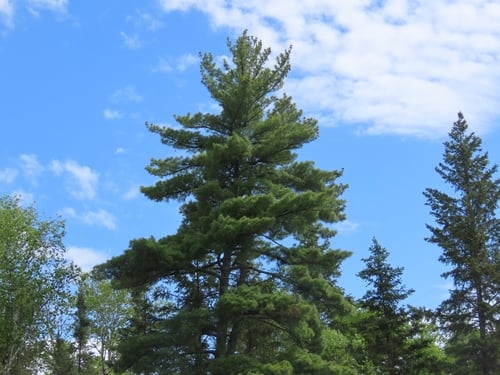
Pinus cembroides subsp. lagunae
(Robert-Passii) D. K. Bailey
gbif· cc-by-nc
Erik Atwell
gbif· cc-by-nc
Erik Atwell
gbif· cc-by-nc
Erik Atwell
Summary
Source: WikipediaPinus cembroides, also known as pinyon pine, Mexican pinyon, Mexican nut pine, and Mexican stone pine, is a pine in the pinyon pine group. It is a small pine growing to about 20 m (66 ft) with a trunk diameter of up to 50 cm (20 in). It is native to western North America. It grows in areas with low levels of rainfall and its range extends southwards from Arizona, Texas and New Mexico in the United States into Mexico. It typically grows at altitudes between 1,600 and 2,400 m (5,200 and 7,900 ft). The seeds are large and form part of the diet of the Mexican jay and Abert's squirrel. They are also collected for human consumption, being the most widely used pine nut in Mexico.
Description
A tree.
This description is brief — help expand it
Edible Uses
The seeds are widely collected in Mexico, being the main edible pine nut in the region. While palatable when raw, their flavor is considered to be improved when roasted.
Distribution
It is a tropical plant.
Where It Grows
Central America, Mexico, North America,
Notes
There are over 100 species of Pinus.
Synonyms
References (1)
- Ciesla, W.M., 1998, Non-wood forest products from conifers. Non-wood forest products 12, FAO, Rome, p 73 (As Pinus lagunae)