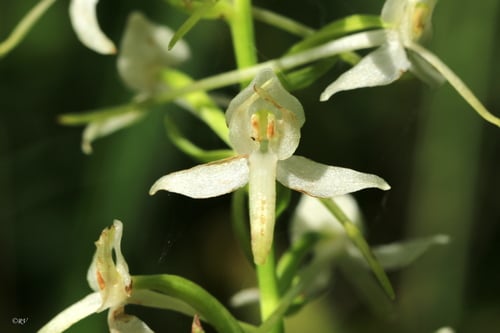
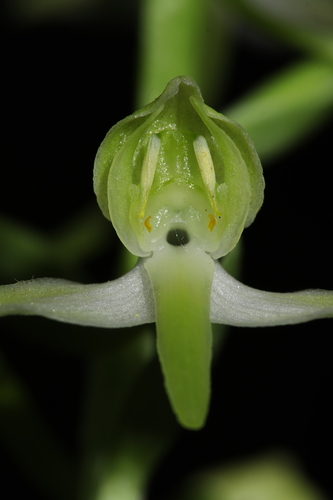
Anacamptis pyramidalis
(L.) Rich.
Pyramidal orchid
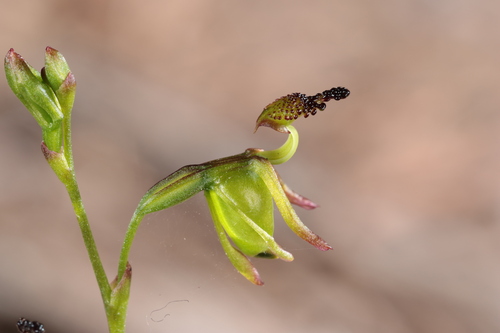
iNaturalist· cc-by-sa
(c) Zeynel Cebeci, some rights reserved (CC BY-SA)
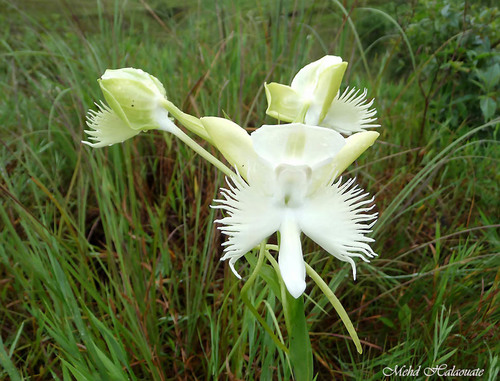
iNaturalist· cc-by-nc
(c) Sebastian J. Dunkl, some rights reserved (CC BY-NC), uploaded by Sebastian J. Dunkl
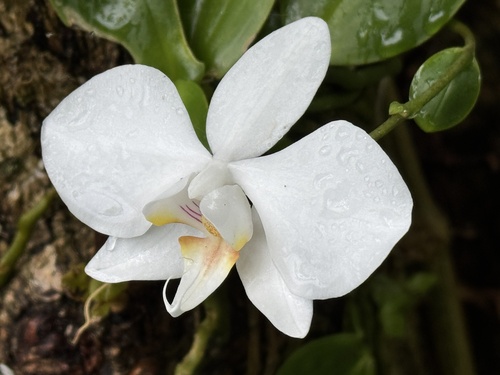
iNaturalist· cc-by-sa
(c) Shi Annan, some rights reserved (CC BY-SA)
Summary
Source: WikipediaAnacamptis pyramidalis, the pyramidal orchid, is a perennial herbaceous plant belonging to the genus Anacamptis of the family Orchidaceae. The scientific name Anacamptis derives from Greek ανακάμτειν 'anakamptein' meaning 'bend forward', while the Latin name pyramidalis refers to the pyramidal form of the inflorescence.
Description
An orchid. It is 20-45 cm high. It grows in the soil. The leaves are arranged in a ring at the base of the stem. There are 4-10 leaves. The flower stalk consists of many small flowers 15 mm wide. They form a pyramid shape. The flowers are pink to dark red.
Edible Uses
The tubers are the source of salep, a fine white to yellowish-white powder made by drying and grinding the harvested tuber. Salep has a starchy character, a sweetish taste, and a faint, somewhat unpleasant smell. It is considered highly nutritious and can be prepared as a drink, added to cereals, or used in bread-making. One ounce of salep is said to be sufficient to sustain a person for a full day.
Traditional Uses
The bulb is eaten cooked as porridge or used in bread. It is also used as powder mixed with milk to make salep.
This uses section is brief — help expand it
Medicinal Uses
Salep is both nutritive and demulcent, and has been valued as a dietary aid for children and convalescents. It is prepared by boiling with water and flavouring, in the same manner as arrowroot. Being rich in mucilage, it forms a soothing jelly used to treat irritation of the gastrointestinal tract. One part salep to fifty parts water is sufficient to produce this jelly. The tuber should be harvested as the plant dies back after flowering and setting seed.
Distribution
It grows mostly in the warm, dry grassland around the Mediterranean up to 1900 m altitude. In Britain it grows on chalk land. It is resistant to frost but sensitive to drought.
Where It Grows
Africa, Albania, Australia, Balkans, Bosnia, Britain, Europe*, France, Greece, Iran, Israel, Italy, Germany, Luxembourg, Mediterranean, Middle East, North Africa, Scandinavia, Slovenia, Spain, Sweden, Turkey, Türkiye,
Cultivation
Plants can be grown by division.
Propagation
Surface sow seed, preferably as soon as it is ripe, in a greenhouse, keeping the compost consistently moist. The seed is extremely simple in structure — a minute embryo enclosed in a single layer of cells with minimal food reserves — and depends on a symbiotic relationship with a soil-dwelling fungus whose hyphae invade the embryo cells and supply nutrients until the seedling can feed itself from soil organic matter. Incorporating soil from around established plants when sowing helps introduce the necessary fungus, as does sowing directly around an existing plant of the same species. Tubers can also be divided as the flowers fade; this species produces a new tuber late in the growing season, and removing it at flowering can stimulate the parent plant to form additional tubers. The removed tuber should be kept dormant while the parent plant is encouraged to keep growing to build new tubers. Division can also be done once a full rosette of leaves has developed but before flowering: the entire new growth is separated from the old tuber near the base of the stem, leaving one or two roots on the old tuber, then potted up. This can often be done without lifting the plant. The old tuber typically produces one or two new growths, while the divided rosette should continue normally to flower.
Other Uses
None known.
Production
It is difficult to grow in cultivation.
Notes
There is only one Anacamptis species. Harvesting from the wild is illegal in most of the plants range.
Synonyms
Also Known As
Kacun piraidalni, Piramidasti pilovec, Sahlep, Salep cicegi, Sivrisalep
References (15)
- Bircher, A. G. & Bircher, W. H., 2000, Encyclopedia of Fruit Trees and Edible Flowering Plants in Egypt and the Subtropics. AUC Press. p 25
- Blamey, M and Grey-Wilson, C., 2005, Wild flowers of the Mediterranean. A & C Black London. p 521
- Bodkin, F., 1991, Encyclopedia Botanica. Cornstalk publishing, p 78
- Cerne, M., 1992, Wild Plants from Slovenia used as Vegetables. Acta Horticulturae 318.
- Dogan, A. & Tuzlaci, E., 2015, Wild Edible Plants of Pertek (Tunceli-Turkey). Marmara Pharmaceutical Journal 19: 126-135
Show all 15 references Hide references
- Ertug, F., 2004, Wild Edible Plants of the Bodrum Area. (Mugla, Turkey). Turk. J. Bot. 28 (2004): 161-174
- Ertug, F, Yenen Bitkiler. Resimli Türkiye Florası -I- Flora of Turkey - Ethnobotany supplement
- Hedrick, U.P., 1919, (Ed.), Sturtevant's edible plants of the world. p 451 (As Orchis pyramidalis)
- Holliman, J., (Ed.), 2002, Orchids. Botanica's Pocket. Random House, Australia. p 57
- Lim, T. K., 2015, Edible Medicinal and Non Medicinal Plants. Volume 9, Modified Stems, Roots, Bulbs. Springer p 60
- Morley, B. & Everard, B., 1970, Wild Flowers of the World. Ebury press. Plate 26
- PARMENTIER, (As Orchis pyramidalis)
- Plants for a Future, The Field, Penpol, Lostwithiel, Cornwall, PL22 0NG, UK. http://www.scs.leeds.ac.uk/pfaf/
- Redzic, S. J., 2006, Wild Edible Plants and their Traditional Use in the Human Nutrition in Bosnia-Herzegovina. Ecology of Food and Nutrition, 45:189-232
- Tekinsen, K. K., and Guner, A., 2010, Chemical composition and physicochemical properties of tubera salep produced from some Orchidaceae species. Food Chemistry 121: 468-1471