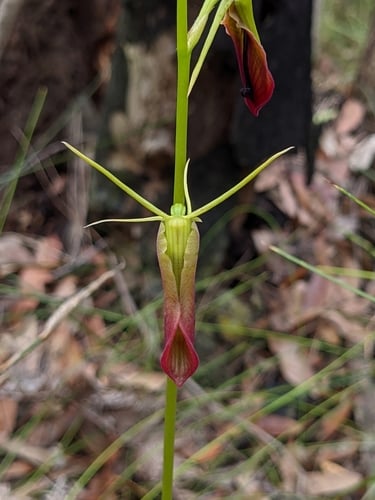
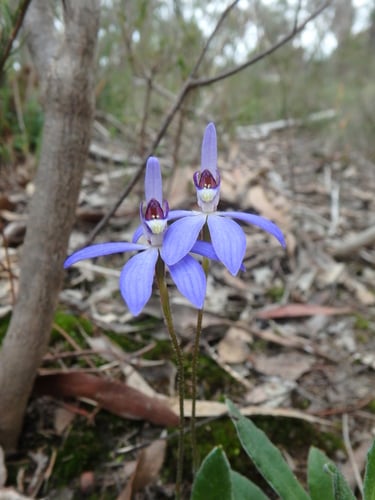
Habenaria epipactidea
Rchb.f.
iNaturalist· cc-by-nc
(c) tjeerd, some rights reserved (CC BY-NC)
iNaturalist· cc-by-nc
(c) Richard Gill, some rights reserved (CC BY-NC)
iNaturalist· cc-by-nc
(c) Richard Gill, some rights reserved (CC BY-NC)
Description
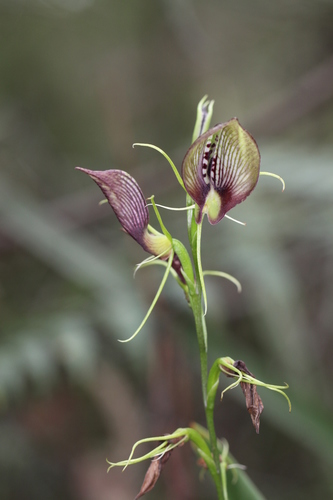
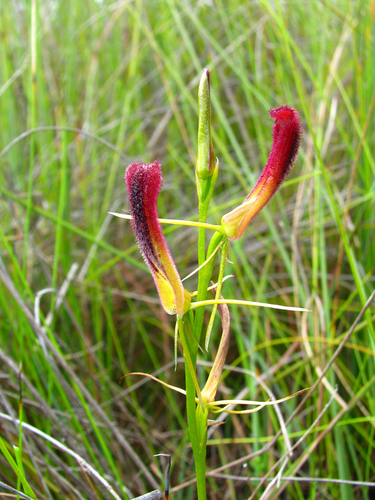
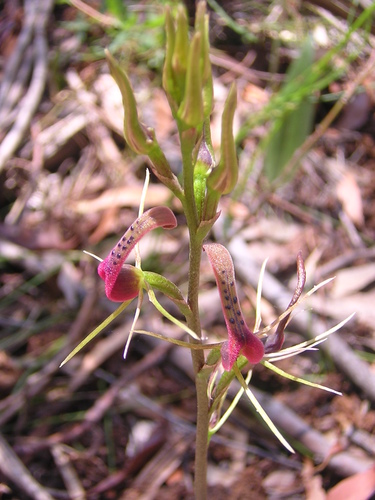
An orchid. It grows in the soil. It is 30-55 cm tall. It has an underground tuber 6 cm long by 3 cm wide. This produces an upright stem. The tuber has a dark woolly covering. There are 8-15 leaves that closely overlap the stem. The largest leaf is the lowest and is 5-12 cm long by 2.5 cm wide. The flowers are on a cylinder shaped spike and they have a sweet scent. The spike is 6-16 cm long and 2-5 cm wide. The flowers are close together and there can be 7 or many. The fruit is a narrowly oval capsule. It has slits that release the very small seeds.
Edible Uses
The tubers are dug, peeled, and cooked; they can also be pounded and baked into mealy cakes. The tubers are popular and sold in local markets.
Traditional Uses
The tubers are dug and peeled and cooked. They can be pounded and baked into mealy cakes.
This uses section is brief — help expand it
Known Hazards
It is becoming rare due to over harvesting. Plants should be cultivated and not only harvested from the wild.
Distribution
It is a tropical plant. It grows in grassland in damp or rocky gullies. In Tanzania it grows between 1,100-1,800 m above sea level.
Where It Grows
Africa, Angola, Botswana, Central Africa, East Africa, Ethiopia, Kenya, Namibia, Rwanda, South Africa, Southern Africa, Tanzania, Uganda, Zimbabwe,
Cultivation
Plants can be grown from tubers.
Production
Tubers are harvested at the end of the rainy season. In Tanzania this is May to July. They can be stored in a cool place for several weeks.
Other Information
The tubers are popular. They are sold in local markets.
Notes
It is becoming rare due to over harvesting. Plants should be cultivated and not only harvested from the wild.
Synonyms
Also Known As
Chichala, Kikande chanima, Kikanda jike, Kikande maka, Kimachura
References (3)
- Ruffo, C. K., Birnie, A. & Tengnas, B., 2002, Edible Wild Plants of Tanzania. RELMA p 360
- Ruiters-Welcome, A. K., 2019, Food plants of southern Africa. Ph.D. thesis. Univ. of Johannesburg p 83
- Welcome, A. K. & Van Wyk, B.-E., 2019, An inventory and analysis of the food plants of southern Africa. South African Journal of Botany 122 (2019) 136–179