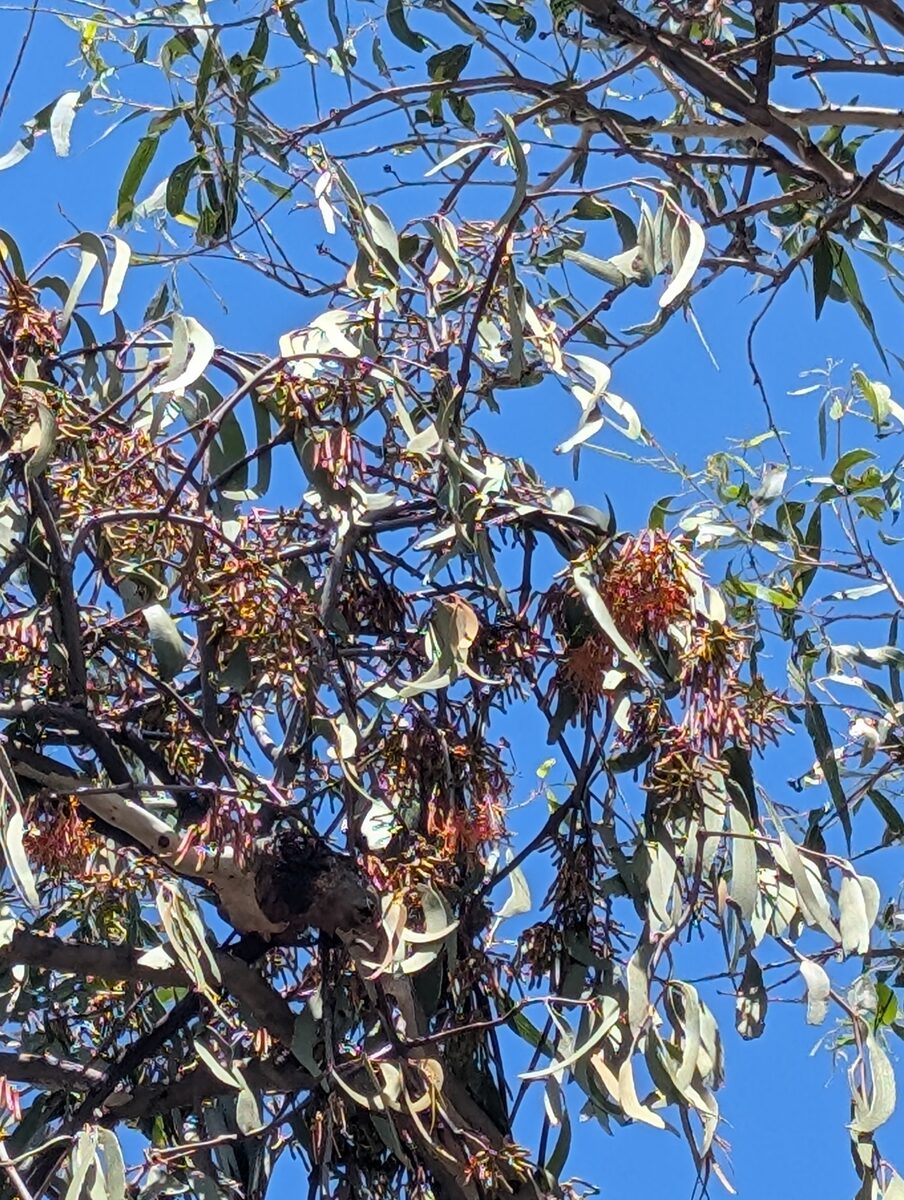
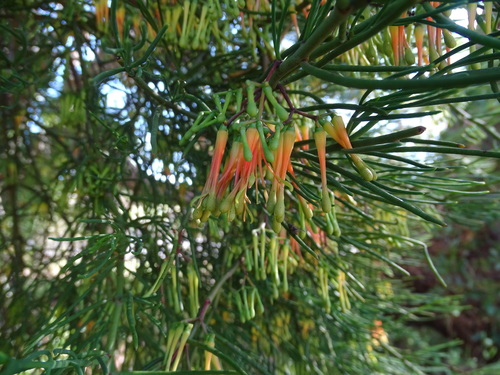
Amyema pendula
(Sieber ex Sprengel) Tieghem
Weeping Mistletoe, Drooping Mistletoe
iNaturalist· cc-by-nc
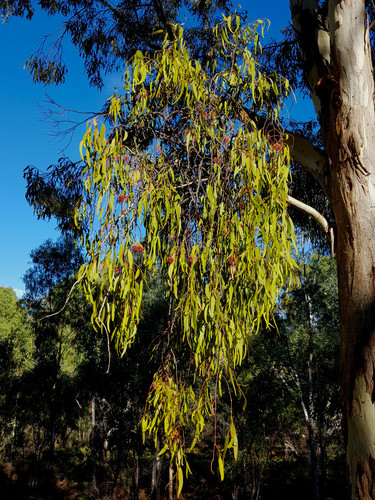
(c) Jenny Emeny, some rights reserved (CC BY-NC), uploaded by Jenny Emeny
iNaturalist· cc-by-nc
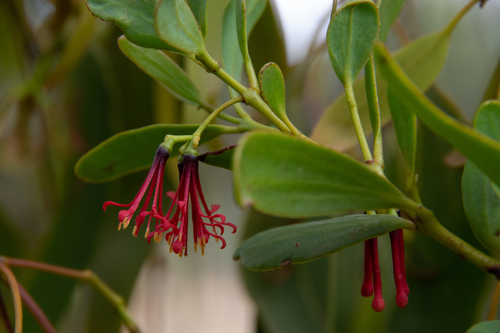
(c) suecee, some rights reserved (CC BY-NC), uploaded by suecee
iNaturalist· cc-by-nc
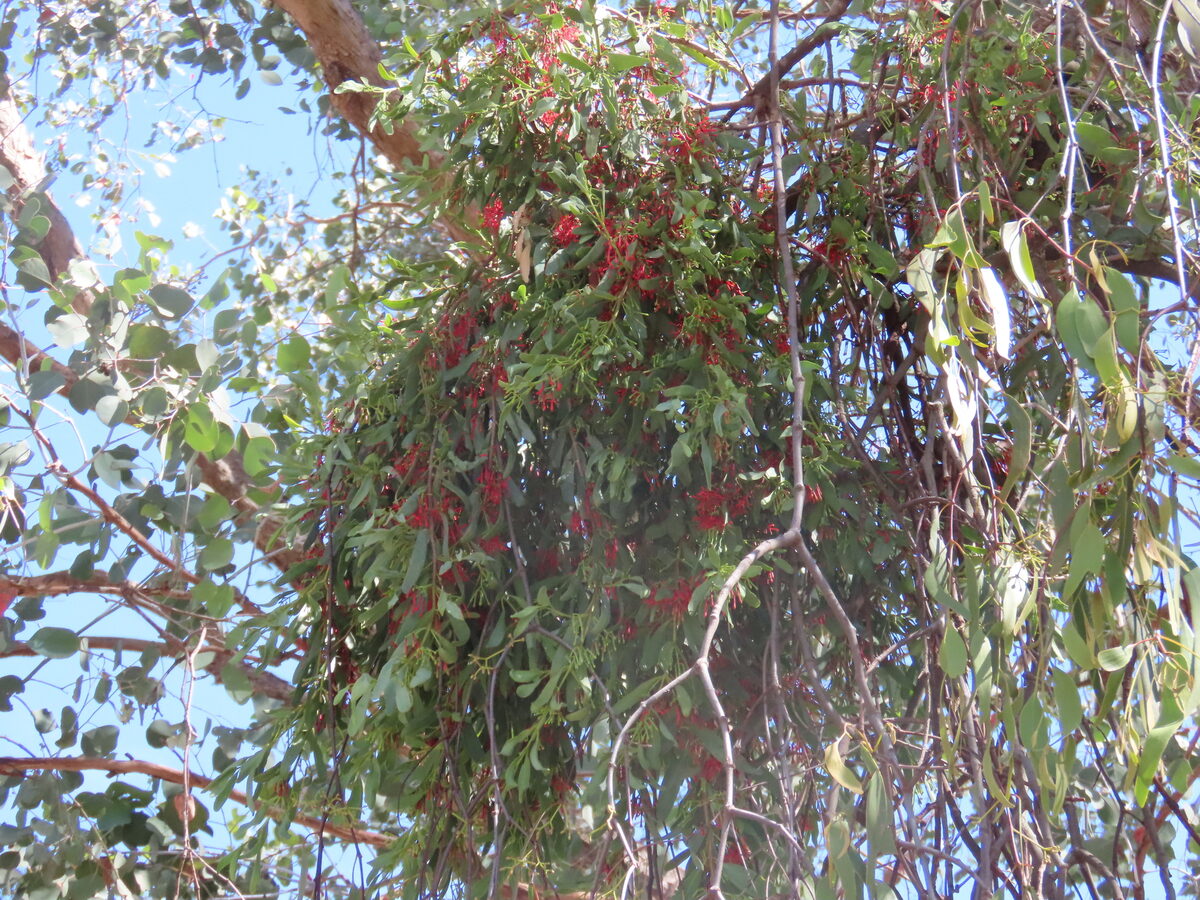
(c) SBERRY, some rights reserved (CC BY-NC), uploaded by SBERRY
Summary
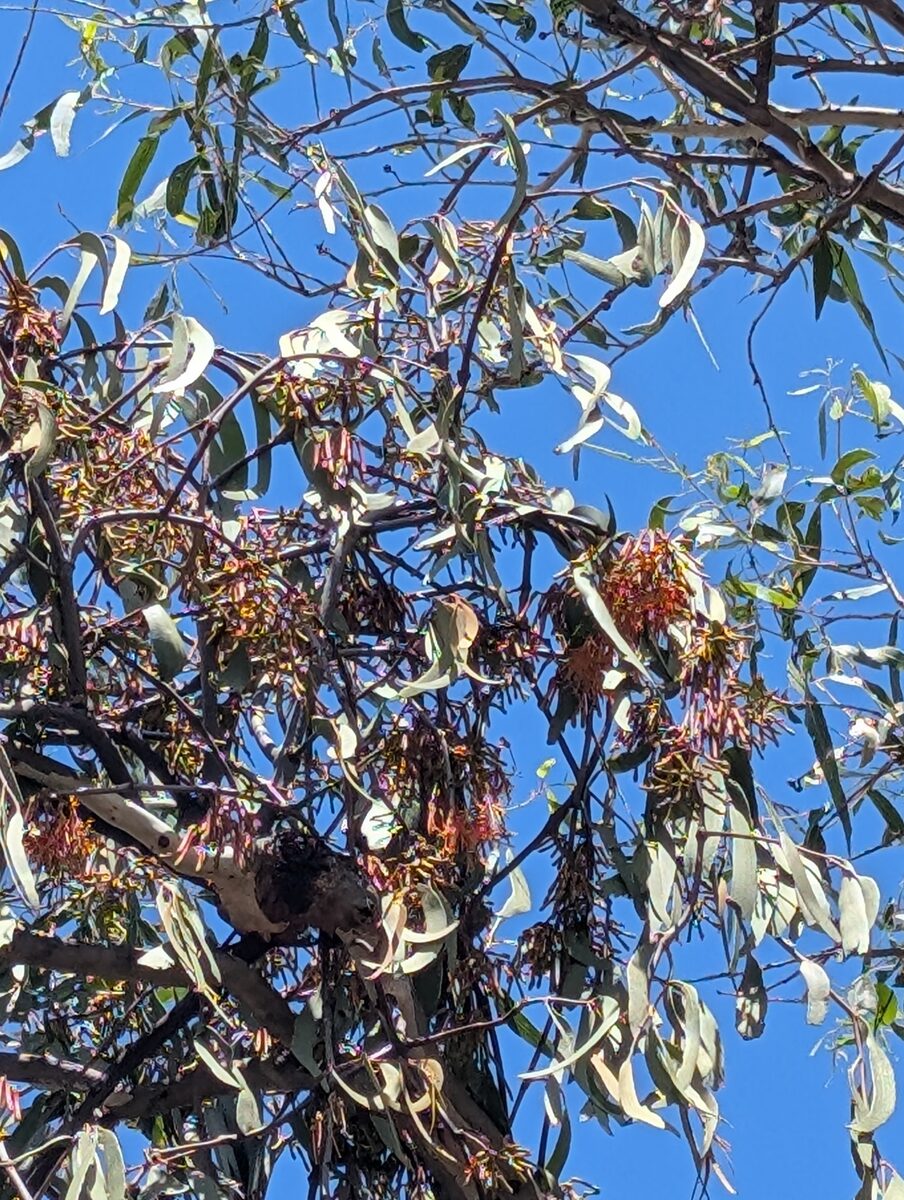
Source: WikipediaAmyema pendula, also known as drooping mistletoe or furry drooping mistletoe, is a species of flowering plant, an epiphytic hemiparasitic plant of the family Loranthaceae, found attached to several species of Australian eucalypt and occasionally on some species of Acacia. It is endemic to south-eastern Australia. It is the most common mistletoe in Victoria, especially on the coastal side of the Great Dividing Range. It has shiny leaves and red flowers arranged in groups of 3 or 4. It is distinguished from the similar Amyema miquelii through the lack of individual stalks on the flowers. There are two subspecies: A. pendula subsp. pendula with short flower stalks and anthers to the east of the Great Dividing Range A. pendula subsp. longifolia with longer stalks and anthers to the west and inland.
Description
A plant which grows on the branches of wattles. It lives partly off these plants. The stems hang down. They are slender. The leaves are usually 10-20 cm long by 2-3 cm wide. They are curved. The young growth often has white to brown hairs. The flower cluster is in the axils of leaves. The stalk is 5 cm long. The flowers are in groups of 3 with 3-7 groups in a cluster. They are orange-red. The middle flower in each 3 is without a stalk.
Edible Uses
The ripe fruit are sweet and edible, though the seeds should not be eaten.
Traditional Uses
The ripe fruit are sweet and edible. (The seeds should not be eaten.)
This uses section is brief — help expand it
Distribution
It is a temperate plant. It grows on Eucalypts and Acacias.
Where It Grows
Australia*,
Cultivation
It grows from seeds.
Notes
There are about 90-100 Amyema species.
Synonyms
References (9)
- Bodkin, F., 1991, Encyclopedia Botanica. Cornstalk publishing, p 77
- Caton, J.M. & Hardwick, R. J., 2016, Field Guide to Useful Native Plants from Temperate Australia. Harbour Publishing House. p 348
- Dashorst, G.R.M., and Jessop, J.P., 1998, Plants of the Adelaide Plains & Hills. Botanic Gardens of Adelaide and State Herbarium. p 50
- Elliot, W.R., & Jones, D.L., 1982, Encyclopedia of Australian Plants suitable for cultivation. Vol 2. Lothian. p 189
- Hardwick, R.J., 2000, Nature's Larder. A Field Guide to the Native Food Plants of the NSW South Coast. Homosapien Books. p 94
Show all 9 references Hide references
- Hunter, J. T. & Sheringham, P., 2006, Vegetation and Floristics of Melville Range Nature Reserve. A Report to the New South Wales Parks and Wildlife Service. p 165
- Lazarides, M. & Hince, B., 1993, Handbook of Economic Plants of Australia, CSIRO. p 19
- Steenbeeke, Greg as part of the Plants Directory project. List of plant species from northern NSW that may be used as food plants p 6
- World Checklist of Useful Plant Species 2020. Royal Botanic Gardens, Kew