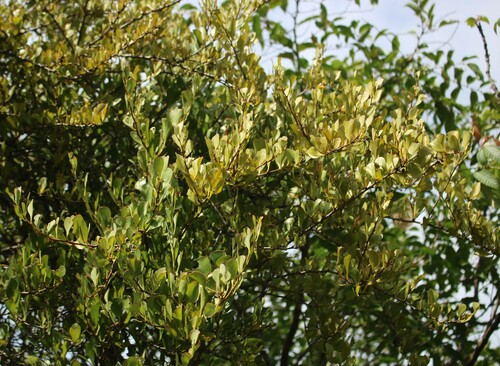
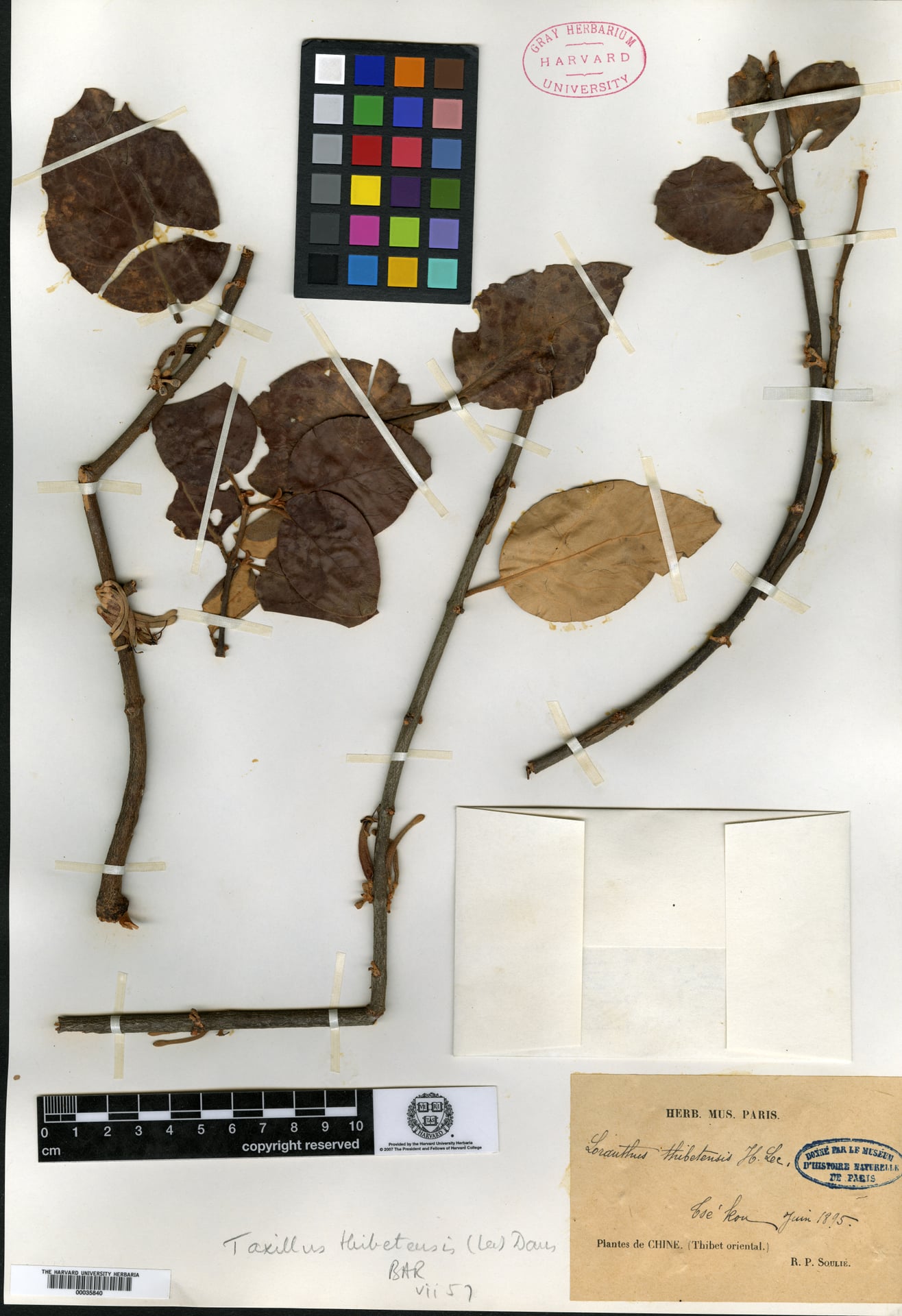
Amyema miquelii
(Lehm.ex Miq.) Tieghem
Mistletoe, Box mistletoe, Stalked mistletoe
iNaturalist· cc-by-nc
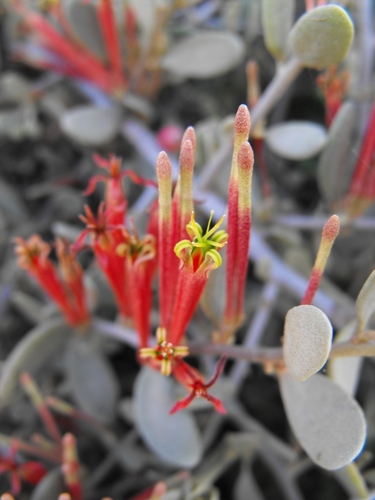
(c) Geoffrey Cox, some rights reserved (CC BY-NC), uploaded by Geoffrey Cox
iNaturalist· cc-by-nc
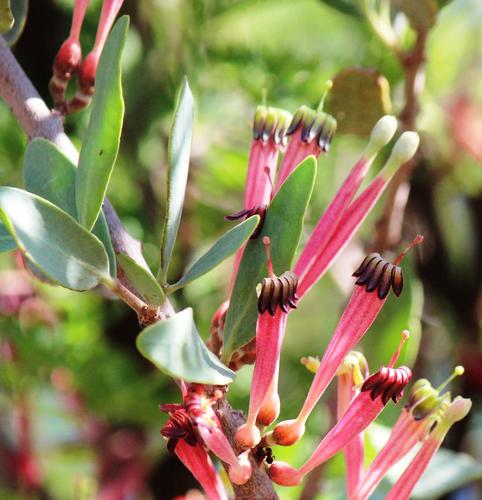
(c) thaliabroughton, some rights reserved (CC BY-NC)
iNaturalist· cc-by-nc
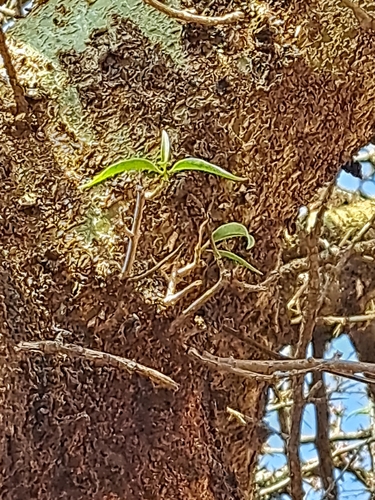
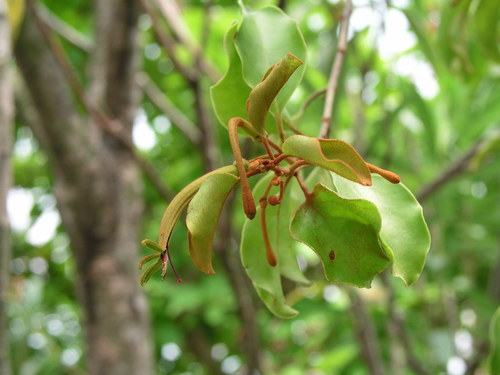
(c) David Spencer Muirhead, some rights reserved (CC BY-NC), uploaded by David Spencer Muirhead
Summary
Source: WikipediaAmyema miquelii, also known as box mistletoe, is a species of flowering plant, an epiphytic hemiparasitic plant of the family Loranthaceae, found attached to several species of Australian eucalypt and occasionally on some species of Acacia. It is the most widespread of the Australian Mistletoes, occurring mainly to the west of the Great Dividing Range. It has shiny leaves and red flowers arranged in groups of 3. It is distinguished from the similar Amyema pendula through the individual stalks of the flowers. The seeds are dispersed by various birds, particularly by the mistletoebird (Dicaeum hirundinaceum) that eat the fruit and then either wipes the sticky remains from the beak or when defecating has to wipe it from its feathers onto, most often, a twig due to the extremely sticky nature of the seed. The seed immediately begins to germinate and soon penetrates the vascular system of the tree and creates a physiological connection with the xylem of the new host. From that point, the seedling begins to obtain water and mineral nutrients from the host.
Description
A plant which grows on the branches of wattles. It lives partly off these plants. The stems hang down. They are slender. The leaves are usually 10-20 cm long by 2-3 cm wide. They are curved. The young growth often has white to brown hairs. The flower cluster is in the axils of leaves. The stalk is 5 cm long. The flowers are in groups of 3 with 3-7 groups in a cluster. They are orange-red.
Edible Uses
The fruit are edible.
Distribution
It grows in warm temperate and tropical places. It grows on Eucalypts and Acacias.
Where It Grows
Australia*,
Cultivation
It grows from seeds.
Notes
There are about 90-100 Amyema species.
Nutrition
| Part | Moisture | kJ | kcal | Protein | Vit A | Vit C | Iron | Zinc |
|---|---|---|---|---|---|---|---|---|
| Fruit | 74.3 | — | — | 2.2 | — | 20 | 0.3 | 0.4 |
Synonyms
Also Known As
Nyirunypa
References (12)
- Bodkin, F., 1991, Encyclopedia Botanica. Cornstalk publishing, p 77
- Cancilla, D., 2018, Ethnobotanical and Ethnozoological Values Desktop Assessment - Eliwana Project. p 41
- Dashorst, G.R.M., and Jessop, J.P., 1998, Plants of the Adelaide Plains & Hills. Botanic Gardens of Adelaide and State Herbarium. p 50
- Elliot, W.R., & Jones, D.L., 1982, Encyclopedia of Australian Plants suitable for cultivation. Vol 2. Lothian. p 189
- Haslam, S., 2004, Noosa's Native Plants. Noosa Integrated Catchment Assn. Inc. p 223
Show all 12 references Hide references
- Hunter, J. T. & Sheringham, P., 2006, Vegetation and Floristics of Melville Range Nature Reserve. A Report to the New South Wales Parks and Wildlife Service. p 165
- Lang, P. J., et al, 1986, Anangu Pitjantjatjara Lands Biological Survey. p 43
- Lazarides, M. & Hince, B., 1993, Handbook of Economic Plants of Australia, CSIRO. p 19
- Melzer, R., & Plumb, J., 2011, Plants of Capricornia. Belgamba, Rockhampton. p 55
- Paczkowska, G. & Chapman, A.R., 2000, The Western Australian Flora. A Descriptive Catalogue. Western Australian Herbarium. p 284
- Steenbeeke, Greg as part of the Plants Directory project. List of plant species from northern NSW that may be used as food plants p 6
- Wheeler, J.R.(ed.), 1992, Flora of the Kimberley Region. CALM, Western Australian Herbarium, p 573