Photinia arguta
Wall.
Dun-soh-rynkha-mum
gbif· cc0
GBIF
gbif· cc0
GBIF
gbif· cc0
GBIF
Summary
Evergreen shrub reaching 4m tall with year-round foliage. Hermaphroditic, insect-pollinated flowers. Accommodates light sandy, medium loamy, and heavy clay soils with good drainage preference. Tolerates mildly acid to very alkaline pH. Grows in semi-shade or full sun, preferring moist soil.
Description
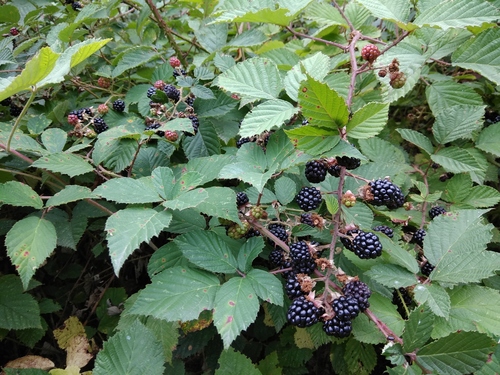
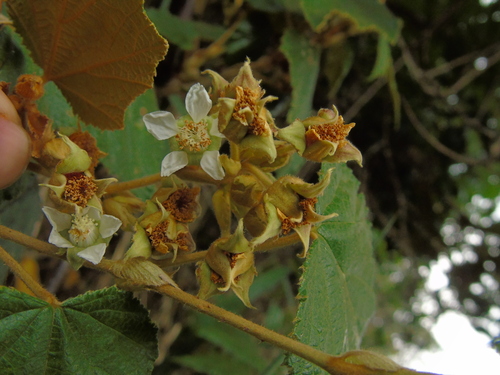
A shrub or small tree. The young branches are purplish brown. The leaves are oblong to sword shaped and 5-8 cm long by 2-3 cm wide. Young leaves have grey coatings. There are several flowers in a group. The fruit is a flattened round shape and 6-7 mm across.
Edible Uses
The fruit is eaten raw and used in desserts.
Medicinal Uses
None known.
Distribution
It is a tropical and subtropical plant. It grows in gullies near water courses between 300-1,300 m above sea level. In Yunnan.
Where It Grows
Asia, Bangladesh, China, Himalayas, India, Indochina, Laos, Myanmar, SE Asia, Thailand, Vietnam,
Cultivation
We have very little information on this species and do not know if it will be hardy in Britain, though judging by its native range it could succeed outdoors at least in the milder parts of this country. The following notes are based on the general needs of the genus. Requires a well-drained fertile soil in a sheltered position in sun or light shade. Prefers a warm soil that is not too heavy or close. Tolerates calcareous soils. Dislikes windy sites. Plants are susceptible to fireblight. Plants in this genus are notably resistant to honey fungus.
Propagation
Seed is best sown in a cold frame as soon as it ripens in autumn. Stored seed will likely need stratification and should be sown as early in the year as possible. Germination is usually good. Prick seedlings into individual pots when large enough to handle and grow on in a greenhouse through their first winter, then plant out in late spring or early summer after the last expected frosts. Basal cuttings can be taken in a frame — harvest shoots with plenty of underground stem when they are 8–10cm above ground, pot individually, and keep in light shade in a cold frame or greenhouse until rooting well, then plant out in summer. Half-ripe wood cuttings, 7–10cm with a heel, taken July/August in a frame, take about 2 months to root; overwinter in a greenhouse and plant out in late spring — fair to good success rate. Cuttings of almost ripe side shoots, 7–12cm with a heel, taken October/November in a cold frame, are lifted the following autumn and planted into permanent positions. Layering in autumn with partial severing of the layer about 12 months later and lifting the following spring gives a high percentage.
Other Uses
The wood is hard and heavy, making it suitable for furniture and other small articles.
Other Information
Fruit sold in markets.
Notes
There are about 60 Photinia species.
Also Known As
Fotini
References (4)
- Altschul, S.V.R., 1973, Drugs and Foods from Little-known Plants. Notes in Harvard University Herbaria. Harvard Univ. Press. Massachusetts. no. 1412
- Flora of China @ efloras.org Volume 9
- Pasha, M. K. & Uddin, S. B., 2019, Minor Edible Fruits of Bangladesh. Bangladesh J. Plant Taxon. 26(2): 299–313
- Plants for a Future database, The Field, Penpol, Lostwithiel, Cornwall, PL22 0NG, UK. http://www.scs.leeds.ac.uk/pfaf/