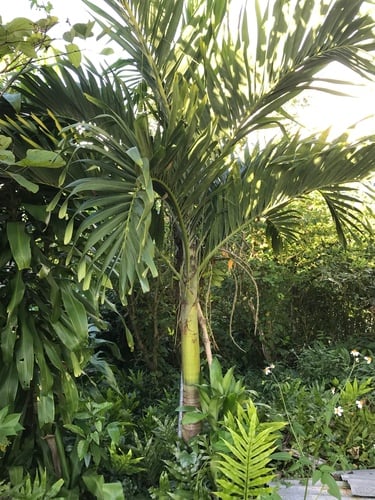
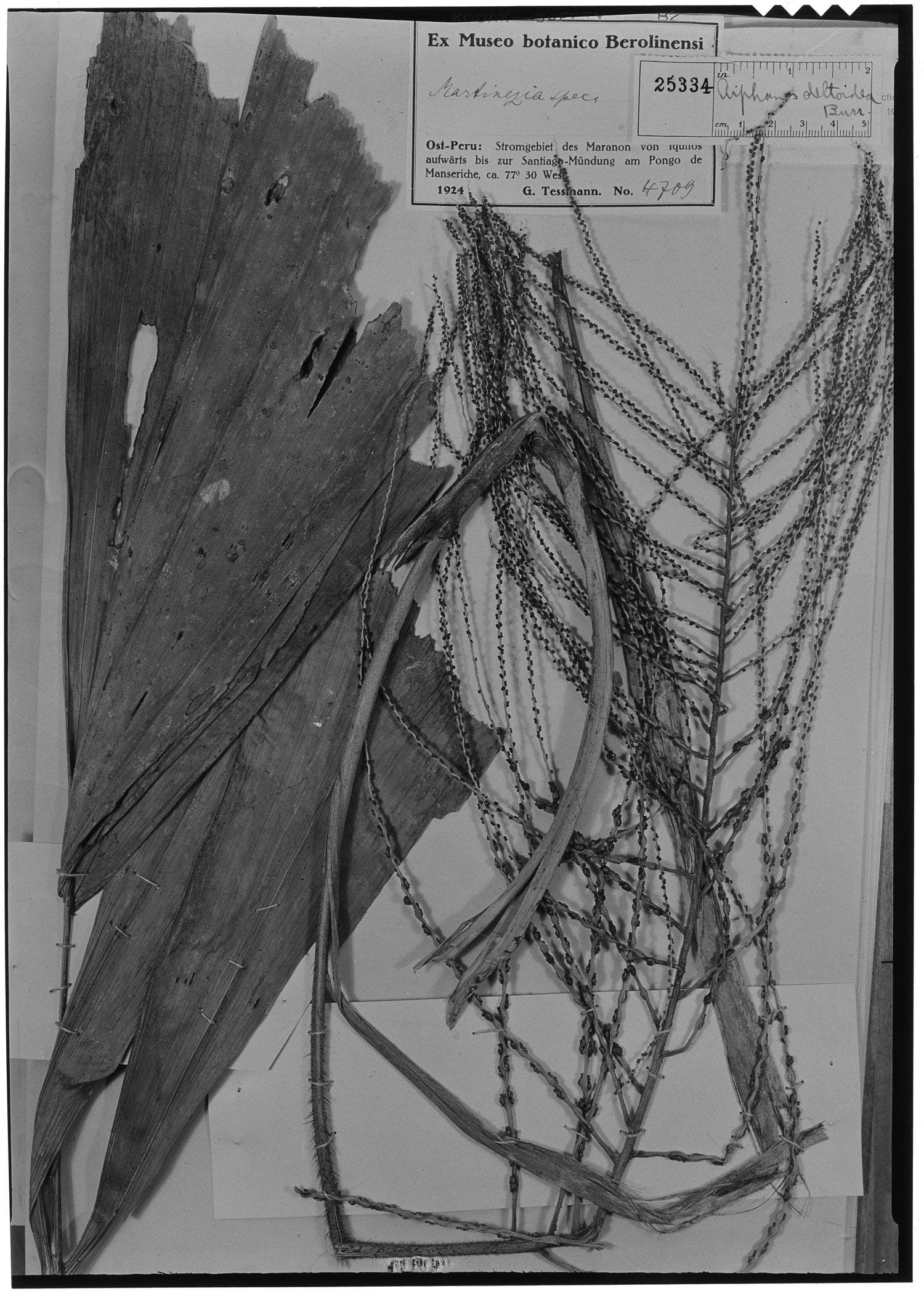
Phoenix sylvestris
(L.) Roxb.
India Date, Silver date palm
iNaturalist· cc-by-nc
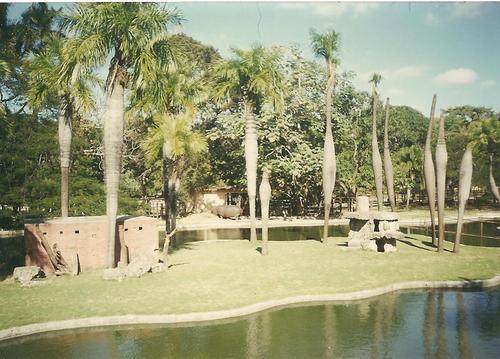
(c) Marcio Santos Ferreira, some rights reserved (CC BY-NC), uploaded by Marcio Santos Ferreira
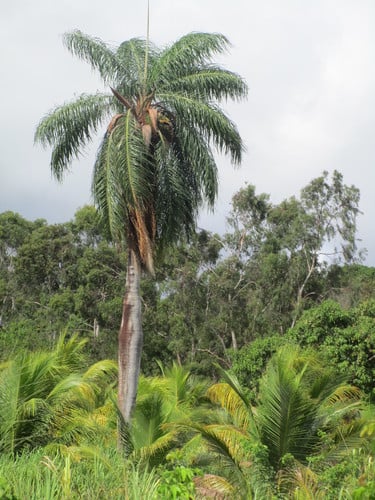
iNaturalist· cc-by-sa
(c) Hari Prasad Nadig, some rights reserved (CC BY-SA)
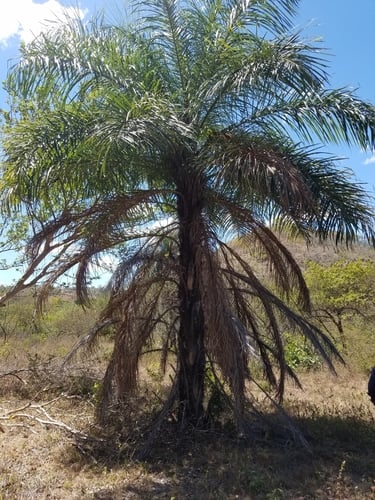
iNaturalist· cc-by-nc
(c) Chennakesavalu Varadaradarajulu, some rights reserved (CC BY-NC), uploaded by Chennakesavalu Varadaradarajulu
Summary
Source: WikipediaPhoenix sylvestris (sylvestris - Latin, of the forest) also known as silver date palm, Indian date, sugar date palm or wild date palm, is a species of flowering plant in the palm family native to southern Pakistan, most of India, Nepal, Bhutan, Myanmar and Bangladesh. It has been introduced to southeastern China, Sri Lanka, Mauritius, Puerto Rico and the Leeward Islands. Growing in plains and scrubland up to 1300 m above sea level, the fruit from this palm species is used to make wine and jelly. The sap is tapped and drunk fresh or fermented into toddy. The fresh sap is boiled to make palm jaggery in West Bengal state of India and Bangladesh.
Description
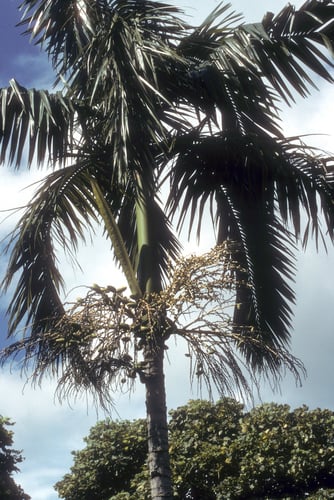
A tall palm. It is unbranched up to 15 m high. The trunk is rough with persistent leaf bases. The trunk is 60-75 cm across. The crown is thick and half rounded to rounded. The leaves are grey-green or covered with a waxy layer. They are 2-3 m long. They have a spiky appearance. They are divided into leaflets along the stalk. The leaflets are 20-25 cm long and with a sharp point. The flowering spikes are enclosed by boat shaped bracts. They are 60-75 cm long. They occur between the leaves. The male flowers are yellowish-white. They have a scent. The female flowers are greenish with a brown tinge. The fruit are yellow when ripe. They are edible. Male and female flowers are on separate plants. Both are needed for fruit.
Edible Uses
The fruit is edible but of very inferior quality. The sap can be concentrated into a syrup or fermented into alcohol and is one of the main sources of sugar in Bengal. It is obtained by cutting the tip from the unopened inflorescence and allowing the sap to flow from the cut. The flow can reach up to 5 litres per day for several months, and the sap contains approximately 14% sugar.
Traditional Uses
The sap from the stalk is used for a drink. It is also fermented. The ripe fruit are eaten raw. They can be used for jams or jellies. The seeds are edible. The flower stalk is tapped for sap which is boiled down to date sugar. It is used for jaggery and sugar. The growing tip or cabbage is eaten. A kind of sago can be extracted from the stem.
Medicinal Uses
No medicinal uses are known for this plant.
Distribution
It grows in tropical and temperate regions. It can grow in inland and coastal districts. It needs a sunny position and a well drained soil. It grows on barren hills in India. It is often on sandy soils. It grows naturally in the Indus basin in Pakistan. It can grow up to 1500 m altitude in SE Asia. Melbourne Botanical gardens. In XTBG Yunnan.
Where It Grows
Asia, Australia, Bangladesh, China, Cuba, Fiji, Guam, Himalayas, India, Indochina, Indonesia, Maldives, Myanmar, Nepal, Northeastern India, NW India, Pacific, Pakistan, Rotuma, SE Asia, Sikkim, Sri Lanka, Thailand, West Indies,
Cultivation
Plants are grown from seed. Seed germinate easily. Germination takes about 3 months.
Propagation
Seed - probably best sown as soon as it is ripe in containers, otherwise sow the seed as soon as you obtain it. Germination usually takes place within 2 - 3 months.
Other Uses
No other uses are known for this plant.
Production
It is quite fast growing. Sap can be taken from the side of the crown. This can be started when the palm is 7-10 years old and continue for 20-25 years. The annual yield per palm is 100 l of juice. This can be converted to 3 kg of sugar.
Other Information
It is cultivated in large areas in India for sap. The fruit are sold in markets.
Notes
There are 17 Phoenix species. It is indigenous to many parts of India.
Synonyms
Also Known As
Boa kadhuru, Boichand, Chhindi, Chotti khagoor, Date sugar palm, Deshi khejur, Desi khajoor, Eatha, Eetha pandlu, Etha, Ethum pannay, Ichalu, Icham, Inthaphalam-thai, Ita chettu, Jangali khajoor, Jangli khajur, Kajar, Kattueenthu, Kejur, Khajji, Khajoor, Khajur, Khajuri, Khakri, Kharak, Khejur palm, Khejur, Kojari, Oedda-ita, Palem korma perak, Pedda-ita, Pind, Sendi, Sendri, Shindi, Shindoli, Sindhi, Sindi, Silver Date palm, Sindi, Sugar date palm, Tadi, Taw-sunpalun, Thakal, Thakkal, Wild date palm
References (71)
- Ambasta, S.P. (Ed.), 2000, The Useful Plants of India. CSIR India. p 449
- Amoros, A., et al, 2014, Physico-chemical and functional characteristics of date fruits from different Phoenix species (Arecaceae). Fruits, Vol. 69, p. 315-323
- Arora, R. K., 2014, Diversity in Underutilized Plant Species - An Asia-Pacific Perspective. Bioversity International. p 81
- Bajpai, O., et al, 2015, Tree species of the Himalayan Terai region of Uttar Pradesh, India: a checklist. Check List 11(4): 1718
- Balick, M.J. and Beck, H.T., (Ed.), 1990, Useful palms of the World. A Synoptic Bibliography. Colombia p 81, 200, 403, 435, 607,
Show all 71 references Hide references
- Bandyopadhyay, S. et al, 2009, Wild edible plants of Koch Bihar district, West Bengal. Natural Products Radiance 8(1) 64-72
- Bandyopadhyay, S., et al, 2012, A Census of Wild Edible Plants from Howrah District, West Bengal, India. Proceedings of UGC sponsored National Seminar 2012
- Bhatia, H., et al, 2018, Traditionally used wild edible plants of district Udhampur, J&K, India. Journal of Ethnobiology and Ethnomedicine (2018) 14:73
- Blomberry, A. & Rodd, T., 1982, Palms. An informative practical guide. Angus & Robertson. p 142
- Bole, P.V., & Yaghani, Y., 1985, Field Guide to the Common Trees of India. OUP p 107
- Burkill, I.H., 1966, A Dictionary of the Economic Products of the Malay Peninsula. Ministry of Agriculture and Cooperatives, Kuala Lumpur, Malaysia. Vol 2 (I-Z) p 1743
- Chandrakumar, P., et al, 2015, Ethnobotanical studies of wild edible plants of Gond, Halba and Kawar tribes of Salekasa Taluka, Gondia District, Maharashtra State, India. International Research Journal of Pharmacy 6(8)
- Chauhan, S. H., et al, 2018, Consumption patterns of wild edibles by the Vasavas: a case study from Gujarat, India. Journal of Ethnobiology and Ethnomedicine (2018) 14:5
- Chowdery, T., et al, 2014, Wild edible plants of Uttar Dinajpur District, West Bengal. Life Science Leaflets. 47:pp 20-36 http://lifesciencesleaflets.ning.com
- Chowdhury, M. & Mukherjee, R., 2012, Wild Edible Plants Consumed by Local Communities of Maldah of West Bengal, India. Indian J.Sci.Res.3(2) : 163-170
- Dangol, D. R. et al, 2017, Wild Edible Plants in Nepal. Proceedings of 2nd National Workshop on CUAOGR, 2017.
- Das, S. and De, B., 2013, Evaluation of Angiotension I-Converting Enzyme (ACE) inhibitory potential of some underutilized indigenous fruits of West Bengal using an in vitro model. Fruits, Vol. 68:499-506
- Dobriyal, M. J. R. & Dobriyal, R., 2014, Non Wood Forest Produce an Option for Ethnic Food and Nutritional Security in India. Int. J. of Usuf. Mngt. 15(1):17-37
- Facciola, S., 1998, Cornucopia 2: a Source Book of Edible Plants. Kampong Publications, p 30
- Fl. ind. ed. 1832, 3:787. 1832
- Flora of Pakistan. www.eFloras.org
- GAMMIE,
- Gautam, R. S., et al, 2020, Wild Edible Fruits of Nepal. Int. J. Appl. Sci. Biotechnol. Vol 8(3): 289-304
- Gautam, R. S., et al, 2022, Ethnobotanical Review of Wild Edible Plants of Nepal. Journal of Natural History Museum Volume 32, 2021-22 p 105
- Gibbons, M., 2003, A pocket guide to Palms. Chartwell Books. p 162
- Haynes, J., & McLaughlin, J., 2000, Edible palms and Their Uses. University of Florida Fact sheet MCDE-00-50-1 p 11
- Hazarika, B. et al. (2020). An overview of the unexplored underutilized fruit crops of Assam, India. Journal of Applied and Natural Science, 12(3): 442 - 453
- Hedrick, U.P., 1919, (Ed.), Sturtevant's edible plants of the world. p 489
- Jabeen, A., et al, 2009, Indigenous uses of economically important flora of Margallah Hills National Park, Islamabad, Pakistan. African Journal of Biotechnology Vol. 8 (5), pp. 763-784
- Jadhav, R., et al, 2015, Forest Foods of Northern Western Ghats: Mode of Consumption, Nutrition and Availability. Asian Agri-History Vol. 19, No. 4: 293-317
- Johnson, D.V., 1998, Tropical palms. Non-wood Forest products 10. FAO Rome. p 42, 48, 123
- Jones, D.L., 1994, Palms throughout the World. Smithtonian Institution, Washington. p 290
- Jones, D.L., 2000, Palms of Australia 3rd edition. Reed/New Holland. p 197
- Khan, D. & Shaukat, S.S., 2006, The Fruits of Pakistan: Diversity, Distribution, Trends of Production and Use. Int. J. Biol. Biotech., 3(3):463-499
- Kiran, K. C., et al, 2019, Diversity and Seasonal Availability of Potential Wild Edible Plants from Vidarbha Region of Maharashtra State, India. Int.J.Curr.Microbiol.App.Sci (2019) 8(2): 1434-1446
- Krishen P., 2006, Trees of Delhi, A Field Guide. DK Books. p 312
- Kuhnlein, H. V., et al, 2009, Indigenous Peoples' food systems. FAO Rome p 195
- Kumar, S. A., Manus, D. & Mallika, M., 2018, Impact of non-timber forest products on Forest and in Livelihood Economy of the People of Adjoining Areas of Jalpaiguri Forest Division, West Bengal, India. Int. J. of Life Sciences, 2018; 6 (2):365-385
- Kunwar, R.M., et al, 2012, Underutilized Plant Species in Far West Nepal. J. Mt. Sci. (2012) 9:589-600
- Kuvar, S. D. & Shinde, R. D., 2019, Wild Edible Plants used by Kokni Tribe of Nasik District, Maharashtra. Journal of Global Biosciences. Volume 8, Number 2, 2019, pp. 5936-5945
- Majeed, M., et al, 2021, Gathered Wild Food Plants among Diverse Religious Groups in Jhelum District, Punjab, Pakistan. Foods 2021, 10, 594.
- McClatchey, W., Thaman, R., & Vodonaivalu, S., 2000, A Preliminary Checklist of the Flora of Rotuma with Rotuman Names. Pacific Science (2000) Vol. 54, No. 4: 345-363
- Misra S. & Misra M., 2016, Ethnobotanical and Nutritional Evaluation of Some Edible Fruit Plants of Southern Odisha, India. International Journal of Advances in Agricultural Science and Technology, Vol.3 Issue.1, March- 2016, pg. 1-30
- Narayanan Ratheesh, M. K. et al, 2011, Wild edible plants used by the Kattunaikka, Paniya and Kuruma tribes of Wayanad District, Kerala, India. Journal of Medicinal Plants Research Vol. 5(15), pp. 3520-3529
- Oudejans, J.H.M., 1979, Date palm, in Simmonds, N.W., (ed), Crop Plant Evolution. Longmans. London. p 230
- Parmar, C., & Kaushel, M. K., 1982, In Wild Fruits. Kalyani Publishers, New Delhi, India. p 58-61
- Pasha, M. K. & Uddin, S. B., 2019, Minor Edible Fruits of Bangladesh. Bangladesh J. Plant Taxon. 26(2): 299–313
- Prachi, K., et al, 2012, Underutilized wild fruits of North Maharashtra. Journal of Research in Plant Sciences. (2012) 1:071-076
- Pradhan, R., et al, 2020, Potential Wild Edible Plants and its Significance in Livelihood of Indigenous People of Male Mahadeshwara Hills, Karnataka. Economic Affairs Vol. 64, No. 4 pp. 01-14
- PROSEA handbook Volume 9 Plants yielding non-seed carbohydrates. p 177
- Purseglove, J.W., 1972, Tropical Crops. Monocotyledons. Longmans p 430
- Ramachandran, V. S., 2007, Wild edible plants of the Anamalais, Coimbatore district, western Ghats, Tamil Nadu. Indian Journal or Traditional Knowledge. 6(1) pp 173-176
- Rao, M. L. S., et al, 2014, Indigenous Plant Foods which are commonly consumed by the tribal communities in Dumbriguda Area of Visakhapatnam District, Andhra Pradesh, India. Biolife. Vol 2, Issue 3
- Rashid, H. E., 1977, Geography of Bangladesh. Westview. p 294
- Reddy, B. M., 2012, Wild edible plants of Chandrapur district, Maharashtra, India. Indian Journal of Natural Products and Resources. 3(1) pp 110-117
- Reddy, K. N. et al, 2007, Traditional knowledge on wild food plants in Andhra Pradesh. Indian Journal of Traditional Knowledge. Vol. 6(1): 223-229
- Reddy, K.R., 1989, Additional Notes on the Wild Edible Plants of India. J. Econ. Tax. Bot. Vol. 13 No. 1 pp 125-127
- Riffle, R.L. & Craft, P., 2003, An Encyclopedia of Cultivated Palms. Timber Press. p 405
- Setiya, A. V., et al, 2016, Exploration and documentation of some wild edible plants used by the aboriginals from Gadchiroli District (M.S.) India. International Advanced Research Journal in Science, Engineering and Technology. 3(7)
- Shah, G.L., 1984, Some economically important plant of Salsette Island near Bombay. J. Econ. Tax. Bot. Vol. 5 No. 4 pp 753-765
- Singh, H.B., Arora R.K.,1978, Wild edible Plants of India. Indian Council of Agricultural Research, New Delhi. p 68
- Singh, V. and Singh, P., 1981, Edible Wild Plants of Eastern Rajasthan. J. Econ. Tax. Bot. Vol 2 pp 197-207
- Sujanapal, P., & Sankaran, K. V., 2016, Common Plants of Maldives. FAO & Kerala FRI, p 202
- Sukarya, D. G., (Ed.) 2013, 3,500 Plant Species of the Botanic Gardens of Indonesia. LIPI p 802
- Swaminathan, M.S., and Kochnar, S.L., 2007, An Atlas of major Flowering Trees in India. Macmillan. p 276
- Upreti, K., et al, 2010, Diversity and Distribution of Wild Edible Fruit Plants of Uttarakhand. Bioversity Potentials of the Himalaya. p 180
- Uprety, Y., et al, 2016, Traditional use and management of NTFPs in Kangchenjunga Landscape: implications for conservation and livelihoods. Journal of Ethnobiology and Ethnomedicine (2016) 12:19
- USDA, ARS, National Genetic Resources Program. Germplasm Resources Information Network - (GRIN). [Online Database] National Germplasm Resources Laboratory, Beltsville, Maryland. Available: www.ars-grin.gov/cgi-bin/npgs/html/econ.pl (10 April 2000)
- WATT,
- Wiersema, J. H. & Leon, B., 2013, World Economic Plants. A Standard Reference CRC Press. 2nd Ed. p 519
- World Checklist of Useful Plant Species 2020. Royal Botanic Gardens, Kew