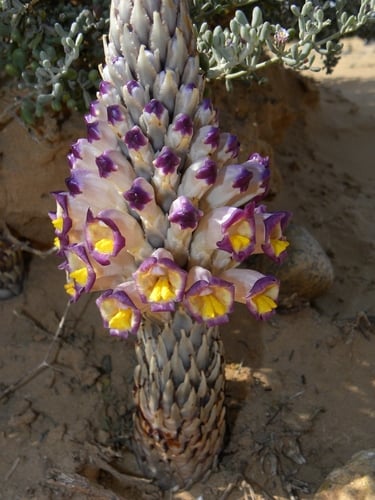
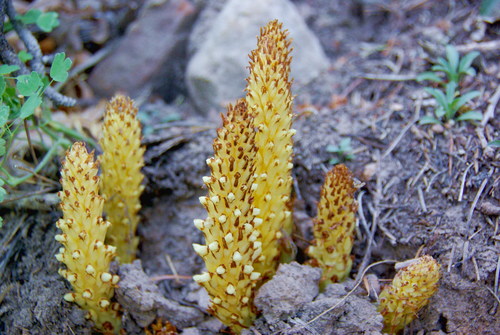
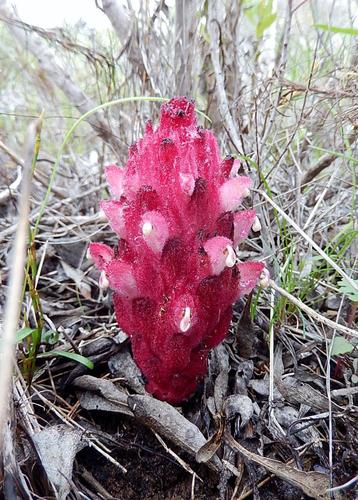
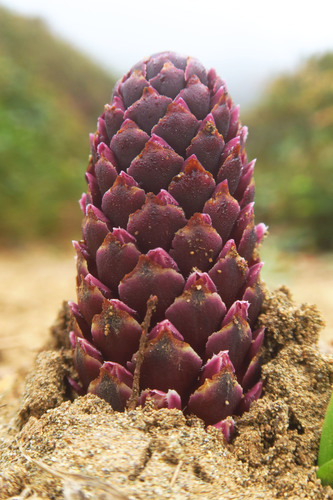
Phelypaea violacea
Desf
gbif· cc-by
e-ReColNat (ANR-11-INBS-0004)
gbif· cc-by
RECOLNAT (ANR-11-INBS-0004)
gbif· cc-by
RECOLNAT (ANR-11-INBS-0004)
Description
It grows attached to or as a parasite on Zygophyllum album L.; Zygophyllum cornutum Coss. [ZYGOPHYLLACEAE] and sometimes Limonastrum guyonianum Dur.; [PLUMBAGINACEAE]).
Edible Uses
The flower stem is the edible portion, traditionally removed and dried, then ground into flour and mixed with barley flour. The plant can also be eaten raw or boiled.
Traditional Uses
The flower stalk is removed and dried. It is reduced to flour and mixed with barley flour. The plant is also eaten raw or boiled.
This uses section is brief — help expand it
Distribution
It is a Mediterranean plant.
Where It Grows
Africa, Mediterranean, North Africa, Tunisia,
Synonyms
Also Known As
Abouchel-n-tekkouk, Aheliouine, Barnouk, Danoun, Denouss, Fetekchan, Idergis, Khares, Ouras, Temzellit, Tertout el kelab, Zebb el kaa, Zebb el nasrani, Zebb er-roumi, Zimzellil
References (1)
- BOUQUET