Phaseolus lunatus
L.
Lima bean
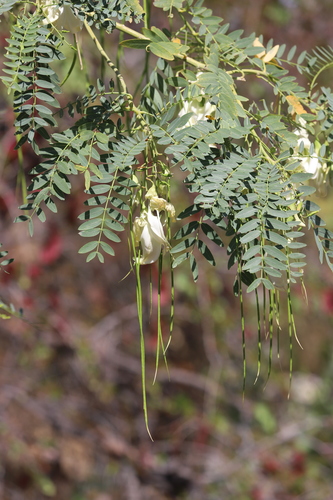
iNaturalist· cc-by
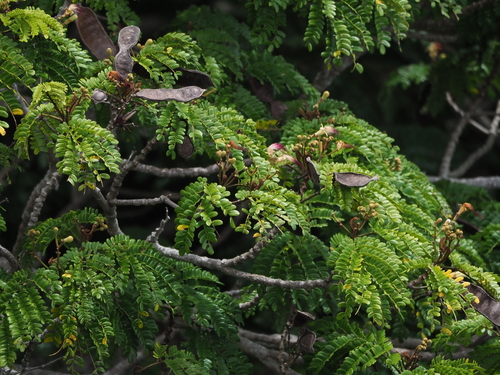
(c) Lyrae, some rights reserved (CC BY), uploaded by Lyrae
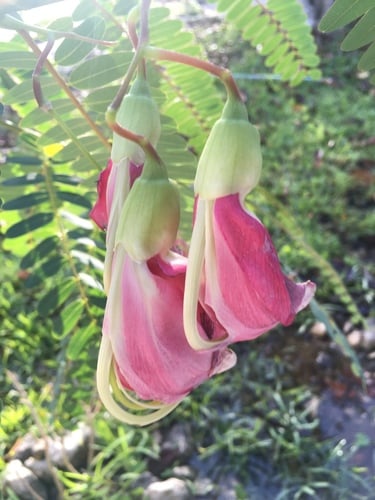
iNaturalist· cc-by-nc-sa
(c) Scamperdale, some rights reserved (CC BY-NC-SA)
iNaturalist· cc-by-nc-sa
(c) Søren Holt, some rights reserved (CC BY-NC-SA)
Summary
Perennial climbing vine reaching 6m tall. Frost-tender, hardy to UK zone 10. Flowers July to September, insect-pollinated. Requires full sun; grows in light sandy, medium loamy, and heavy clay soils including nutritionally poor soil, with mildly acid to basic pH. Prefers moist conditions. Fixes nitrogen.
Description
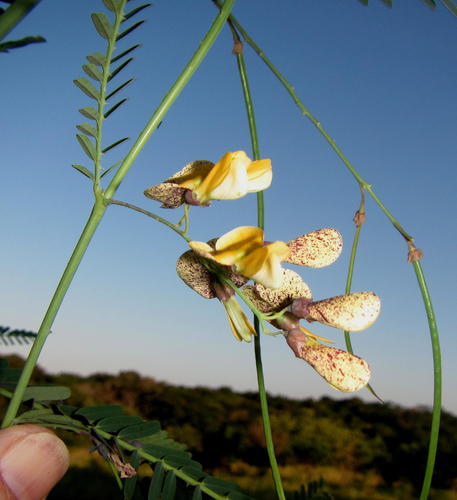
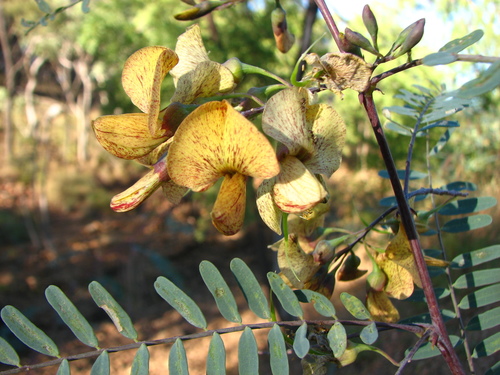
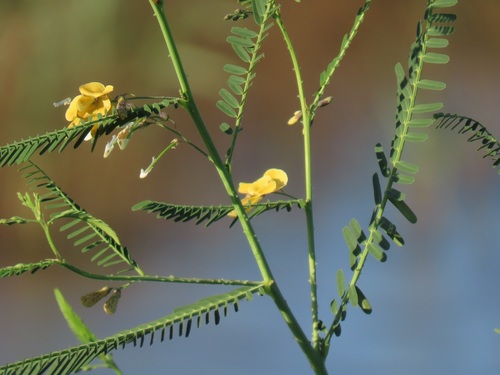
A perennial climbing bean. It is often a tall vigorously climbing plant which can keep growing for some years. The leaves are slightly rounded at the base and pointed at the tip. The flower is white or yellow. The keel of the flower is twisted which helps tell the difference between this bean and Lablab bean. The pods are long (10 cm), flattened and curved and have 3-4 seeds which are very variable in colour. The seeds are large. The seeds have a short round hilum where the seed is attached to the pod. The seeds also have lines going out from this point across the bean seed.
Edible Uses
Immature seeds can be cooked and used like peas in soups and stews. Mature seeds are dried and stored for future use; they must be thoroughly cooked before eating and are best soaked for around 12 hours beforehand. They can be used in soups and stews, or fermented to make tempeh. Sprouted seeds are cooked and used in Chinese dishes. Dried seeds can be ground into a powder to thicken soups or mixed with cereal flours when making bread. Young seedpods can be steamed and served as a side dish with rice, or added to soups and stews. Leaves are also edible when cooked, though they often have a bitter taste.
Traditional Uses
The leaves, young pods and seeds are all eaten. The seeds are eaten fresh or after drying. They are also fried in oil. Dried beans are boiled or baked. They can be used in soups and stews. The seeds are sometimes grown as bean sprouts then cooked and eaten. CAUTION Some kinds have poison (hydrocyanic acid). This is destroyed by thorough cooking. As well the beans contain a protein inhibitor but this is destroyed by cooking.
Medicinal Uses
In traditional Asian medicine, the seeds and leaves are valued for their astringent properties and are used as a dietary treatment for fever. The seeds are powdered and rubbed into small cuts on tumours and abscesses to encourage suppuration. The leaf juice, mixed with coconut oil or castor oil, is given to children to build strength, treat fever, and act as an emetic.
Known Hazards
The raw mature seed is poisonous. The toxic principle is hydrocyanic acid and this is destroyed by thoroughly cooking the seed.
Distribution
It suits warm and subtropical areas. In the tropics it is common between 500 and 2100 m altitude but grows to the limit of cultivation (2700 m). For germination it must have a soil temperature above 15.5°C and cannot withstand frost. In very hot weather seeds often do not set. It does best in a temperature range 14-21°C. It is sensitive to a pH less than 6. It can grow in arid places. It suits hardiness zones 8-11. In Yunnan.
Where It Grows
Africa, Andes, Angola, Argentina, Asia, Australia, Bahamas, Bangladesh, Belize, Benin, Bhutan, Brazil, Cameroon, Cape Verde, Caribbean, Central Africa, Central African Republic, CAR, Central America, Chile, China, Colombia, Comoros, Congo DR, Costa Rica, Côte d'Ivoire, Cuba, Dominican Republic, East Africa, East Timor, Ecuador, El Salvador, Equatorial Guinea, Ethiopia, Fiji, French Guiana, Gabon, Gambia, Ghana, Guatemala, Guianas, Guinea, Guinée, Guinea-Bissau, Guyana, Haiti, Hawaii, Himalayas, India, Indochina, Indonesia, Iran, Iraq, Ivory Coast, Jamaica, Japan, Kenya, Laos, Liberia, Madagascar, Malawi, Malaysia, Maldives, Mali, Marianas, Mauritius, Mexico, Middle East, Mozambique, Myanmar, Nepal, Niger, Nigeria, North America, Northeastern India, Pacific, Pakistan, Panama, Papua New Guinea, PNG, Paraguay, Peru*, Philippines, Puerto Rico, Reunion, Rwanda, Sahel, Sao Tome and Principe, SE Asia, Seychelles, Senegal, Sierra Leone, Sikkim, Slovenia, Solomon Islands, South Africa, Southern Africa, South America, Sri Lanka, Sudan, Suriname, Taiwan, Tanzania, Thailand, Timor-Leste, Togo, Uganda, USA, Vanuatu, Venezuela, Vietnam, West Africa, West Indies, West Timor, Zambia, Zimbabwe,
Cultivation
Plants are generally tolerant of heavy rainfall during the growing period, though heavy rain, when they are flowering, can adversely affect fertilization. A dry period is required for the seeds to mature. Temperatures higher than 30°c adversely affect fertilization, especially in forms that have large seeds. Requires a well-drained moderately fertile soil in a sunny position. Prefers a sandy loam.. Plants are prone to drop their flowers when grown in nitrogen-rich soils. Found in the wild on a range of well-drained soils from black clay to brown friable to rocky and sandy (even on sand dunes near beaches) and variously derived from basalt, volcanic ash, limestone. metamorphic schists or volcanic rock. Prefers a pH in the range 6 - 7, however, some cultivars tolerate acid soils with a pH as low as 4.4. Some climbing forms are more drought-resistant than bush forms due to their deep, well-developed root system. Plants can commence producing their edible seedpods in 12 - 16 weeks from seed. The pods can be harvested over a period of several months. Yields of 400 - 1,500 kilos per hectare of dried seed can be obtained. A very variable plant from which a wide range of cultivars have been developed. There are both bush and climbing forms as well as annual and perennial forms. The climbing plants are more productive but bush forms come into bearing more quickly and are probably more suitable for cooler gardens. This species has a symbiotic relationship with certain soil bacteria, these bacteria form nodules on the roots and fix atmospheric nitrogen. Some of this nitrogen is utilized by the growing plant but some can also be used by other plants growing nearby. The plants are very frost tender and are even less tolerant of wet and cold than the runner bean, Phaseolus coccineus. There are bush and climbing forms, the climbers are more productive but bush forms come into bearing more quickly and are probably more suitable for cooler gardens. Plants mature in 12 - 16 weeks from seed in warm climates but the growing season in Britain is usually too short for the beans to mature fully and crop yields are seldom worthwhile.
Propagation
Pre-soak the seed for 12 hours in warm water and sow in mid-spring in a greenhouse. Germination should occur within 10 days. Prick seedlings out into individual pots when large enough to handle, and plant out after the last expected frosts.
Other Uses
In the more humid tropics, Lima bean is mostly grown in home gardens or intercropped with cereals such as maize and sorghum, root and tuber crops including yam and cassava, or other crops such as banana, groundnut, and sugar cane. Sole cropping is more common in drier areas such as Madagascar and Peru. In intercropping, seeds are often placed in the same planting hole as the companion crop. Lima bean has also been grown as a cover crop and green manure. It is used for animal feed, fodder, and forage, and improves soil fertility.
Production
Harvesting can begin after about 100 days. Dried beans can be stored for several months. Yields of 0.12 kg of seeds per square metre have been obtained. The yield of pods can be 1 kg per square metre. The leaves, pods and flowers can be plucked from the plant.
Other Information
It is a commercially cultivated vegetable. A quite important and common bean in many highland areas of Papua New Guinea. About 100,000 tons of dry beans are produced each year.
Nutrition
| Part | Moisture | kJ | kcal | Protein | Vit A | Vit C | Iron | Zinc |
|---|---|---|---|---|---|---|---|---|
| Seed | 12 | 1407 | 337 | 19.8 | — | 0 | 5.6 | — |
| Seed - young cooked | 67.2 | 515 | 123 | 6.8 | 37 | 10.1 | 2.5 | 0.8 |
| Young Seeds raw | 70.2 | 473 | 113 | 6.8 | 30 | 23.4 | 3.1 | 0.8 |
Synonyms
Also Known As
Abongband, Agwa, Akbaka, Akpatramo, Amaijalero, Apteram, Awuje, Behna, Beloi, Butter bean, Civet bean, Ckuku, Daful, Dau bach-bien, Dau-diem, Dau-ngu, Ebigaaga, Ewuje, Feijao-magalo, Frejol de manteca, Frijol caballero, Haba, Haba pallar, Habilla, Htawbat-pe, Kachang china, Kachang jawa, Kachang mas, Kachang serendeng, Kal-beir-kan, Kara, Kawl-be, Kekara, Khasi kollu, Korokoco, Kpokpo, Kratok, Limski fižol, Lobia, Lobiya, Muma kedeba, Obuhindhini, Obuyindiyindi, Okuku, Onguk, Orusa, Patani, Pe-bra, Pe-byu-gyi, Pe-gya, Roway, Santagu-pe, Sem, Sieva Bean, Taipee, Tim-sin, Torta, Tua rachamat, Tunoran, Wake
References (80)
- Abbiw, D.K., 1990, Useful Plants of Ghana. West African uses of wild and cultivated plants. Intermediate Technology Publications and the Royal Botanic Gardens, Kew. p 31
- Agea, J. G., et al 2011, Wild and Semi-wild Food Plants of Bunyoro-Kitara Kingdom of Uganda: etc. Environmental Research Journal 5(2) 74-86
- Ambasta, S.P. (Ed.), 2000, The Useful Plants of India. CSIR India. p 445
- Anderson, E. F., 1993, Plants and people of the Golden Triangle. Dioscorides Press. p 217
- Baudoin, J.P., 2006. Phaseolus lunatus L. [Internet] Record from Protabase. Brink, M. & Belay, G. (Editors). PROTA (Plant Resources of Tropical Africa), Wageningen, Netherlands. < http://database.prota.org/search.htm>. Accessed 21 October 200919 October 2009
Show all 80 references Hide references
- Beckstrom-Sternberg, Stephen M., and James A. Duke. "The Foodplant Database." http://probe.nalusda.gov:8300/cgi-bin/browse/foodplantdb.(ACEDB version 4.0 - data version July 1994)
- Bianchini, F., Corbetta, F., and Pistoia, M., 1975, Fruits of the Earth. Cassell. p 34
- Bodner, C. C. and Gereau, R. E., 1988, A Contribution to Bontoc Ethnobotany. Economic Botany, 43(2): 307-369
- Bortolotto, I. M., et al, 2018, Lista preliminar das plantas alimenticias nativas de Mato Grosso do Sul, Brasil. Iheringia, Serie Botanica, Porto Alegre, 73 (supl.):101-116
- Brown, W.H., 1920, Wild Food Plants of the Philippines. Bureau of Forestry Bulletin No. 21 Manila. p 70
- Burkill, H. M., 1985, The useful plants of west tropical Africa, Vol. 3. Kew.
- Castillo, R. O., 1995, Plant Genetic Resources in the Andes: Impact, Conservation, and Management. Crop Science 35:355-360
- Cheifetz, A., (ed), 1999, 500 popular vegetables, herbs, fruits and nuts for Australian Gardeners. Random House p 87
- Cobley, L.S. (rev. Steele, W.M.) 2nd Ed., 1976, An Introduction to the Botany of Tropical Crops. Longmans. p 89
- Cundall, P., (ed.), 2004, Gardening Australia: flora: the gardener's bible. ABC Books. p 1022
- D'Ambrosio, U., & Puri, R. K., 2016, Foodways in transition: food plants, diet and local perceptions of change in a Costa Rican Ngäbe community. Journal of Ethnobiology and Ethnomedicine (2016) 12:3 p 24
- Duarte, M. C., et al, 2022, Diversity of Useful Plants in Cabo Verde Islands: A Biogeographic and Conservation Perspective. Plants 2022, 11, 1313 p 12
- Epenhuijsen C.W. van., 1974, Growing Native vegetables in Nigeria. FAO Rome, p 76
- Evans, A.M., 1979, Beans, in Simmonds N.W.,(ed), Crop Plant Evolution. Longmans. London. p 168
- Facciola, S., 1998, Cornucopia 2: a Source Book of Edible Plants. Kampong Publications, p 109
- FAO, 1993, Valor Nutritivo Y Usis en Alimantacion humana de Algunis Cultivos Autoctonos Subexplotados de Mesoamerica. FAO, Santiago, Chile. p 96
- Flora of Pakistan. www.eFloras.org
- Fowler, D. G., 2007, Zambian Plants: Their Vernacular Names and Uses. Kew. p 39
- Fox, F. W. & Young, M. E. N., 1982, Food from the Veld. Delta Books. p 226
- French, B.R., 1986, Food Plants of Papua New Guinea, A Compendium. Asia Pacific Science Foundation p 40
- French, B.R., 2010, Food Plants of Solomon Islands. A Compendium. Food Plants International Inc. p 54
- Godfrey, J. et al, 2013, Harvesting, preparationand preservation of commonly consumed wild and semi-wild food plants in Bunyoro-Kitara Kingdom, Uganda. Int. J. Med. Arom. Plants. Vol.3 No.2 pp 262-282
- Goode, P., 1989, Edible Plants of Uganda. FAO p 26
- Goode, P., 1989, Edible Plants of Uganda. FAO p 39
- Hadfield, J., 2001, The A-Z of Vegetable Gardening in South Africa. Struik p 94
- Hedrick, U.P., 1919, (Ed.), Sturtevant's edible plants of the world. p 477 (Also as Phaseolus derasus)
- Henty, E.E., 1980, Harmful Plants in Papua New Guinea. Botany Bulletin No 12. Division Botany, Lae, Papua New Guinea. p 94, Pl. 32
- Hermandez Bermejo, J.E., and Leon, J. (Eds.), 1994, Neglected Crops. 1492 from a different perspective. FAO Plant Production and Protection Series No 26. FAO, Rome. p 54
- http://www.botanic-gardens-ljubljana.com/en/plants
- Hu, Shiu-ying, 2005, Food Plants of China. The Chinese University Press. p 480 (As Phaseolus limensis)
- ILDIS Legumes of the World http:www:ildis.org/Legume/Web
- Jardin, C., 1970, List of Foods Used In Africa, FAO Nutrition Information Document Series No 2.p 28
- Kays, S. J., and Dias, J. C. S., 1995, Common Names of Commercially Cultivated Vegetables of the World in 15 languages. Economic Botany, Vol. 49, No. 2, pp. 115-152
- Kiple, K.F. & Ornelas, K.C., (eds), 2000, The Cambridge World History of Food. CUP p 1729
- Kuo, W. H. J., (Ed.) Taiwan's Ethnobotanical Database (1900-2000), http://tk.agron.ntu.edu.tw/ethnobot/DB1.htm
- Latham, P., 2004, Useful Plants of Bas-Congo province. Salvation Army & DFID p 221
- Lazarides, M. & Hince, B., 1993, Handbook of Economic Plants of Australia, CSIRO. p 187
- Lembogi Biologi Nasional, 1980, Sayur-sayuran. Balai Pustaka, Jakarta. p 72
- Macmillan, H.F. (Revised Barlow, H.S., et al) 1991, Tropical Planting and Gardening. Sixth edition. Malayan Nature Society. Kuala Lumpur. p 328
- Martin, F.W. & Ruberte, R.M., 1979, Edible Leaves of the Tropics. Antillian College Press, Mayaguez, Puerto Rico. p 45, 200
- Medhi, P. & Borthakur, S. K., 2012, Phytoresources from North Cachur Hills of Assam -3: Edible plants sold at Hflong market. Indian Journal or Natural Products and Resources. 3(1) pp 84-109
- Moerman, D. F., 2010, Native American Ethnobotany. Timber Press. p 390
- Molares, S. & Ladio, A., 2012, The Usefulness of Edible and Medicinal Fabaceae in Argentine and Chilean Patagonia: Environmental Availability and Other Sources of Supply. Evidence-Based Complementary and Alternative Medicine. Volume 2012, Article ID 901918, 12 pages, Hindawi Publishing Corporation.
- Nascimento, V. T. D., et al, 2013, Knowledge and Use of Wild Food Plants in Areas of Dry Seasonal Forests in Brazil. Ecology of Food and Nutrition, 52:317–343
- Nyadanu, D., et al, 2015, Agro-biodiversity and challenges of on-farm conservation: the case of plant genetic resources of neglected and underutilized crop species in Ghana. Genet. Resourc. Crop Evol. 62(7):
- Ochse, J.J. et al, 1931, Vegetables of the Dutch East Indies. Asher reprint. p 409
- Omawale, 1973, Guyana's edible plants. Guyana University, Georgetown p 86
- Owen, S., 1993, Indonesian Food and Cookery, INDIRA reprints. p 64
- Peekel, P.G., 1984, (Translation E.E.Henty), Flora of the Bismarck Archipelago for Naturalists, Division of Botany, Lae, PNG. p 257, 254
- Pham-Hoang Ho, 1999, An Illustrated Flora of Vietnam. Nha Xuat Ban Tre. p 963
- Plants for a Future database, The Field, Penpol, Lostwithiel, Cornwall, PL22 0NG, UK. http://www.scs.leeds.ac.uk/pfaf/
- Plants of Haiti Smithsonian Institute http://botany.si.edu/antilles/West Indies
- PROSEA
- Purseglove, J.W., 1968, Tropical Crops Dicotyledons, Longmans. p 296
- Royal Botanic Gardens, Kew (1999). Survey of Economic Plants for Arid and Semi-Arid Lands (SEPASAL) database. Published on the Internet; http://www.rbgkew.org.uk/ceb/sepasal/internet [Accessed 29th April 2011]
- Rubaihayo, E. B., Conservation and use of traditional vegetables in Uganda. Bioversity International.
- Sharma, B.B., 2005, Growing fruits and vegetables. Publications Division. Ministry of Information and broadcasting. India. p 149
- Small, E., 2009, Top 100 Food Plants. The world's most important culinary crops. NRC Research Press. p 318
- Solomon, C., 2001, Encyclopedia of Asian Food. New Holland. p 211
- Sp. pl. 2:724. 1753
- Staples, G.W. and Herbst, D.R., 2005, A tropical Garden Flora. Bishop Museum Press, Honolulu, Hawaii. p 320
- Sukenti, K., et al, 2016, Ethnobotanical study on local cuisine of the Sasak tribe in Lombok Island, Indonesia. Journal of Ethnic Foods. 3 (2016) 189-200 p 198
- Tapia, M. E., The role of under-utilised plant species with regard to increased food security and improved health of poor poeople, in mountain regions. IIAP-PNUD/Peru
- Terra, G.J.A., 1973, Tropical Vegetables. Communication 54e Royal Tropical Institute, Amsterdam, p 65
- Tindall, H.D., 1983, Vegetables in the Tropics, Macmillan p 277
- Torre, de la, L., et al, 2008, Enciclopedia de las Plantas Útiles del Ecuador. Herbario QCA. Pontificia Universidad Católica del Ecuador. p 356
- Tronickova, E. & Krejcova, Z., 1987, Ortaggi, Instituto Geografico de Agostini, Cecoslovacchia. p 128
- USDA, ARS, National Genetic Resources Program. Germplasm Resources Information Network - (GRIN). [Online Database] National Germplasm Resources Laboratory, Beltsville, Maryland. Available: www.ars-grin.gov/cgi-bin/npgs/html/econ.pl (10 April 2000)
- van Wyk, B., 2005, Food Plants of the World. An illustrated guide. Timber press. p 289
- Verdcourt, B., 1979, Manual of New Guinea Legumes. Botany Bulletin No 11, Division of Botany, Lae, Papua New Guinea. p 513
- Vickery, M.L. and Vickery, B., 1979, Plant Products of Tropical Africa, Macmillan. p 22
- Wiersema, J. H. & Leon, B., 2013, World Economic Plants. A Standard Reference CRC Press. 2nd Ed. p 515
- Williamson, J., 2005, Useful Plants of Malawi. 3rd. Edition. Mdadzi Book Trust. p 195
- Woodward, P., 2000, Asian Herbs and Vegetables. Hyland House. p 110
- Zhang, L., et al, 2016, Ethnobotanical study of traditional edible plants used by the Naxi people during droughts. Journal of Ethnobiology and Ethnomedicine. 12:39