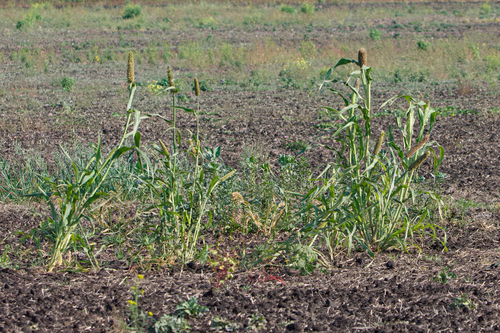
Triticum carthlicum
Nevski
Persian black wheat, Persian wheat
wikimedia· cc0
Wikimedia Commons - Tracey Slotta
Summary
Source: WikipediaTriticum carthlicum Nevski, 1934, the Persian wheat, is a wheat with a tetraploid genome. Some scholars refer to it as T. turgidum subspecies carthlicum. Recent research suggest that T. carthlicum originated from a cross between domesticated emmer wheat and T. aestivum.
Description
A tetraploid grass in the wheat family with four sets of chromosomes. It is grown as a grain crop in the Turkish Caucasus region up to 2,100 m altitude in temperate climates.
Edible Uses
The seeds are eaten as cereal.
Traditional Uses
The seeds are eaten.
This uses section is brief — help expand it
Distribution
It is a temperate plant. It is grown as a grain crop in the Turkish Caucasus region up to 2,100 m altitude.
Where It Grows
Asia, Caucasus, Georgia, Iran, Middle East, Turkey, Türkiye,
Other Information
It is a cultivated food plant.
Synonyms
Also Known As
Dik'a
References (9)
- Bot. Not. 114:49. 1961
- Bussman, R. W., et al, 2016, A comparative ethnobotany of Khevsureti, Samtskhe-Javakheti, Tusheti, Svaneti, and Racha-Lechkhumi, Republic of Georgia (Sakartvelo), Caucasus. Journal of Ethnobiology and Ethnomedicine.
- Bussman, R. W., et al, 2021, Unity in diversity—food plants and fungi of Sakartvelo (Republic of Georgia), Caucasus. Journal of Ethnobiology and Ethnomedicine (2021) 17:72 p 13
- Chemonics International Inc., 2000, Biodiversity Assessment of Georgia. USAID Contract. (As Triticum carthlicum)
- Facciola, S., 1998, Cornucopia 2: a Source Book of Edible Plants. Kampong Publications, p 182 (As Triticum carthlicum)
Show all 9 references Hide references
- Plants for a Future database, The Field, Penpol, Lostwithiel, Cornwall, PL22 0NG, UK. http://www.scs.leeds.ac.uk/pfaf/
- Uphof,
- USDA, ARS, National Genetic Resources Program. Germplasm Resources Information Network - (GRIN). [Online Database] National Germplasm Resources Laboratory, Beltsville, Maryland. Available: www.ars-grin.gov/cgi-bin/npgs/html/econ.pl (10 April 2000)
- Wiersema, J. H. & Leon, B., 2013, World Economic Plants. A Standard Reference CRC Press. 2nd Ed. p 699