Elaeocarpus obovatus
G. Don
Hard quandong
iNaturalist· cc-by-nc
(c) Nathanael Green, some rights reserved (CC BY-NC), uploaded by Nathanael Green
iNaturalist· cc-by
(c) Tony van Kampen, some rights reserved (CC BY), uploaded by Tony van Kampen
iNaturalist· cc-by-sa
(c) Greg Tasney, some rights reserved (CC BY-SA), uploaded by Greg Tasney
Summary
Source: WikipediaElaeocarpus obovatus, commonly known as hard quandong, blueberry ash, whitewood, grey carabeen, freckled oliveberry or gray carrobeen, is a species of flowering plant in the family Elaeocarpaceae and is endemic to eastern Australia. It is a tree with buttress roots at the base of the trunk, egg-shaped to lance-shaped leaves with the narrower end towards the base, racemes of white flowers, and blue, oval fruit.
Description
A large evergreen tree. It can have buttresses. It grows 15 m tall. The flowers are white and bell shaped. The fruit is 8-12 mm long by 7-9 mm wide. They are blue.
Edible Uses
The fruit is eaten.
Distribution
It is a warm temperate plant.
Where It Grows
Australia*,
Cultivation
We have no specific information for this species, but members of this genus generally grow well in full sun to moderate shade, requiring a fertile, moist but well-drained soil. A fast-growing tree.
Propagation
The seed of most species in this genus is covered by a hard, woody shell and can be very slow and erratic to germinate, sometimes taking 2 years or more. Filing down the shell, or cracking it (being very careful not to damage the seed) in order to allow the ingress of moisture can help to greatly speed up germination. Sow the seed in containers in light shade. When the seedlings are large enough to handle, prick them out into individual pots and grow them on until large enough to plant out, Cuttings of almost ripe shoots, in a sandy soil in a frame. The leaves should be left on the stem.. Many species strike readily from cuttings.
Other Uses
The seeds have been used as beads in necklaces. A fast-growing tree, it is suitable for use in windbreaks.
References (2)
- Edible and Useful Native Plants (off internet)
- Fern Useful tropical plants.
More from Elaeocarpaceae
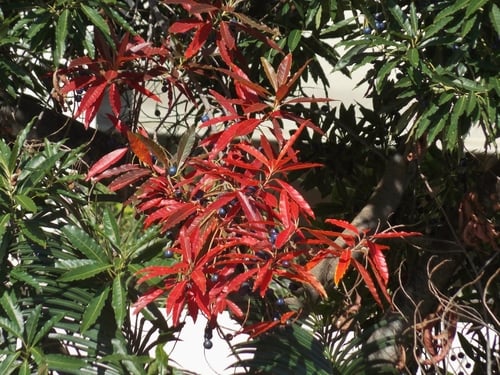
Elaeocarpus angustifolius
Blue quandong, Silver quandong
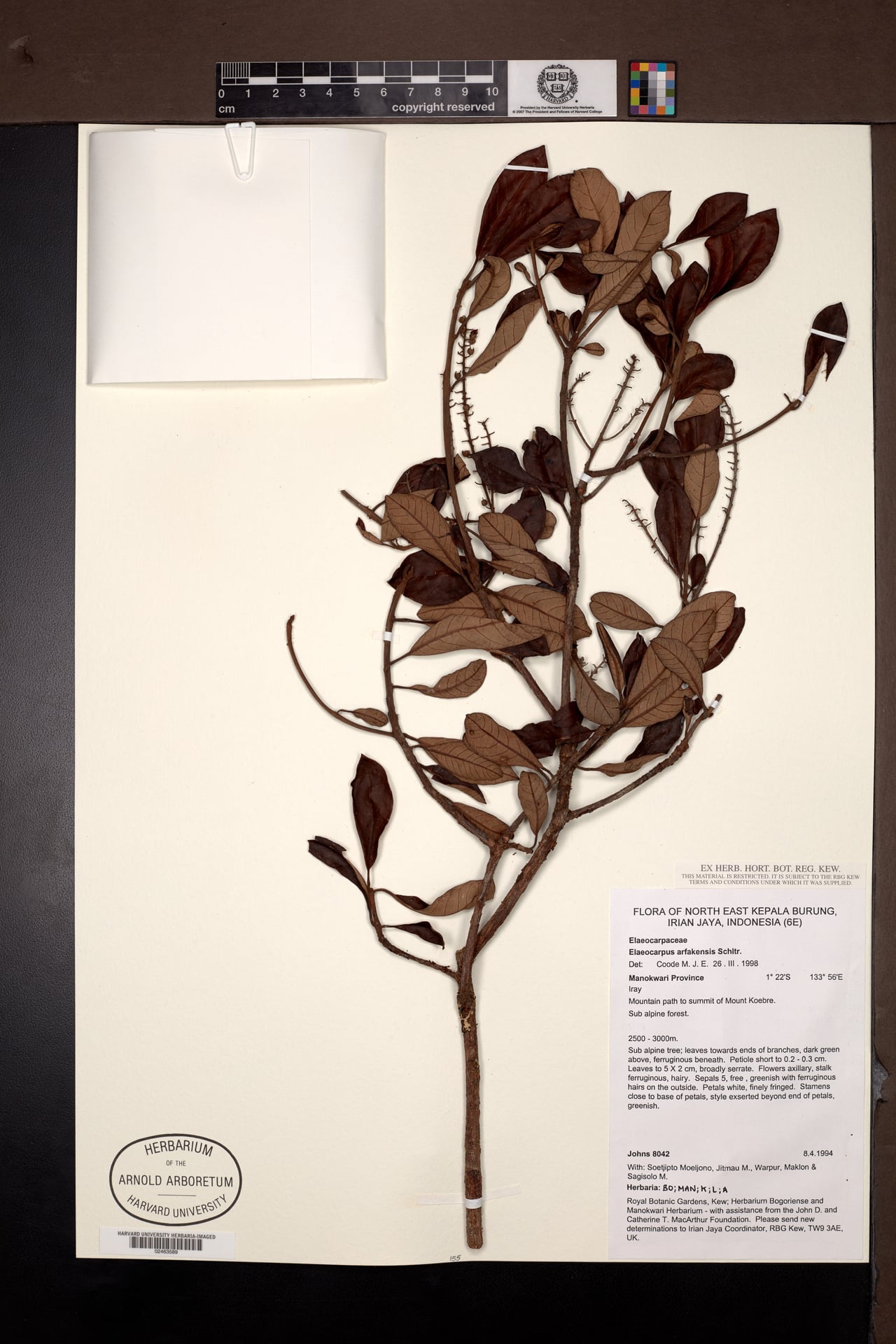
Elaeocarpus arfakensis
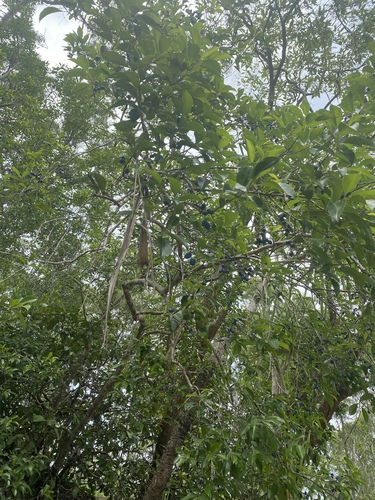
Elaeocarpus arnhemicus
Arnhem Land quandong, Bony Quandong
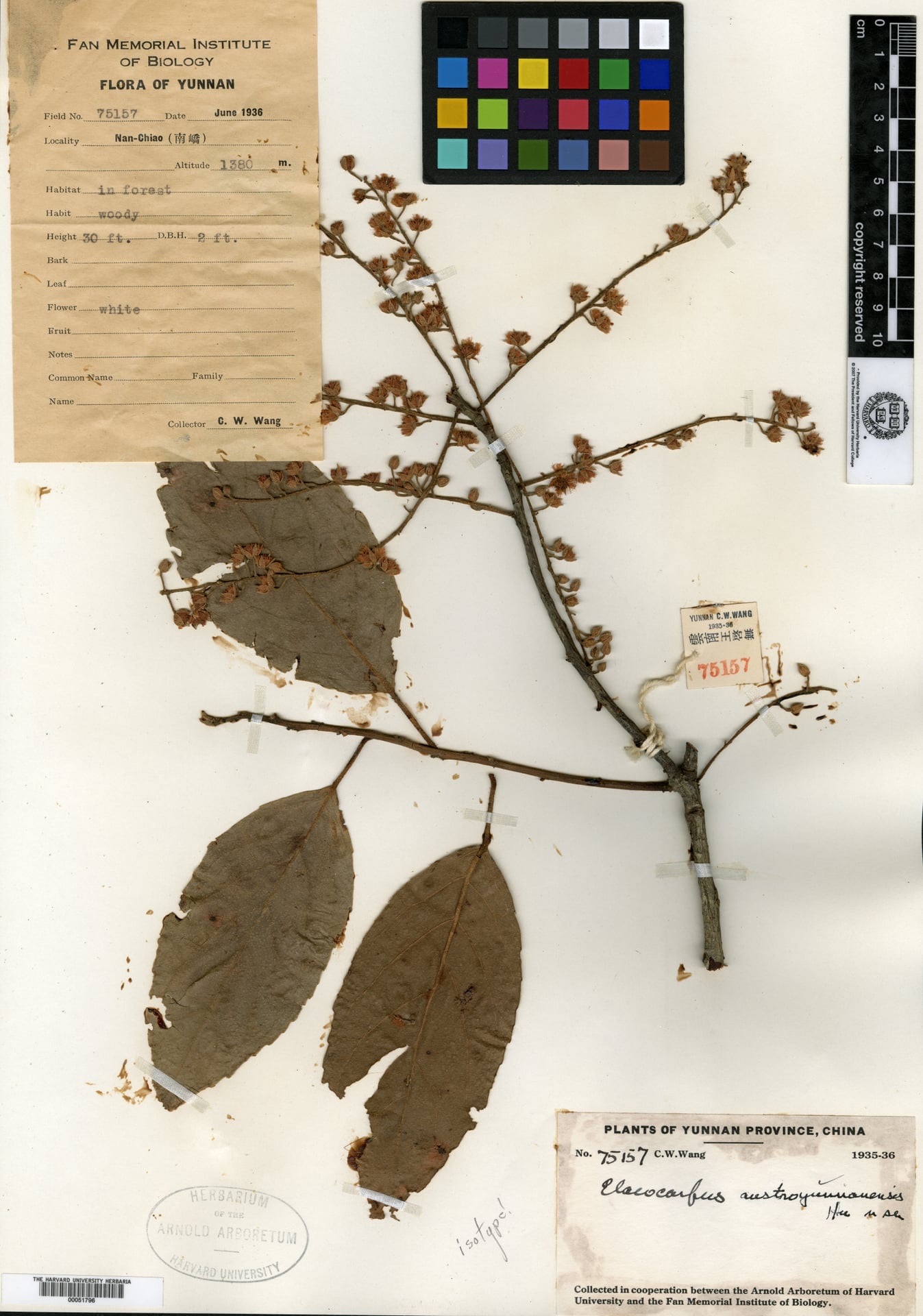
Elaeocarpus austroyunnanensis
Elaeocarpus bancroftii
Queensland almond, Karanda nut, Johnson River almond, Ebony Heart, Kuranda quandong, Grey nut
Elaeocarpus blepharoceras