Hagenia abyssinica
(Bruce) J. F. Gmel.
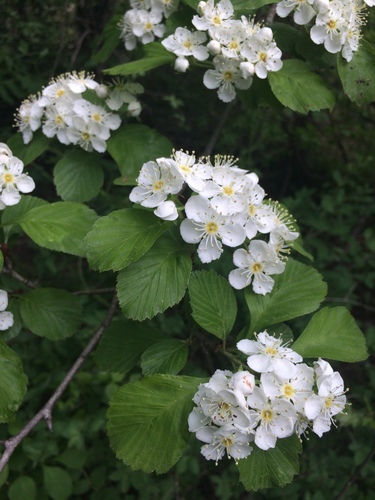
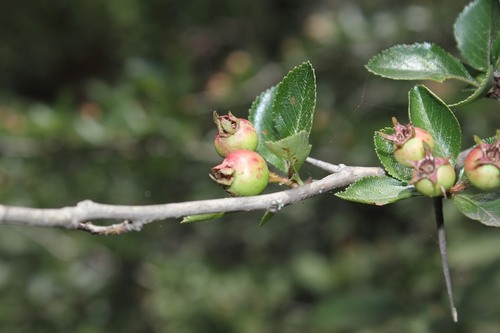
iNaturalist· cc-by-nc-sa
(c) Thomas Brooks, some rights reserved (CC BY-NC-SA), uploaded by Thomas Brooks
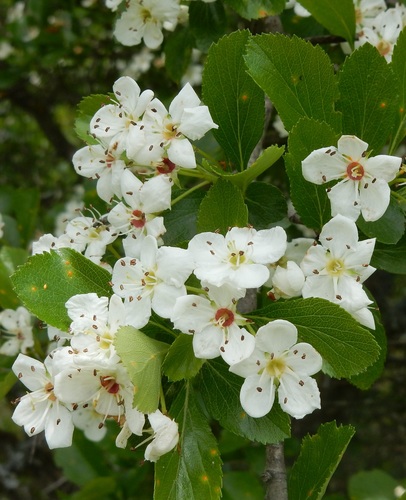
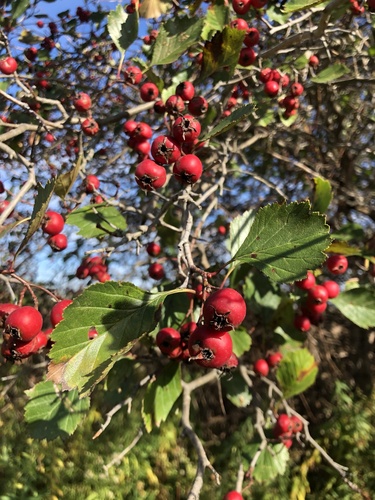
iNaturalist· cc-by-nc
(c) Bart Wursten, some rights reserved (CC BY-NC)
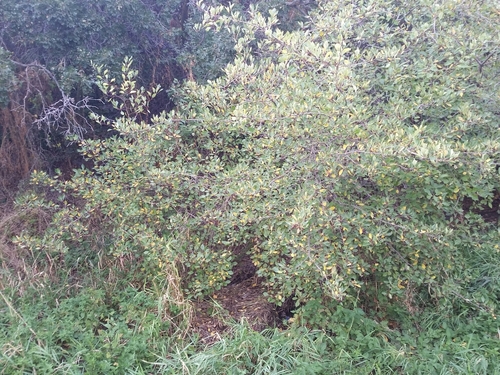
iNaturalist· cc-by-nc
(c) Bart Wursten, some rights reserved (CC BY-NC)
Description
A tree. It grows 25 m high. The crown is rounded and often umbrella shaped. The bark is red-brown and is papery and peels off. The flowers are pinkish-white. They hang in long stalks and are of one sex.
Edible Uses
The fresh fruit is pounded and eaten. The seeds and herb are also edible portions.
Traditional Uses
The fresh fruit is pounded and eaten.
This uses section is brief — help expand it
Medicinal Uses
A drug obtained from the tree, known as Kousso, comprises the entire inflorescence kept in form by a band wound transversely round it. The active principle is koussin or kosin, C31H38O10, which is soluble in alcohol and alkalis, and may be given directly in doses or in an infusion of the coarsely powdered flowers. It is considered to be an effectual anthelmintic for tapeworm, Taenia solium.
Known Hazards
Possibly edible — exercise caution.
Distribution
It is a tropical plant. It is easily killed by fire. It grows along the edges of rainforest and spreads into burnt grassland. It suits humid locations.
Where It Grows
Africa, Burundi, Central Africa, Central African Republic, CAR, Congo, East Africa, Eritrea, Ethiopia, Kenya, Malawi, Rwanda, Sudan, Tanzania, Uganda, Zambia,
Cultivation
A plant of the dry to moist tropics, where it is found at elevations from 1,800 - 4,300 metres. It grows best in areas where annual daytime temperatures are within the range 25 - 32°c, but can tolerate 5 - 36°c. It prefers a mean annual rainfall in the range 1,000 - 1,600mm, but tolerates 400 - 1,800mm. Prefers a sunny position. Prefers a fertile, well-drained, medium-textured soil. Prefers a pH in the range 6 - 7.5, tolerating 5.5 - 8.5. Flowering and seeding can be observed almost throughout the year, with a break in the months with the coldest temperatures. Mature trees are tolerant of fire, and heavy fires create ideal germination conditions for the small wind-dispersed seeds. The plant is unable to regenerate in areas suffering from a high level of grazing. Young trees have poor competitive ability. Plants can recover well after a forest fire. The plant is usually dioecious, but with some polygamous specimens.
Propagation
Seed - they can be stored dry without special requirements for 6 - 12 months. Germination is about 40 - 60% after 2 - 3 weeks from sowing. The seed is very light: there are 400 - 500 seeds per gram.
Other Uses
The bark is used for dyeing textiles yellowish red. The heartwood is dark red to red-brown; the sapwood is creamy yellow. The grain is straight, with occasionally some silver grain when cut radially. The wood is medium soft, moderately heavy but not durable, and is subject to attack by borers and termites. It is fairly easy to saw; planing may be difficult due to interlocked grain, but the moulding, boring and turning are satisfactory; pre-boring before screwing is essential; nail-holding power is high. The wood has a handsome appearance and is used for making furniture, poles, flooring, carving and cabinet making. A good source of firewood and charcoal. The trees are employed in soil-conservation activities. A fire-resistant species, it can be planted to form a firebreak. The tree constantly sheds leaves, providing mulch and green manure. In an experiment in Makete District Tanzania, grain yield of wheat was measured on eight different farms for a two-year period. The threshed wheat yield under a pruned H. abyssinica canopy averaged 810 kg/ha compared to 600kg/ha on parts of the field located at least 30 metres from a tree.
Notes
There is one Hagenia species. Possibly edible. It is also used in medicine.
Also Known As
Heto, Koso, Kousso, Umugeeti
References (5)
- Alemneh, D., 2020, Ethnobotany of wild edible plants in Yilmana Densa and Quarit Districts of West Gojjam Zone, Amhara Region, Ethiopia. Ethnobotany Research & Applications. 20:47
- Fowler, D. G., 2007, Zambian Plants: Their Vernacular Names and Uses. Kew. p 83
- Molla, A., Ethiopian Plant Names. http://www.ethiopic.com/aplants.htm
- Seyoum, Y., et al, 2015, Edible Wild Fruit Trees and Shrubs and Their Socioeconomic Significance in Central Ethiopia. Ethnobotany Research & Applications. 14:183-197
- White, F., Dowsett-Lemaire, F. and Chapman, J. D., 2001, Evergreen Forest Flora of Malawi. Kew. p 446