Pentachondra pumila
(J.R. Forst. & G. Forst.) R. Br.
Carpet frilly heath
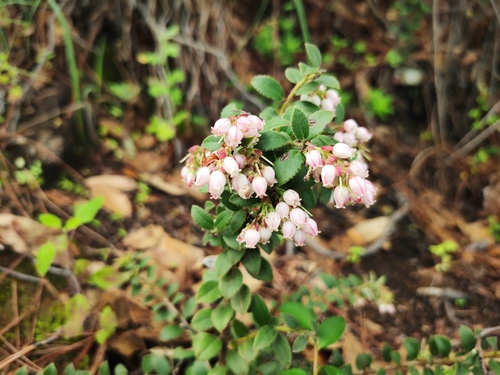
iNaturalist· cc-by-nc-sa
(c) neomyrtus, some rights reserved (CC BY-NC-SA)
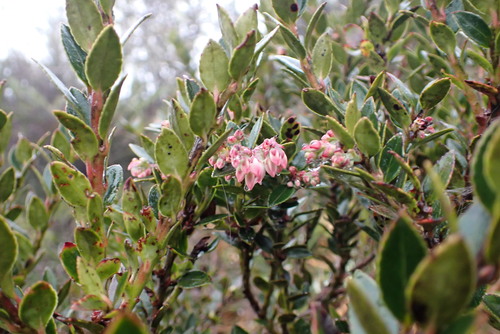
iNaturalist· cc-by-nc
(c) hamishg, some rights reserved (CC BY-NC), uploaded by hamishg
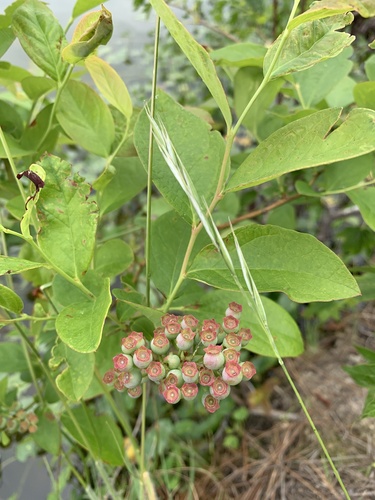
iNaturalist· cc-by-nc
(c) Chris Hone, some rights reserved (CC BY-NC), uploaded by Chris Hone
Summary
Source: WikipediaPentachondra pumila, also known as carpet heath, is a small alpine shrub in the epacris family (Ericaceae). It is commonly found in Australia and New Zealand in areas of high rainfall, being known for its small white flowers as well as its red, hollow fruit that grows on branch ends. It is distinguishable as a prostrate, mat-like shrub, growing in rocky or boggy alpine areas. The fruit is edible and is a food source for many species of bird.
Description
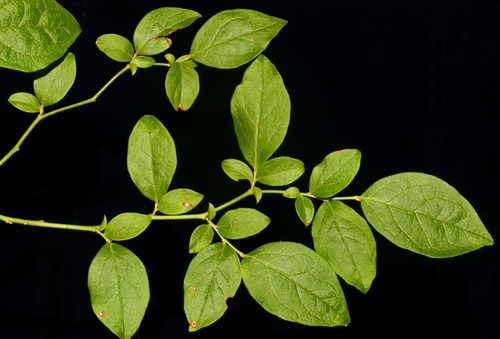
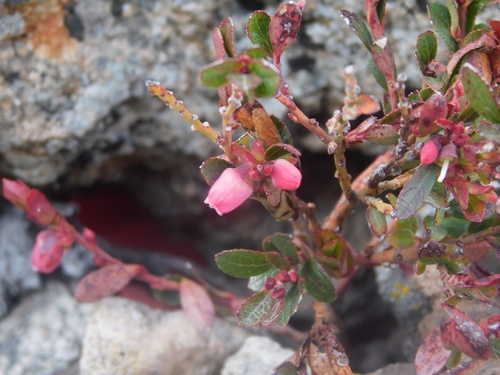
A very small shrub. It forms mats. It grows 5-15 cm high and spreads 50-150 cm wide. Young growth can be hairy. The branches are long and wiry and often form roots when near the ground. The small branches are rough. The leaves are 0.3-0.6 cm long by 0.2 cm wide. The are oblong and crowded. They are stiff and curved inwards and have a sharp tip. The flowers are like tubes and 0.4 cm long. They are white with spreading lobes. The fruit are about 0.8 cm across. They are almost round and bright red.
Edible Uses
The fruit can be eaten raw or cooked. It is sweet and watery, and takes the form of a fleshy drupe around 12mm in diameter, made up of roughly 5–10 one-seeded nuts.
Medicinal Uses
None known
Distribution
It is a temperate plant. It grows above the tree line in subalpine regions. It needs well drained acidic soils. It can tolerate low temperatures and snow. It suits hardiness zones 8-9. Tasmania Herbarium.
Where It Grows
Australia*, New Zealand, Tasmania*,
Cultivation
Plants can be grown from cuttings of soft wood. It can also be grown from layered stems.
Propagation
Seed is best sown as soon as it is ripe in autumn. Germination can be very slow, sometimes taking up to 5 years. Stored seed, and possibly fresh seed too, benefits from scarification before sowing. Sow stored seed as soon as it is received. Two or three periods of cold stratification lasting 4–6 weeks each can help reduce germination time. Once seedlings are large enough to handle, prick them into individual pots and grow them on in the greenhouse for at least their first winter. Plant out into permanent positions in late spring or early summer, after the last expected frosts, and consider providing frost protection for at least the first winter outdoors. Half-ripe cuttings can be taken in July or August in a frame, though subsequent growth is slow. Rooted offsets can also be divided.
Other Uses
None known Special Uses
Production
It is slow growing. The fruit take about a year to ripen.
Notes
There are 3-5 Pentachondra species.
References (13)
- Bodkin, F., 1991, Encyclopedia Botanica. Cornstalk publishing, p 770
- Brickell, C. (Ed.), 1999, The Royal Horticultural Society A-Z Encyclopedia of Garden Plants. Convent Garden Books. p 769
- Codd, P., Payne, B. & Woolcock, C., 1998, The Plant Life of Kosciusko. Kangaroo Press. p 28
- Cronin, L., 1989, The Concise Australian Flora. Reed. p 31
- Cundall, P., (ed.), 2004, Gardening Australia: flora: the gardener's bible. ABC Books. p 1009
Show all 13 references Hide references
- Curtis, W.M., 1963, The Students Flora of Tasmania Vol 2 p 429
- Elliot, W.R., & Jones, D.L., 1997, Encyclopedia of Australian Plants suitable for cultivation. Vol 7. Lothian. p 196
- Etherington, K., & Imwold, D., (Eds), 2001, Botanica's Trees & Shrubs. The illustrated A-Z of over 8500 trees and shrubs. Random House, Australia. p 514
- Kirkpatrick, J., 1997, Alpine Tasmania, An Illustrated guide to the flora and vegetation. Oxford, p 53
- Low, T., 1991, Wild Food Plants of Australia. Australian Nature FieldGuide, Angus & Robertson. p 131
- Plants for a Future database, The Field, Penpol, Lostwithiel, Cornwall, PL22 0NG, UK. http://www.scs.leeds.ac.uk/pfaf/
- Tasmanian Herbarium Vascular Plants list p 27
- Whiting, J. et al, 2004, Tasmania's Natural Flora. Tasmania's Natural Flora Editorial Committee PO Box 194, Ulverstone, Tasmania, Australia 7315 p 142