Acrotriche prostrata
F. Muell.
Trailing ground berry
iNaturalist· cc-by
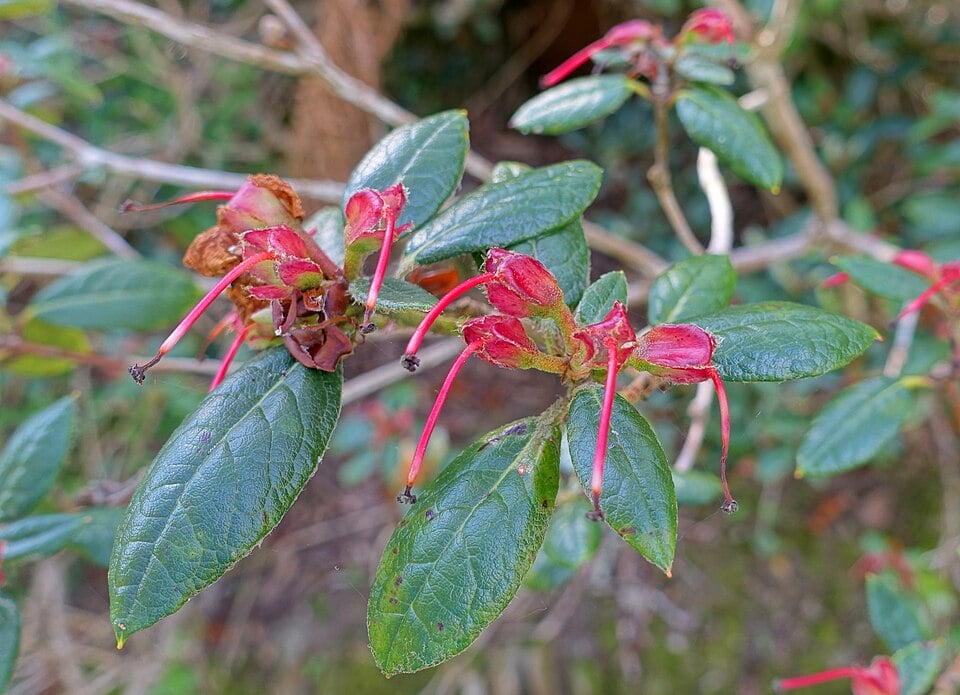
(c) Elspeth Swan, some rights reserved (CC BY), uploaded by Elspeth Swan
iNaturalist· cc-by-nc
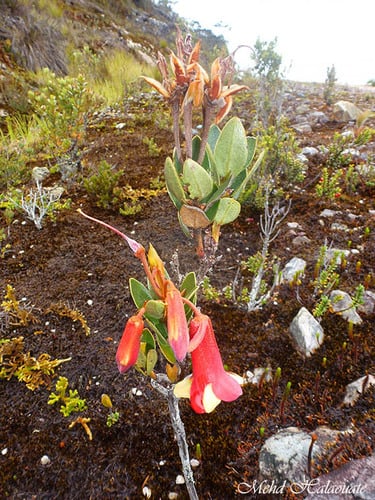
(c) bmoyle, some rights reserved (CC BY-NC)
Summary
Source: WikipediaAcrotriche prostrata, commonly known as trailing ground-berry, is a species of flowering plant in the family Ericaceae and is endemic to Victoria. It is a trailing shrub with prostrate stems, widely spreading, lance-shaped to egg-shaped leaves and spikes of 5 to 14 light green flowers and spherical, green drupes.
Description
A trailing shrub or it may lie along the ground. It grows 30-50 cm high and spreads 50-100 cm wide. The small branches often produce roots at the nodes. The leaves are 1-2 cm long and 1 cm wide. The leaves are widest near the base and taper to a fine point. The leaves are hairy on the upper surface. The flowers are tube shaped. They are 0.8 cm long and in clusters or 7-10 flowers. They grow on the older wood. They are greenish and release lots of nectar.
Edible Uses
The fruit can be eaten raw. Flowers are a source of nectar.
Traditional Uses
The nectar is used as a drink. The fruit are eaten raw.
This uses section is brief — help expand it
Medicinal Uses
None known.
Distribution
It needs a cool location. It can be in light shade. It will grow in moist, well-drained soil.
Where It Grows
Australia*,
Cultivation
Plants can be grown from cuttings.
Other Uses
None known.
Notes
There are 14 Acrotriche species. They are in Australia.
References (5)
- Cribb, A.B. & J.W., 1976, Wild Food in Australia, Fontana. p 181
- Cronin, L., 1989, The Concise Australian Flora. Reed. p 31
- Elliot, W.R., & Jones, D.L., 1982, Encyclopedia of Australian Plants suitable for cultivation. Vol 2. Lothian. p 145
- Hastings Advance Community College, 2017, Uses for Native Plants of the Mornington Peninsula. 86pp. p 11
- Morley, B.D., & Toelken, H.R., (Eds), 1983, Flowering Plants in Australia. Rigby. p 112