Pennisetum purpureum
Schumach. & Thonn.
Elephant grass, Napier grass
iNaturalist· cc-by-nc
(c) taiwan_reevesia, some rights reserved (CC BY-NC)
iNaturalist· cc-by-nc
(c) taiwan_reevesia, some rights reserved (CC BY-NC)
iNaturalist· cc-by-nc
(c) taiwan_reevesia, some rights reserved (CC BY-NC)
Summary
Source: WikipediaA perennial grass reaching 4m tall and 0.5m wide with fast growth. Hardy to UK zone 9. Attracts wildlife and grows in light, medium, or heavy soils across a range of pH levels. Tolerates semi-shade to full sun, prefers moist conditions but can endure drought.
Description
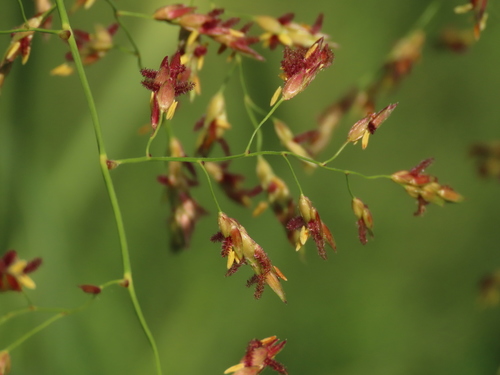
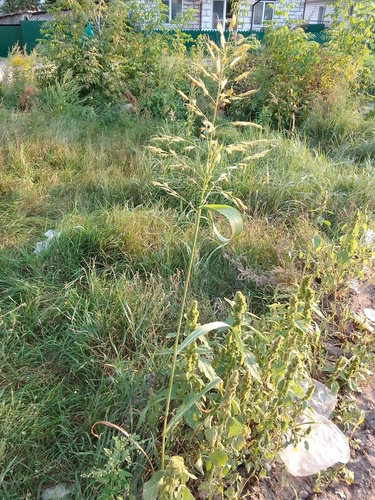
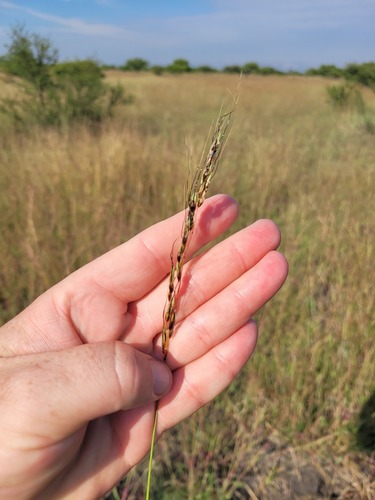
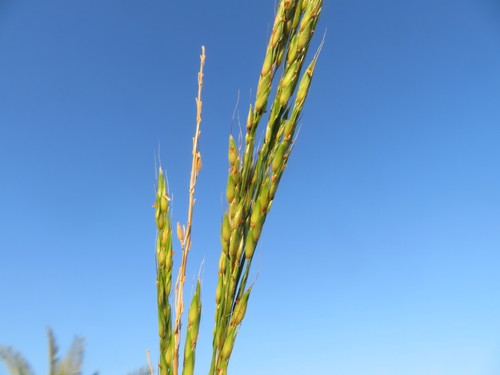
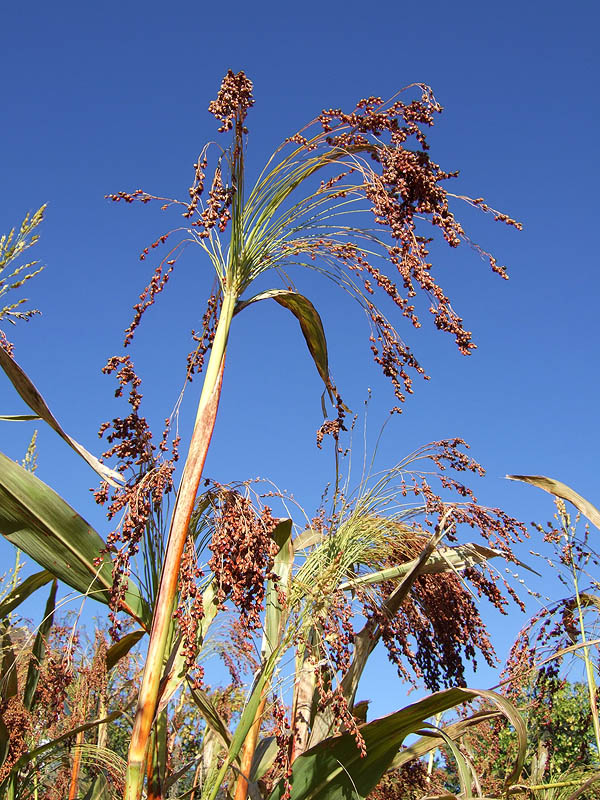
A grass which keeps growing from year to year. It forms large clumps. It can grow 2-4 m tall. The leaf blades are 4 cm wide. The edges become very sharp. The flowers are dense and spike like. They are yellow, brown and purple.
Edible Uses
The young shoots and leaves are added to soups to contribute extra protein, carbohydrates, fat, and vitamins — note that this soup has a mildly laxative effect. Very young, tender inflorescences are also eaten as a vegetable. The stalks can be burned to ash, and the soluble and insoluble components separated with water to produce a vegetable salt. The plant has been successfully crossed with Pennisetum glaucum (pearl millet) to produce forage grasses, with potential for development as a perennial millet staple crop.
Traditional Uses
The young shoots or leaves are added to soup. They are also stir fried. The stalks are reduced to ash and then the soluble and insoluble parts separated out with water to produce vegetable salt.
Medicinal Uses
The plant has numerous medicinal applications in Africa. Nigerian material has been found to contain a trace of alkaloid in the leaf. Extracts from all parts of the plant are strongly diuretic. An infusion of both foliage and culms is used to treat anuria, while a root decoction is given for blennorrhoea. A leaf infusion serves as a gargle and mouthwash for buccal complaints, gingivitis, and thrush. Sap pressed from young shoots heated over a fire is mixed with a little salt and instilled into the eyes for cataracts. The sap is also regarded as healing on wounds, alone or combined with other herbs, and the stem sap is used for ear problems. Pith from the ends of young culms is softened in fire and applied as a dressing for contusions. Ash from roasted culms is blended into an ointment with palm oil or false shea butter (Lophira lanceolata) to treat herpes and other skin complaints. This ash is also added to slices of large green banana and placed on ulcers on the soles of the feet. The seed is reportedly used to cure headaches.
Known Hazards
Can cause nitrate poisoning in cattle if fed as sole diet component.
Distribution
It is a tropical grass. It grows in sand and loam. It can grow in warm temperate areas. It does well in fertile soils with a rainfall or 1,000-1,500 mm per year. It grows below 2,300 m above sea level. It can grow in arid places. In Sichuan and Yunnan.
Where It Grows
Africa, American Samoa, Angola, Asia, Australia, Belize, Benin, Brazil, Burkina Faso, Burundi, Cameroon, Central Africa, Central African Republic, CAR, Central America, China, Colombia, Congo DR, Costa Rica, Côte d'Ivoire, East Africa, Ecuador, El Salvador, Equatorial Guinea, Eswatini, Ethiopia, Gabon, Gambia, Ghana, Guiana, Guinea, Guinée, Guyana, Hawaii, India, Indochina, Indonesia, Ivory Coast, Jamaica, Japan, Kenya, Kiribati, Laos, Liberia, Madagascar, Malawi, Malaysia, Mauritius, Middle East, Mozambique, Myanmar, Namibia, New Caledonia, Nicaragua, Nigeria, Norfolk Island, Oman, Pacific, Panama, Papua New Guinea, PNG, Peru, Rwanda, Samoa, Sao Tome and Principe, Saudi Arabia, SE Asia, Seychelles, Sierra Leone, South Africa, Southern Africa, South America, St Helena, Sudan, Swaziland, Taiwan, Tanzania, Thailand, Togo, Trinidad & Tobago, Uganda, USA, Venezuela, West Africa, West Indies, Zambia, Zimbabwe,
Cultivation
It is found at elevations from near sea level to 2,000 metres in the tropics. It grows best in areas where the mean annual temperature falls within the range 21 - 40°c, but can tolerate 15 - 45°c. Plants can survive occasional light frosts. It prefers a mean annual rainfall in the range 1,500 - 2,500mm, tolerating 850 - 4,000mm. Grows best in a sunny position, but tolerates light shade. Succeeds in most soils - although it can persist and compete in dry, sandy soils, it grows best in rich, well-drained conditions. Established plants have a deep root system and are extremely drought tolerant. It prefers a pH in the range 5 - 6.5, tolerating 4.5 - 8.2. The plant has escaped from cultivation and becomes naturalized in many parts of the tropics and subtropics. In moist rich places it forms reed jungles, thereby eliminating the use of such land for cultivation. It forms dense perennial stands, difficult to penetrate, which inhibits the establishment of other vegetation. A fast-growing plant, under favourable conditions it can reach a height of several metres within 60 days. Plants recover well after fire, and can become the dominant vegetation in fire-affected savannah communities. Seed set is usually poor, possibly due to low pollen viability. Moderate shade tolerance. USDA Hardiness Zone 8 - 11. Carbon Farming Solutions - Cultivation: global crop. Management: hay (Describes the non-destructive management systems that are used in cultivation).
Propagation
Plants are easily grown from cuttings, seed, or by dividing established clumps. To propagate from cuttings, simply push small stem sections into damp soil either in place or in a nursery setting — roots strike very quickly.
Other Uses
Napier grass is used as fodder and is extremely palatable to all classes of livestock when young and leafy. It can cause nitrate poisoning in cattle if used as the sole dietary component. Oxalate levels measure 2.5–3.1% of dry matter, though no associated problems have been recorded. Dry matter yields of 10–30 t/ha/yr are common when well fertilised, reaching up to 85 t/ha/yr under optimal conditions; unfertilised stands yield 2–10 t/ha/yr. More frequent cuts (up to every 45 days) reduce dry matter yield but improve leaf production. The plant is used in push-pull pest management, repelling stem-borer moths — a major cause of yield loss in Africa — away from maize. It improves soil fertility and protects arid land from erosion. Additional uses include firebreaks, windbreaks, paper pulp production, bio-oil, biogas, and charcoal. It is planted as a boundary marker between garden plots, though its roots can compete with adjacent crops. Stands established on riverbanks help prevent erosion and scour. It is commonly intercropped with cassava and banana in home gardens.
Other Information
It is a commercially cultivated vegetable. It is only a minor food.
Notes
There are about 100 Pennisetum species.
Nutrition
| Part | Moisture | kJ | kcal | Protein | Vit A | Vit C | Iron | Zinc |
|---|---|---|---|---|---|---|---|---|
| Shoots | 93.7 | 67 | 16 | 2.6 | — | — | 2 | — |
Synonyms
Also Known As
Achara, Agwoh, Azong grass, Balanco, Bibingu, Capim elefante, Litete, Mane, Nsenjere, Ntisong, Vao povi, Xiang cao
References (29)
- Akoroda M.O., 1990, Ethnobotany of Telfairia occidentalis (Cucurbitaceae) among Igbos of Nigeria. Economic Botany. 44(1) pp 29-39
- Ambasta, S.P. (Ed.), 2000, The Useful Plants of India. CSIR India. p 438
- Beskr. Guin. pl. 44. 1827
- Bunderson, W. T. et al, 2002, Common Agroforestry Species in Malawi. Malawi Agroforestry Extension Project, Pubication No. 46, Lilongwe. p 49
- Burkill, H. M., 1985, The useful plants of west tropical Africa, Vol. 2. Kew.
Show all 29 references Hide references
- Burkill, I.H., 1966, A Dictionary of the Economic Products of the Malay Peninsula. Ministry of Agriculture and Cooperatives, Kuala Lumpur, Malaysia. Vol 2 (I-Z) p 1717
- Borrell, O.W., 1989, An Annotated Checklist of the Flora of Kairiru Island, New Guinea. Marcellin College, Victoria Australia. p 24
- Dalziel, J. M., 1937, The Useful plants of west tropical Africa. Crown Agents for the Colonies London.
- Fongnzossie Fedoung, E., et al, 2020, Wild edible plants and mushrooms of the Bamenda Highlands in Cameroon: ethnobotanical assessment and potentials for enhancing food security. Journal of Ethnobiology and Ethnomedicine 16:12
- Food Composition Tables for use in Africa FAO http://www.fao.org/infoods/directory No. 709
- Fowler, D. G., 2007, Zambian Plants: Their Vernacular Names and Uses. Kew. p 71
- Grivetti, L. E., 1980, Agricultural development: present and potential role of edible wild plants. Part 2: Sub-Saharan Africa, Report to the Department of State Agency for International Development. p 32
- Grubben, G. J. H. and Denton, O. A. (eds), 2004, Plant Resources of Tropical Africa 2. Vegetables. PROTA, Wageningen, Netherlands. p 563
- Hussey, B.M.J., Keighery, G.J., Cousens, R.D., Dodd, J., Lloyd, S.G., 1997, Western Weeds. A guide to the weeds of Western Australia. Plant Protection Society of Western Australia. p 64
- Kays, S. J., and Dias, J. C. S., 1995, Common Names of Commercially Cultivated Vegetables of the World in 15 languages. Economic Botany, Vol. 49, No. 2, pp. 115-152
- Lazarides, M. & Hince, B., 1993, Handbook of Economic Plants of Australia, CSIRO. p 185
- Long, C., 2005, Swaziland's Flora - siSwati names and Uses http://www.sntc.org.sz/flora/
- Mercy, N. A., et al, 2016, Survey of Wild Vegetables in the Lebialem Highlands of South Western Cameroon. Journal of Plant Sciences 4(6): 172-184
- Okigbo, B.N., Vegetables in Tropical Africa, in Opena, R.T. & Kyomo, M.L., 1990, Vegetable Research and development in SADCC countries. Asian Vegetable Research and development Centre. Taiwan. p 42
- Paczkowska, G. & Chapman, A.R., 2000, The Western Australian Flora. A Descriptive Catalogue. Western Australian Herbarium. p 113
- Peters, C. R., O'Brien, E. M., and Drummond, R.B., 1992, Edible Wild plants of Sub-saharan Africa. Kew. p 26
- Purseglove, J.W., 1972, Tropical Crops. Monocotyledons. Longmans p 203
- Royal Botanic Gardens, Kew (1999). Survey of Economic Plants for Arid and Semi-Arid Lands (SEPASAL) database. Published on the Internet; http://www.rbgkew.org.uk/ceb/sepasal/internet [Accessed 3rd June 2011]
- Salako, V. K. et al, 2013, Home gardens: an assessment of their biodiversity and potential contribution to conservation of threatened species and crop wild relatives in Benin. Genet Resour Crop Evol
- Swaziland's Flora Database http://www.sntc.org.sz/flora
- Terashima, H., et al, 1992, Ethnobotany of the Lega in the Tropical Rainforest of Eastern Zaire (Congo): Part Two, Zone de Walikale, African Study Monographs, Suppl. 19:1-60
- Terra, G.J.A., 1973, Tropical Vegetables. Communication 54e Royal Tropical Institute, Amsterdam, p 65
- Williams, C.N., Chew, W.Y., and Rajaratnam, J.A., 1989, Tree and Field Crops of the Wetter Regions of the Tropics. Longman, p 241
- Zapfack, L., et al, 2001, Ethnobotanical Survey of the Takamanda Forest Reserve. Consultancy Report PROFA, Cameroon. p 28