Panicum kalaharense
Mez
Kalahari buffalo grass
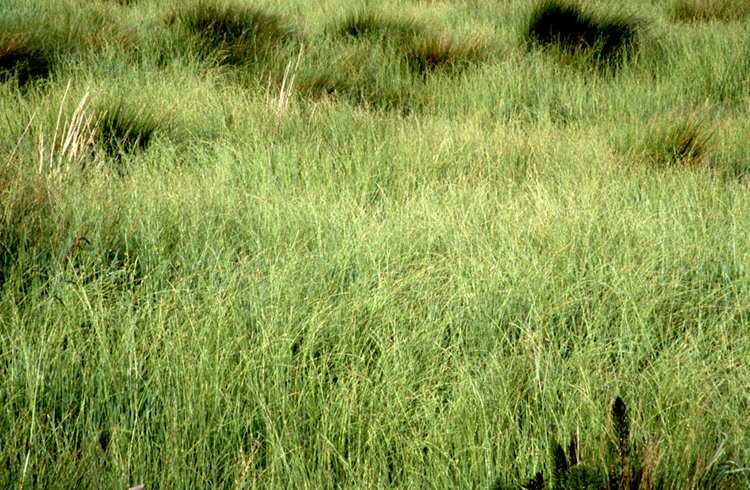
iNaturalist· cc-by-nc
(c) Ben Strohbach, some rights reserved (CC BY-NC), uploaded by Ben Strohbach
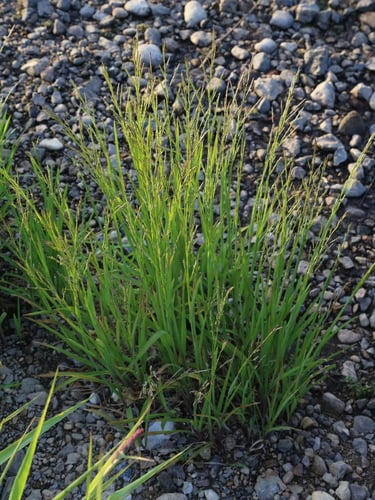
iNaturalist· cc-by-nc
(c) Ben Strohbach, some rights reserved (CC BY-NC), uploaded by Ben Strohbach
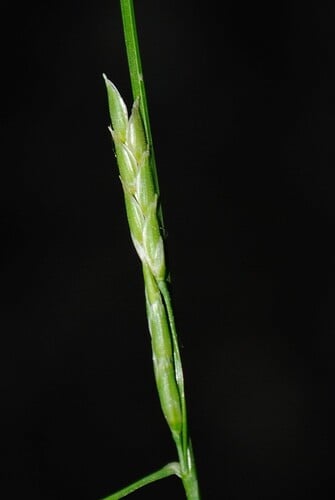
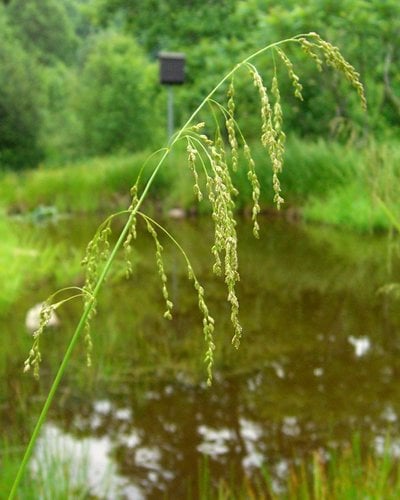
iNaturalist· cc-by-nc
(c) Francois du Randt, some rights reserved (CC BY-NC), uploaded by Francois du Randt
Description
A herb. It is a tussock forming grass. It has rhizomes or underground stems and keeps growing from year to year. It grows 2.5 m high.
This description is brief — help expand it
Edible Uses
The seeds are used as a cereal grain and for making porridge.
Traditional Uses
The seeds are used as a cereal and for porridge.
This uses section is brief — help expand it
Distribution
A subtropical plant. It grows in hot arid places. It grows in areas with an annual rainfall of 150 mm. It grows in dry sandy soils. It grows between 300-1,400 m above sea level. It can tolerate drought. It can grow in arid places.
Where It Grows
Africa, Angola, Botswana, Central Africa, East Africa, Mozambique, Namibia, South Africa, Southern Africa, Zimbabwe,
Cultivation
A plant of drier areas in the tropics and subtropics, where it is found at elevations of 500 - 1,200 metres. It grows in areas where the mean annual rainfall is within the range 300 - 600mm. Established plants are drought resistant. Found in the wild on sandy soils. This species photosynthesizes by a more efficient method than most plants. Called the 'C4 carbon-fixation pathway', this process is particularly efficient at high temperatures, in bright sunlight and under dry conditions.
Notes
There are about 500 Panicum species.
Also Known As
Ruperere
References (6)
- Bot. Jahrb. Syst. 57:187. 1921
- Jardin, C., 1970, List of Foods Used In Africa, FAO Nutrition Information Document Series No 2.p 5
- Royal Botanic Gardens, Kew (1999). Survey of Economic Plants for Arid and Semi-Arid Lands (SEPASAL) database. Published on the Internet; http://www.rbgkew.org.uk/ceb/sepasal/internet [Accessed 3rd June 2011]
- Ruiters-Welcome, A. K., 2019, Food plants of southern Africa. Ph.D. thesis. Univ. of Johannesburg p 89
- Welcome, A. K. & Van Wyk, B.-E., 2019, An inventory and analysis of the food plants of southern Africa. South African Journal of Botany 122 (2019) 136–179
Show all 6 references Hide references
- World Checklist of Useful Plant Species 2020. Royal Botanic Gardens, Kew