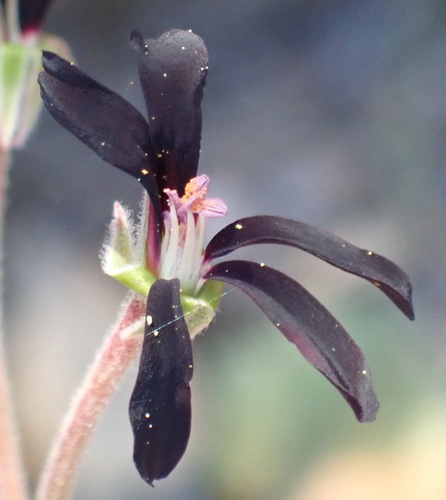
Pelargonium zonale
(L.) L'Hér.
Horseshoe Geranium
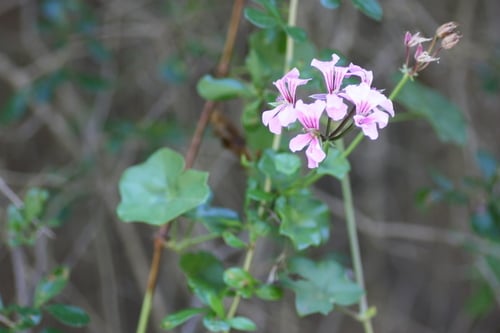
iNaturalist· cc-by-nc
(c) Evie Bowen, some rights reserved (CC BY-NC), uploaded by Evie Bowen
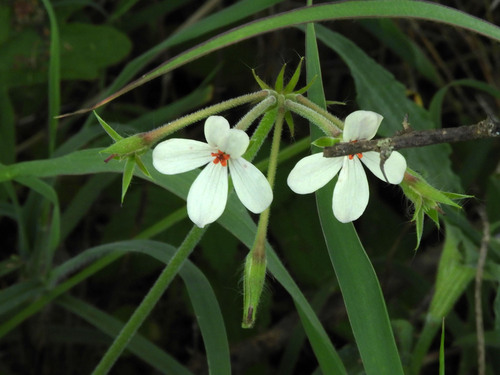
iNaturalist· cc-by-nc
(c) Alan Lee, some rights reserved (CC BY-NC), uploaded by Alan Lee
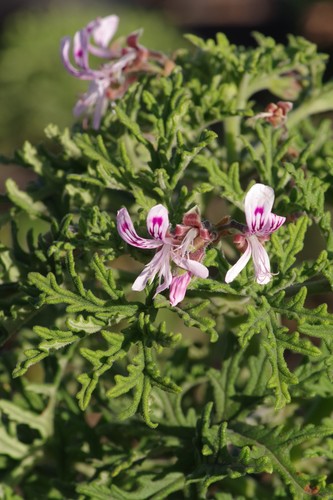
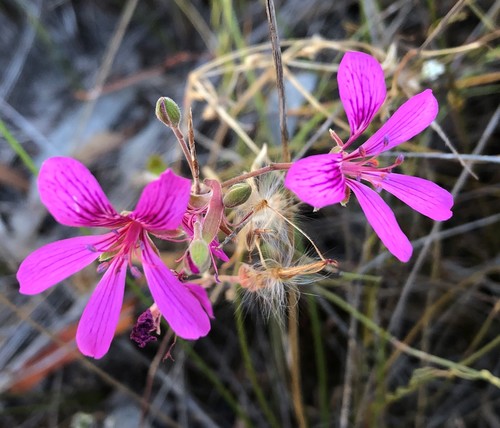
iNaturalist· cc-by-nc
(c) Johan Eksteen, some rights reserved (CC BY-NC), uploaded by Johan Eksteen
Summary
Source: WikipediaPelargonium zonale is a species of Pelargonium native to southern Africa in the western regions of the Cape Provinces, in the geranium family. It is one of the parents of the widely cultivated plant Pelargonium × hortorum, often called "geranium", "horseshoe geranium", "zonal geranium" or "zonal pelargonium".
Description
A herb or small shrub. It has red or white flowers. It has a disagreeable smell when crushed.
This description is brief — help expand it
Edible Uses
Leaves and stems are edible cooked as a vegetable.
Medicinal Uses
All parts of the plant are astringent.
Distribution
It is a tropical plant.
Where It Grows
Africa, Asia, Australia, Canary Is., Cuba, Dominican Republic, Haiti, Himalayas, Korea, Mexico, Middle East, Morocco, Myanmar, North America, Pakistan, Puerto Rico, SE Asia, South Africa, Southern Africa, Spain, Trinidad-Tobago, USA, Uzbekistan, Vietnam, West Indies, Yemen,
Propagation
Seed is best sown as soon as it is ripe in a greenhouse. Stored seed should be sown in early spring under glass. Germination requires a minimum temperature of 13°c and usually occurs within 2 weeks, though it can sometimes take several months. Prick seedlings out into individual pots when large enough to handle and grow on in the greenhouse for at least the first winter. If planting outdoors, set out in early summer and consider providing extra winter protection. Cuttings can be taken at almost any time during the growing season, though early summer is ideal to allow the new plant to establish before winter.
Other Uses
An essential oil is obtained from the plant.
Notes
There are about 230 Pelargonium species.
Synonyms
References (6)
- H. G. A. Engler, Pflanzenr. IV. 129(Heft 53):383. 1912
- Hedrick, U.P., 1919, (Ed.), Sturtevant's edible plants of the world. p 469
- Hibbert, M., 2002, The Aussie Plant Finder 2002, Florilegium. p 227
- Kew Plants of the World Online
- Plants for a Future database, The Field, Penpol, Lostwithiel, Cornwall, PL22 0NG, UK. http://www.scs.leeds.ac.uk/pfaf/
Show all 6 references Hide references
- Plants of Haiti Smithsonian Institute http://botany.si.edu/antilles/West Indies