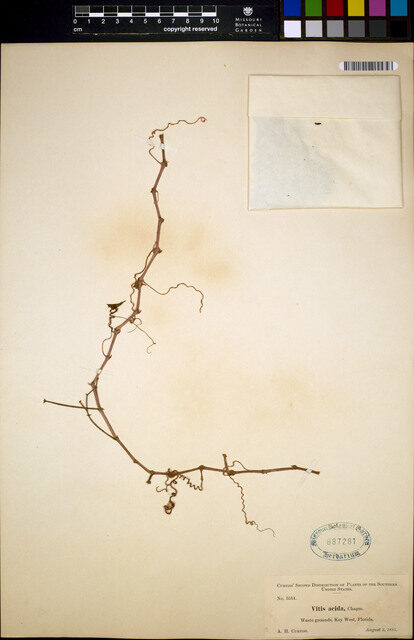
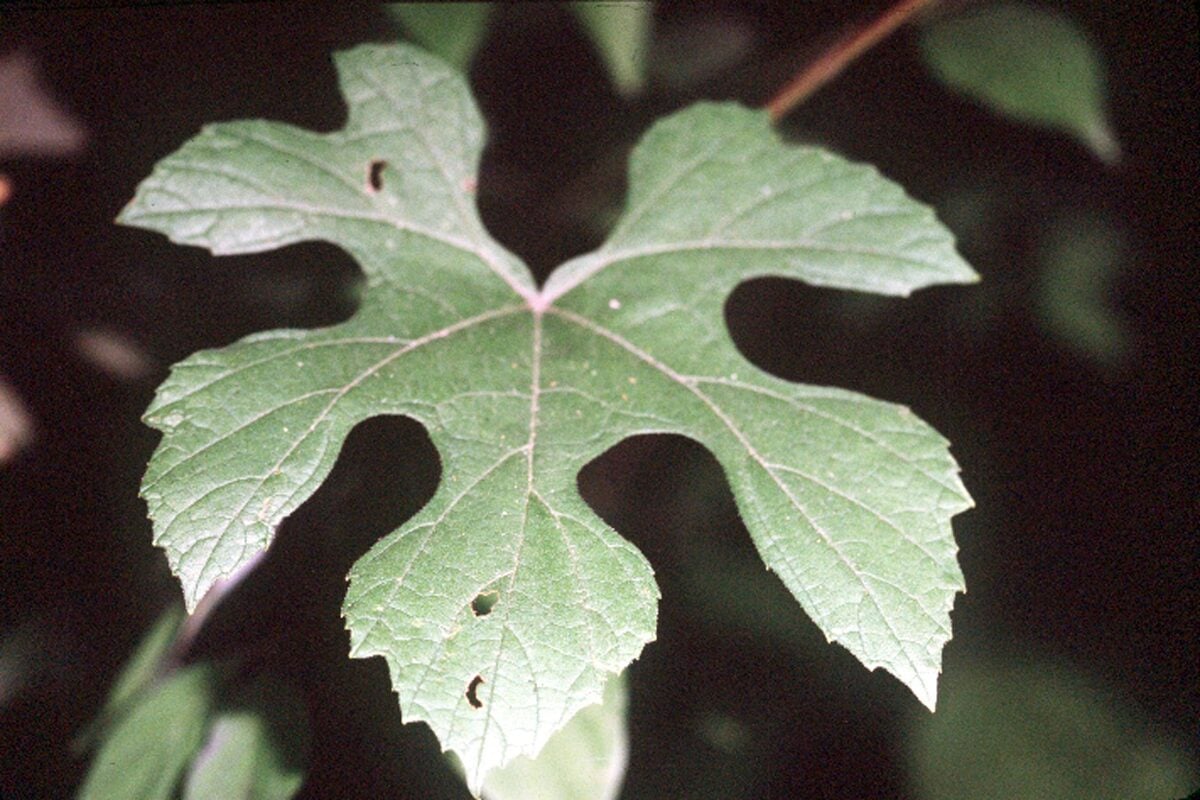
Tetrastigma lanceolarium
(Roxb.) Planch.
Grape tetrastigma
wikimedia· cc-by-sa
Wikimedia Commons - Vinayaraj
wikimedia· cc-by-sa
Wikimedia Commons - Vinayaraj
Description
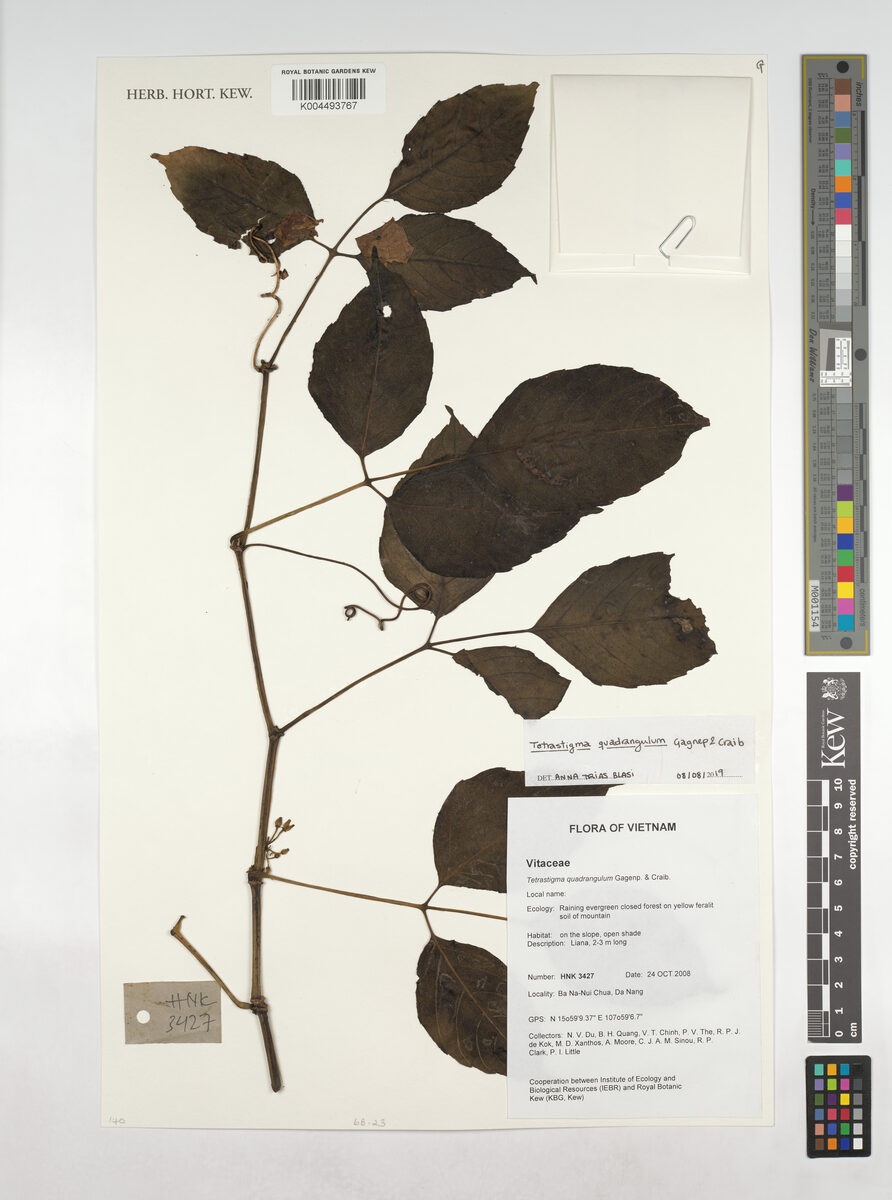
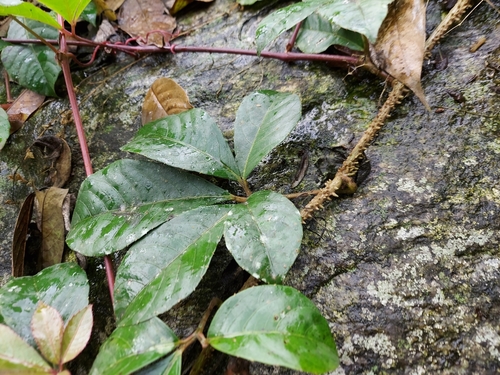
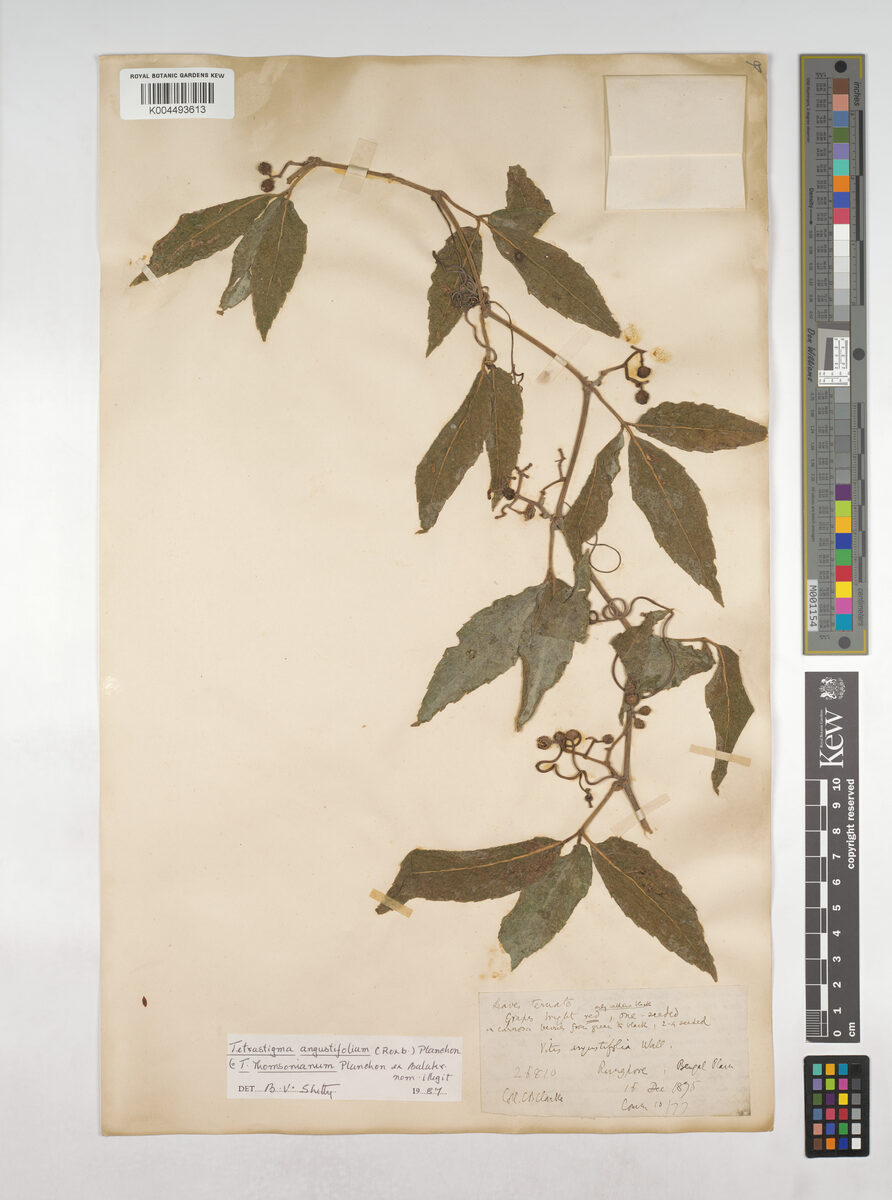
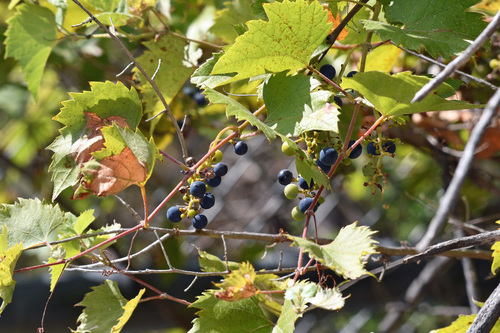
A large evergreen climber. The stems are flattened, woody and grooved. They climb over the top of large trees in the forest. The leaves have 3-5 leaflets at the tip. They have a long stout stalk. The leaflets are fleshy. The flowers are yellow. They occur in much branched compact clusters. The fruit are round or pear shaped berries. They are white when ripe. They are 2 cm long. They have 1-2 seeds.
Edible Uses
The ripe fruit are eaten raw or cooked, and are often prepared with fish. The leaves are also eaten.
Traditional Uses
The ripe fruit are eaten raw or cooked. They are often cooked with fish. The leaves are eaten.
This uses section is brief — help expand it
Distribution
A tropical plant. It grows in tropical and subtropical forests up to 2,100 m above sea level.
Where It Grows
Asia, India, Indochina, Indonesia, Laos, Malaysia, Myanmar, Northeastern India, SE Asia, Sikkim,
Cultivation
Plants can be grown from seeds and cuttings. It can also be grown by budding or grafting.
Synonyms
Also Known As
Akar cabang limah, Berseri, Bherseri, Choral, Khajgolicha, Krishna, Kyi-ni-nwe, Poto lashi, Salbra, Tadi ripum, Tetrastigma lancet, Tundor-sik, Tundror-rik, Zaibra
References (16)
- Ambasta, S.P. (Ed.), 2000, The Useful Plants of India. CSIR India. p 631
- Chakraborty, S. & Chaturbedi, H. P., 2014, Some Wild Edible Fruits of Tripura- A Survey. Indian Journal of Applied research. (4) 9
- A. L. P. P. de Candolle & A. C. de Candolle, Monogr. phan. 5:423. 1887
- Dobriyal, M. J. R. & Dobriyal, R., 2014, Non Wood Forest Produce an Option for Ethnic Food and Nutritional Security in India. Int. J. of Usuf. Mngt. 15(1):17-37
- Kumbhojkar, M.S. & Vartak, V.D., 1988, Ethnobotanical Studies on Wild Edible Grapes from Sacred Groves in Western Maharashtra. J. Econ. Tax. Bot. Vol. 12 No. 2 pp 257-263
Show all 16 references Hide references
- Majumdar, K and Datta, N., 2009, Traditional wild edible fruits for the forest dwellers of Tripura, India. Pleione 3(2) 167-178
- Martin, F.W. & Ruberte, R.M., 1979, Edible Leaves of the Tropics. Antillian College Press, Mayaguez, Puerto Rico. p 225
- Milow, P., et al, 2013, Malaysian species of plants with edible fruits or seeds and their evaluation. International Journal of Fruit Science. 14:1, 1-2
- Mozhui, R., et al, 2011, Wild edible fruits used by the tribals of Dimapur district of Nagaland, India. Pleione 5(1): 56 - 64
- Patiri, B. & Borah, A., 2007, Wild Edible Plants of Assam. Geethaki Publishers. p 28
- Pullaiah, T., et al, Ethnobotany of India, Volume 1: Eastern Ghats and Deccan.
- Savita, et al, 2006, Studies on wild edible plants of ethnic people in east Sikkim. Asian J. of Bio Sci. (2006) Vol. 1 No. 2 : 117-125
- Singh, H.B., Arora R.K.,1978, Wild edible Plants of India. Indian Council of Agricultural Research, New Delhi. p 73
- Singh, V. B., et al, (Ed.) Horticulture for Sustainable Income and Environmental Protection. Vol. 1 p 220
- Sukarya, D. G., (Ed.) 2013, 3,500 Plant Species of the Botanic Gardens of Indonesia. LIPI p 982
- World Checklist of Useful Plant Species 2020. Royal Botanic Gardens, Kew