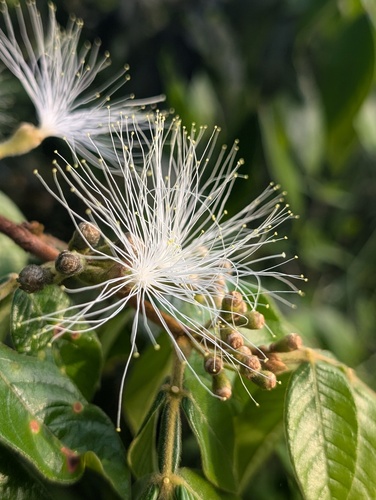
Dalea lasiathera
A. Gray
Purple prairie clover
iNaturalist· cc-by-nc
(c) Paul Tavares, some rights reserved (CC BY-NC), uploaded by Paul Tavares
gbif· cc-by-nc
vturner
iNaturalist· cc-by-nc
(c) Matthew Salkiewicz, some rights reserved (CC BY-NC), uploaded by Matthew Salkiewicz
wikimedia· cc-by-sa
Marshman at English Wikipedia / Eric Guinther (via Wikimedia Commons)
Summary
Source: WikipediaDalea lasiathera is a compact perennial reaching 0.2 m (8 inches) in height and spread. It thrives in full sun and tolerates sandy, loamy, and very alkaline soils with good drainage. The plant is drought-tolerant and hardy to UK zone 6. Insects pollinate its flowers, which bloom from late spring through summer.
Description
Dalea lasiathera is a compact perennial reaching 0.2 m (8 inches) in height and spread. It thrives in full sun and tolerates sandy, loamy, and very alkaline soils with good drainage. The plant is drought-tolerant and hardy to UK zone 6. Insects pollinate its flowers, which bloom from late spring through summer.
Edible Uses
Roots are considered edible but vary in quality. Edible Uses & Rating. Provides a modest root food resource. Taste, Processing & Kitchen Notes. Roots may be sweet and aromatic but often contain fibrous cores. Seasonality (Phenology). Flowers from late spring through summer. Safety & Cautions (Food Use). Flavor variability requires testing before harvesting larger amounts. Harvest & Processing Workflow. Roots are cleaned and typically boiled for flavor extraction. Cultivar/Selection Notes. Rarely cultivated outside restoration contexts. Look-Alikes & Confusion Risks. Similar to other prairie-clovers and best identified by floral details. Traditional/Indigenous Use Summary. Prairie-clover roots were occasionally used as sweet wild foods. Root - raw. Chewed as a snack, especially by children, and greatly enjoyed. Flowers - used as a flavouring. Crushed by hand and sprinkled on a stew after cooking. Pecos or purple prairie-clover (Dalea lasiathera) is a native leguminous plant of the Southwest. Like other prairie-clovers, its roots are edible and are generally described as sweet and pleasant, though the quality can vary between plants. Prairie-clover roots were sometimes considered flavorful enough to be compared to “natural candy,” with a fruity, food-like aroma. However, the roots are consistently woody and often splinter into fibers when chewed, making them less enjoyable as a direct food. Boiling helps release their sweetness into the water, producing a yellowish-brown broth that ranges in flavor from mild and slightly soapy to pleasantly syrup-like.The leaves of some prairie-clovers were sampled during field studies, though they are not traditionally recorded as edible. They are aromatic and resinous, with notes that can be fruity or evergreen-like. While not unpleasant in small amounts, they were rarely valued as food. Among prairie-clovers, D. lasiathera was notable to the Zuni Indians of New Mexico, who chewed its sweet-tasting roots for flavor. This cultural use highlights its role more as a chewing root than as a staple food.
Medicinal Uses
The Zuni Indians traditionally chewed the sweet-tasting roots. While other Dalea species have documented medicinal applications, D. lasiathera is primarily known for its culinary use rather than medicinal properties.
Known Hazards
Flavor variability requires testing before harvesting larger quantities.
Distribution
It is a temperate plant.
Where It Grows
Mexico, North America, USA,
Cultivation
A useful ecological species with limited culinary significance. Growing Conditions. Thrives in sunny dry grasslands. Habitat & Range. Occurs primarily in southwestern plains and desert grassland regions. Size & Landscape Performance. Performs well in natural prairie landscapes. Cultivation (Horticulture). Occasionally grown in restoration plantings. Pests & Problems. Generally hardy. Identification & Habit. Perennial herb with compound gland-dotted leaves and flower spikes. Pollinators. Attracts bees and butterflies. A perennial and grows primarily in the desert or dry shrubland biome. In its native habitat it is found on stony plains and hillsides, mesquite savannah, commonly on limestone. Upper Elevation Limit 620 metres Lower Elevation Limit 400 metres. Pecos prairie-clover grows in dry habitats of the American Southwest and is best suited to USDA Hardiness Zones 5–9. Pecos prairie-clover (Dalea lasiathera) belongs to the bean family (Fabaceae). It typically reaches 30–70 cm tall.
Propagation
Sow seed in early spring in a greenhouse. Scarify the hard seed coat by pouring nearly boiling water over the seeds, then soak in warm water for 12–24 hours until swollen. If seeds remain hard, carefully nick the seed coat and soak another 12 hours before sowing. Prick out seedlings into individual pots when large enough and plant permanently in summer.
Other Uses
Occasionally used in restoration plantings. Provides nectar for pollinators and improves soil fertility.
Synonyms
Also Known As
Purple Dalea, Pecos or purple prairie-clover (Dalea lasiathera)
References (1)
- Beckstrom-Sternberg, Stephen M., and James A. Duke. "The Foodplant Database." http://probe.nalusda.gov:8300/cgi-bin/browse/foodplantdb.(ACEDB version 4.0 - data version July 1994) (As Parosela lasianthera)