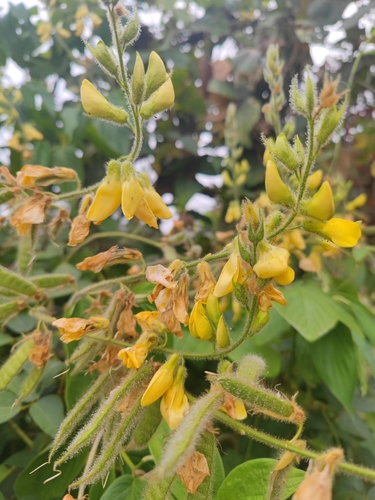
Parkinsonia florida - (Benth. ex A.Gray) S.Watson
(Benth. ex A.Gray) S.Watson
Blue Palo Verde
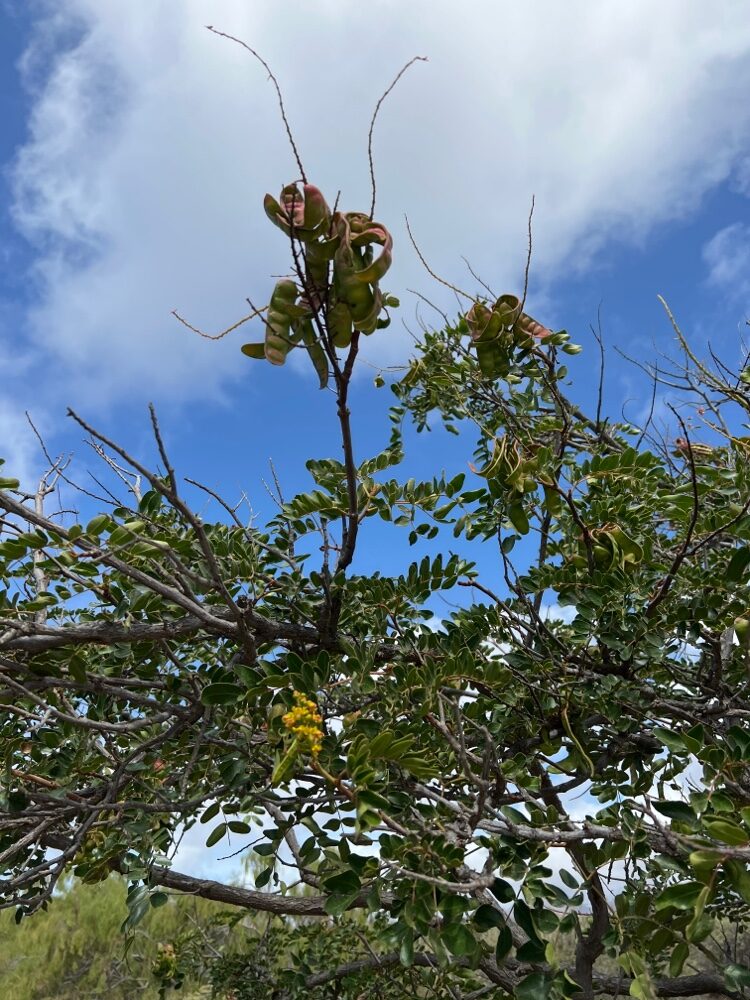
gbif· cc-by-nc
clawdea
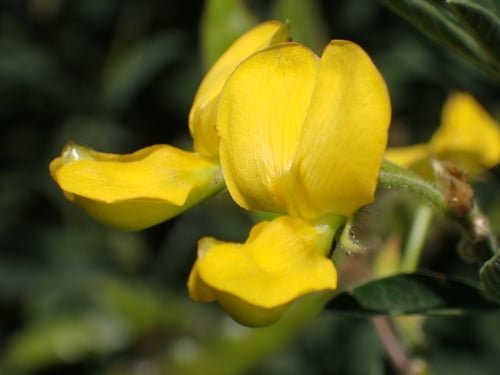
gbif· cc-by-nc
fbclub
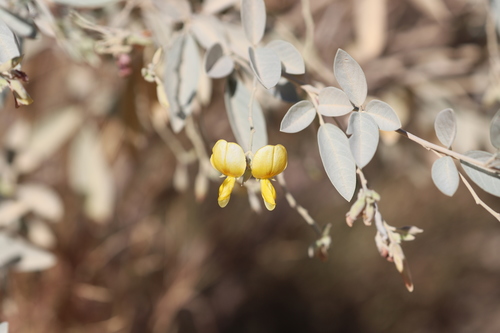
gbif· cc-by-nc
James Mitchell
Description
Parkinsonia florida is a deciduous Tree growing to 5 m (16ft) by 5 m (16ft). See above for USDA hardiness. It is hardy to UK zone 9 and is not frost tender. The flowers are pollinated by Bees, Insects. Suitable for: light (sandy) and medium (loamy) soils, prefers well-drained soil and can grow in nutritionally poor soil. Suitable pH: mildly acid, neutral and basic (mildly alkaline) soils. It cannot grow in the shade. It prefers dry or moist soil and can tolerate drought.
Edible Uses
Seeds - cooked. The dried beans were roasted (often until almost burnt) then ground into a powder and made into a mush or into cakes. Usually viewed as a famine food and only used when better foods were not available. The seedpods are 3 - 11cm long, each pod containing 1 - 8 (usually 3) flat seeds 9 - 12mm long and 5 - 7mm wide. Green pods - eaten raw. The immature pods and green seeds are eaten cooked. Blue paloverde (Parkinsonia florida), also known as desert or bigleaf paloverde, is a dominant tree of the southwestern deserts. Like all paloverde species, its pods and seeds should be regarded with caution, as they contain compounds that can cause digestive upset and are reported to be mildly poisonous. Native Americans traditionally ate both immature pods and mature seeds after cooking. The immature pods, available in late spring to summer, are moist, fibrous, and somewhat like garden peas, though stringier. Even very young pods are tough and gummy, and while boiling improves the flavor, it does little to eliminate the stringiness. The taste has elements of peas with earthy, slightly unpleasant accents. Mature beans, which develop later in summer and autumn, are hard and encased in papery pods that crumble easily when dried. After soaking and boiling, the beans soften, double in size, and taste mild and comparable to white beans, though they often develop a slimy texture. Changing the cooking water helps reduce this mucilage. Despite these issues, the beans have some food value and were used in traditional diets. However, they also suffer from frequent insect damage, so careful sorting is required. Overall, blue paloverde provides an abundant but low-quality wild food, with both young pods and mature seeds offering potential in survival situations rather than as a preferred staple.
Distribution
Southwestern N. America - California, Arizona, northern Mexico
Where It Grows
Native to: Arizona, California, Mexico Northeast, Mexico Northwest, Nevada.
Cultivation
Parkinsonia florida is a plant of arid and semi-arid climates in southwestern N. America, experiencing high summer temperatures and a highly variable rainfall. Requires a sunny position, growing in soils with low levels of nutrients, especially nitrogen and phosphorus. It is usually found on sandy to gravelly, coarse loamy to fine sandy soils overlain with fine gravel. The leaves of this plant are ephemeral, being mainly present in the rainy season. Much of the photosynthesis is carried out by the plant's green stems. This species occasionally forms hybrids throughout its range with yellow paloverde (Parkinsonia microphylla). Although many species within the family Fabaceae have a symbiotic relationship with soil bacteria, this species is said to be devoid of such a relationship and therefore does not fix atmospheric nitrogen. Suitable for Temperate Forest and Shrubland. Subtropical/Tropical Dry Shrubland. Typically hardy in Zones 8–11, thriving in hot, arid desert regions of the American Southwest.
Propagation
Seed
Other Uses
The wood is soft and close-grained. The trunk and any branches large enough were traditionally used to make ladles. The wood is used for fuel.
Synonyms
Also Known As
Blue, Desert, or Bigleaf Paloverde