Parkinsonia africana
Sonder
Wild green-hair tree
iNaturalist· cc-by-nc
(c) Alex Dreyer, some rights reserved (CC BY-NC), uploaded by Alex Dreyer
iNaturalist· cc-by-sa
(c) Tony Rebelo, some rights reserved (CC BY-SA), uploaded by Tony Rebelo
iNaturalist· cc-by-nc
(c) lougarou, some rights reserved (CC BY-NC), uploaded by lougarou
Summary
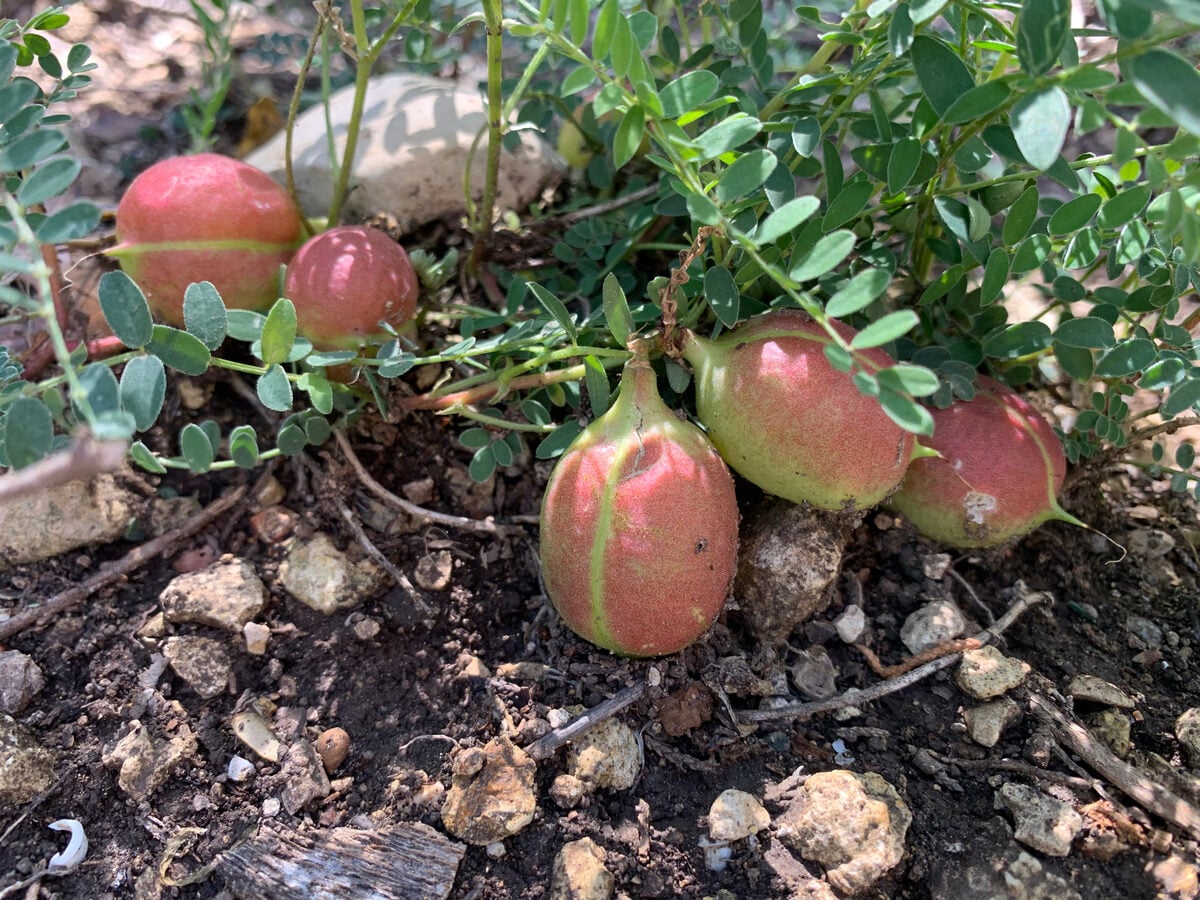
Source: WikipediaParkinsonia africana, the green-hair tree, is a species of flowering plant in the family Fabaceae, native to southern Angola, Botswana, and Namibia, and the Cape Provinces and Northern Provinces of South Africa. It is a bush growing 1–3m tall with green bark that allows for photosynthesis when the leaves are shed. It produces yellow flowers and yellow to brown pods. The wood does not crack when hot and is used to make smoking pipes.
Description
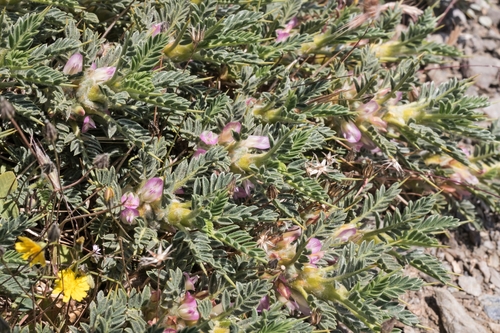
A shrub or small tree. It can grow up to 6 m tall. The branches are smooth and flexible. The young branches are bright yellow-green and armed with spines. The tree is normally leafless. Only the midribs of the leaves cling to the tree. When leaflets are present they are narrow and arranged in 8-10 opposite pairs. The flowers are small and yellow. They occur in bunches in the axils of leaf stalks and at the ends of branches. The pods are 10-15 cm long. They are reddish brown and compressed between the seeds. There are about 8 seeds per pod and they are oblong and shiny.
Edible Uses
The seeds are roasted, ground, and boiled in water as a coffee substitute or coffee additive. The fruit are prepared as a drink, and the leaves are eaten as a vegetable.
Traditional Uses
The seeds are sometimes used for coffee. They are roasted, ground and boiled in water as coffee. They are sometimes added to coffee to improve the flavour. The fruit are used to prepare a drink. The leaves are eaten as a vegetable.
Distribution
A tropical plant. It grows on sandy plains in arid areas. It grows in the desert in Namibia. It grows in stony and sandy soils. It grows between 100-1,350 m above sea level. In Costa Rica it occurs in dry lowland areas. It can grow in arid places.
Where It Grows
Africa, Angola, Argentina, Australia, Botswana, Central Africa, Central America, Costa Rica, Eswatini, Namibia, North America, South Africa, Southern Africa, Swaziland,
Notes
It can become invasive. Also as Caesalpinaceae.
Also Known As
Ehuu, Lemoendoring, Palo verde, Peulboom, Retamo
References (15)
- Grubben, G. J. H. and Denton, O. A. (eds), 2004, Plant Resources of Tropical Africa 2. Vegetables. PROTA, Wageningen, Netherlands. p 563
- ILDIS Legumes of the World http:www:ildis.org/Legume/Web
- Kew Plants of the World On line
- Linnaea 23:38. 1850
- Mannheimer, C. A. & Curtis. B.A. (eds), 2009, Le Roux and Muller's Field Guide to the Trees and Shrubs of Namibia. Windhoek: Macmillan Education Namibia. p 152
Show all 15 references Hide references
- Palgrave, K.C., 1996, Trees of Southern Africa. Struik Publishers. p 289
- Palmer, E and Pitman, N., 1972, Trees of Southern Africa. Vol. 2. A.A. Balkema, Cape Town p 887
- Royal Botanic Gardens, Kew (1999). Survey of Economic Plants for Arid and Semi-Arid Lands (SEPASAL) database. Published on the Internet; http://www.rbgkew.org.uk/ceb/sepasal/internet [Accessed 21st April 2011]
- Ruiters-Welcome, A. K., 2019, Food plants of southern Africa. Ph.D. thesis. Univ. of Johannesburg p 59
- Swaziland's Flora Database http://www.sntc.org.sz/flora
- Van Damme, P et al, 1922, Plant Uses by the Topnaar of the Kuiseb Valley Namib Desert. Afrika Focus Vol. 8(3-4):223-252
- van Wyk, B, van Wyk, P, and van Wyk B., 2000, Photographic guide to Trees of Southern Africa. Briza. p 227
- van Wyk, Ben-Erik, 2019, The diversity and multiple uses of southern African legumes. Australian Systematic Botany, 2019, 32, 519–546
- Welcome, A. K. & Van Wyk, B.-E., 2019, An inventory and analysis of the food plants of southern Africa. South African Journal of Botany 122 (2019) 136–179
- Zuchowski W., 2007, Tropical Plants of Costa Rica. A Zona Tropical Publication, Comstock Publishing. p 268