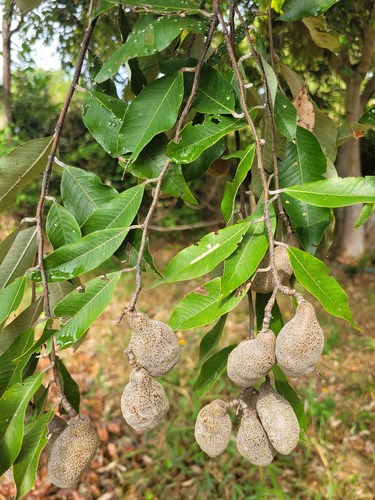
Parinari montana
Aubl.
Mountain parinari
iNaturalist· cc-by-nc
(c) Maël Lemaitre, some rights reserved (CC BY-NC), uploaded by Maël Lemaitre
iNaturalist· cc-by-nc
(c) Guillaume Léotard, some rights reserved (CC BY-NC)
Description
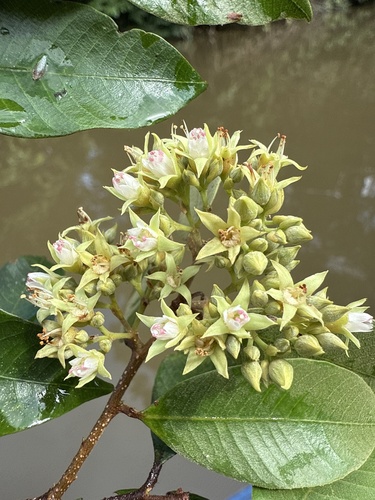
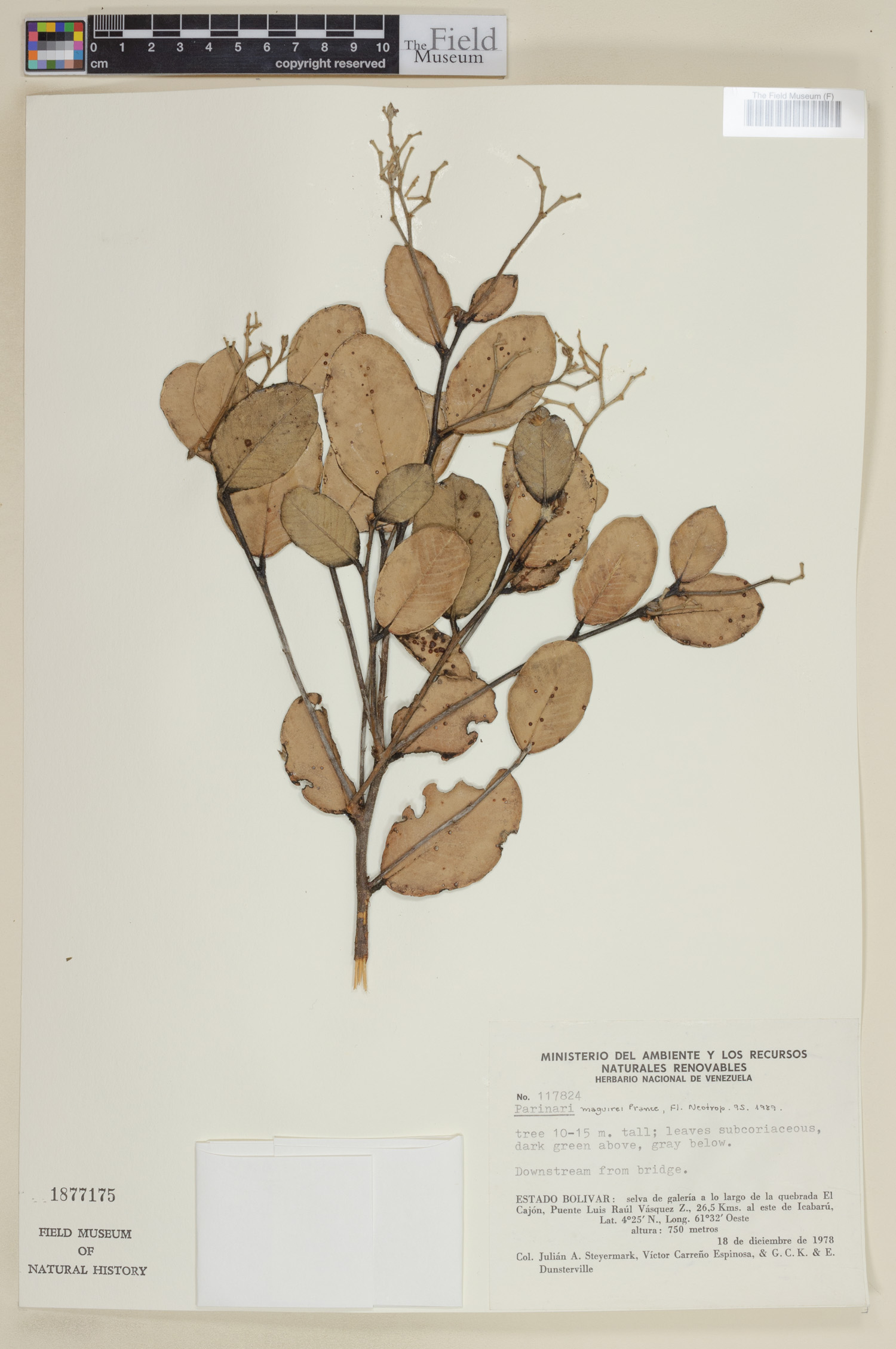
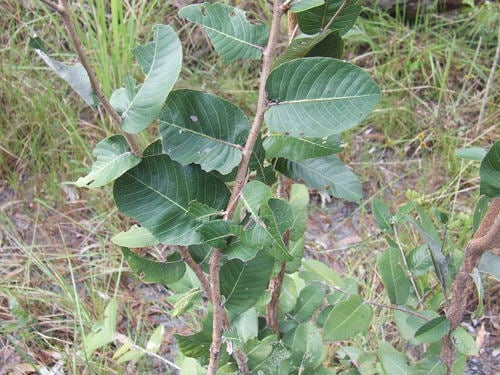
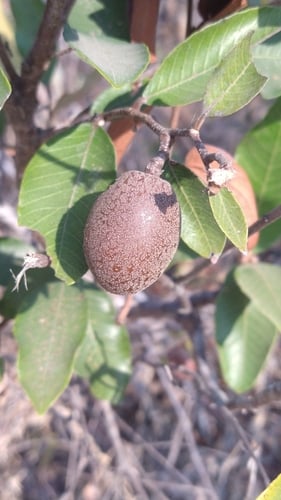
A tree. It grows 30-40 m tall. The trunk is 60 cm across. The leaves alternate and oval. They are hairy and woolly underneath. They taper to a tip at the end. The flowers are cream. The fruit is fleshy with a stone inside. The fruit are round or oval and 12-15 cm across.
Edible Uses
The kernels have an almond-like taste and can be pressed to produce oil. The fruit is also eaten.
Traditional Uses
The seeds have the taste of almonds. They can be used to produce oil.
This uses section is brief — help expand it
Distribution
A tropical plant. It grows in the rainforest.
Where It Grows
Amazon, Brazil, Colombia, Guiana, Guyana, South America,
Cultivation
Plants are grown from seed.
Production
In the Amazon plants flower from June to November. A tree can produce 100-150 fruit.
Other Information
It is occasionally cultivated.
Notes
There are about 50 Parinari species. They grow in the tropics.
Synonyms
Also Known As
Castanheira-de-pedra, Kamo, Mepri, Oiti coro, Pajuari, Pajuda da mata, Pajura grande, Pajura pedra, Pajurazeiro, Parari, Toneka
References (10)
- FAO, 1995, Edible Nuts. Non Wood Forest Products 5.
- Hedrick, U.P., 1919, (Ed.), Sturtevant's edible plants of the world. p 464
- Kermath, B. M., et al, 2014, Food Plants in the Americas: A survey of the domesticated, cultivated and wild plants used for Human food in North, Central and South America and the Caribbean. On line draft. p 606
- Lopez-Diago, D. & Garcia, N., 2021, Wild edible fruits of Colombia. Biota ColomBiana 22 (2) p 35
- Martin, F. W., et al, 1987, Perennial Edible Fruits of the Tropics. USDA Handbook 642 p 92
Show all 10 references Hide references
- Menninger, E.A., 1977, Edible Nuts of the World. Horticultural Books. Florida p 59
- Paz, F. S., et al, 2021, Edible Fruit Plant Species in the Amazon Forest Rely Mostly on Bees and Beetles as Pollinators. Journal of Economic Entomology, XX(XX), 2021, 1–13
- Roa, J. A. G. & Boada, D. S. G., 2018, Fundación para el Fortalecimiento de la Fruticultura y Plantas Alimenticias no Convencionales en Colombia.
- Smith, N., Mori, S.A., et al, 2004, Flowering Plants of the Neotropics. Princeton. p 101 (Drawing)
- Wickens, G.E., 1995, Edible Nuts. FAO Non-wood forest products. FAO, Rome. p 115