Palaquium rostratum
(Miq.) Burck.
Nyatoh terung tree
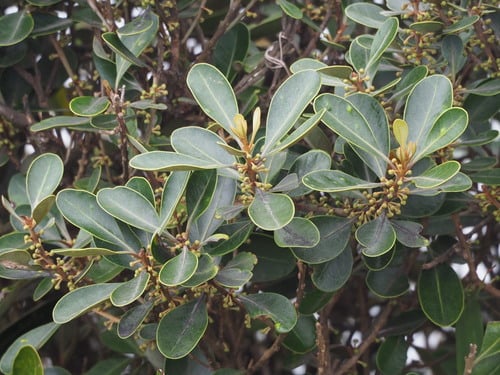
iNaturalist· cc-by-nc
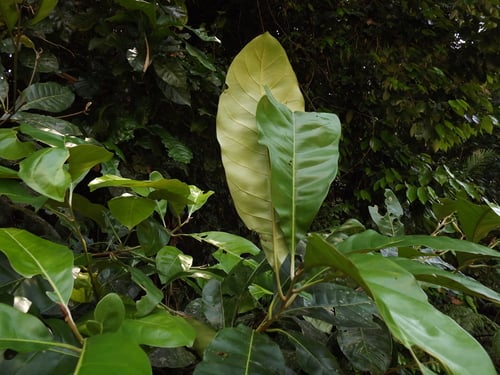
(c) Hani Ristiawan, some rights reserved (CC BY-NC), uploaded by Hani Ristiawan
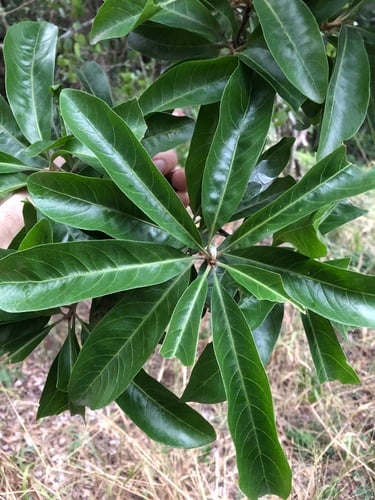
iNaturalist· cc-by-nc
(c) Hani Ristiawan, some rights reserved (CC BY-NC)
Summary
Source: WikipediaPalaquium rostratum is a tree in the family Sapotaceae. It is native to Southeast Asia.
Description
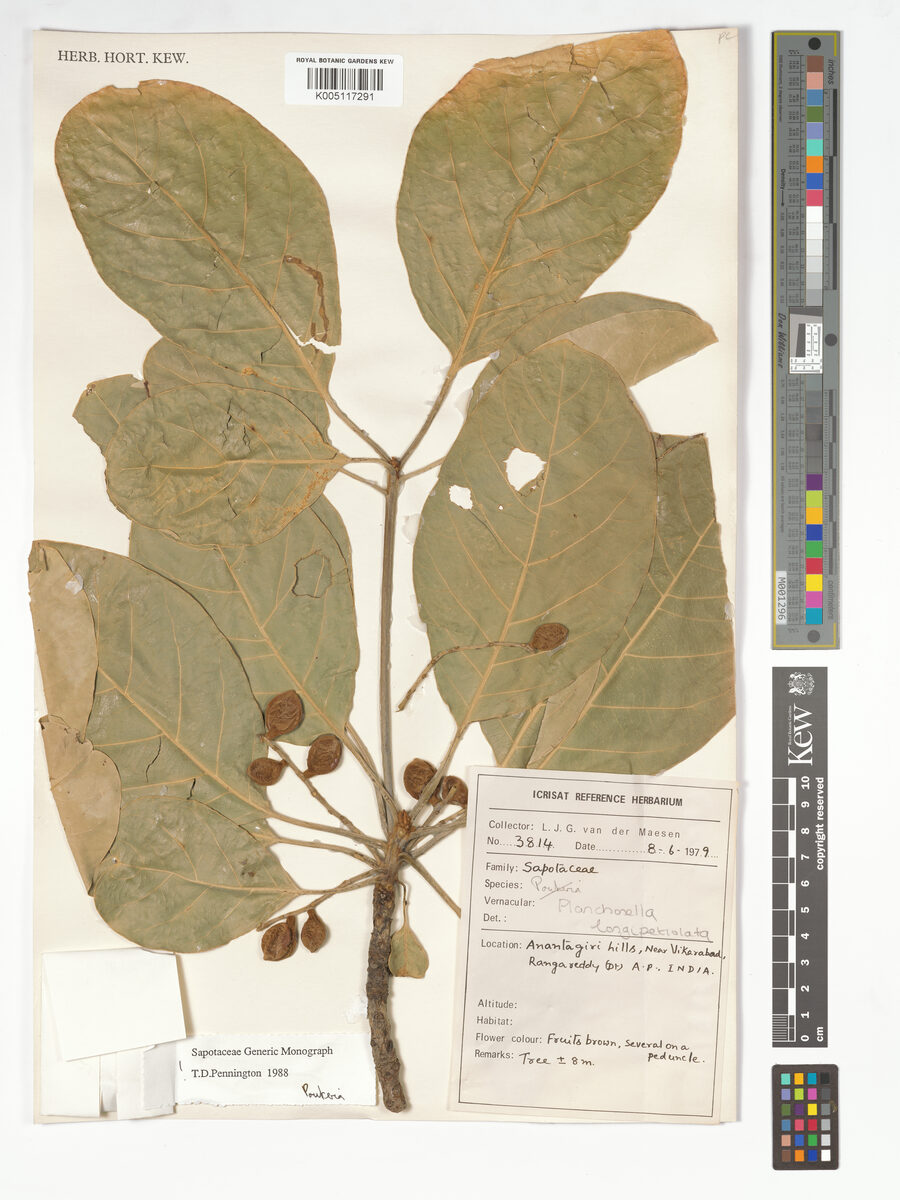
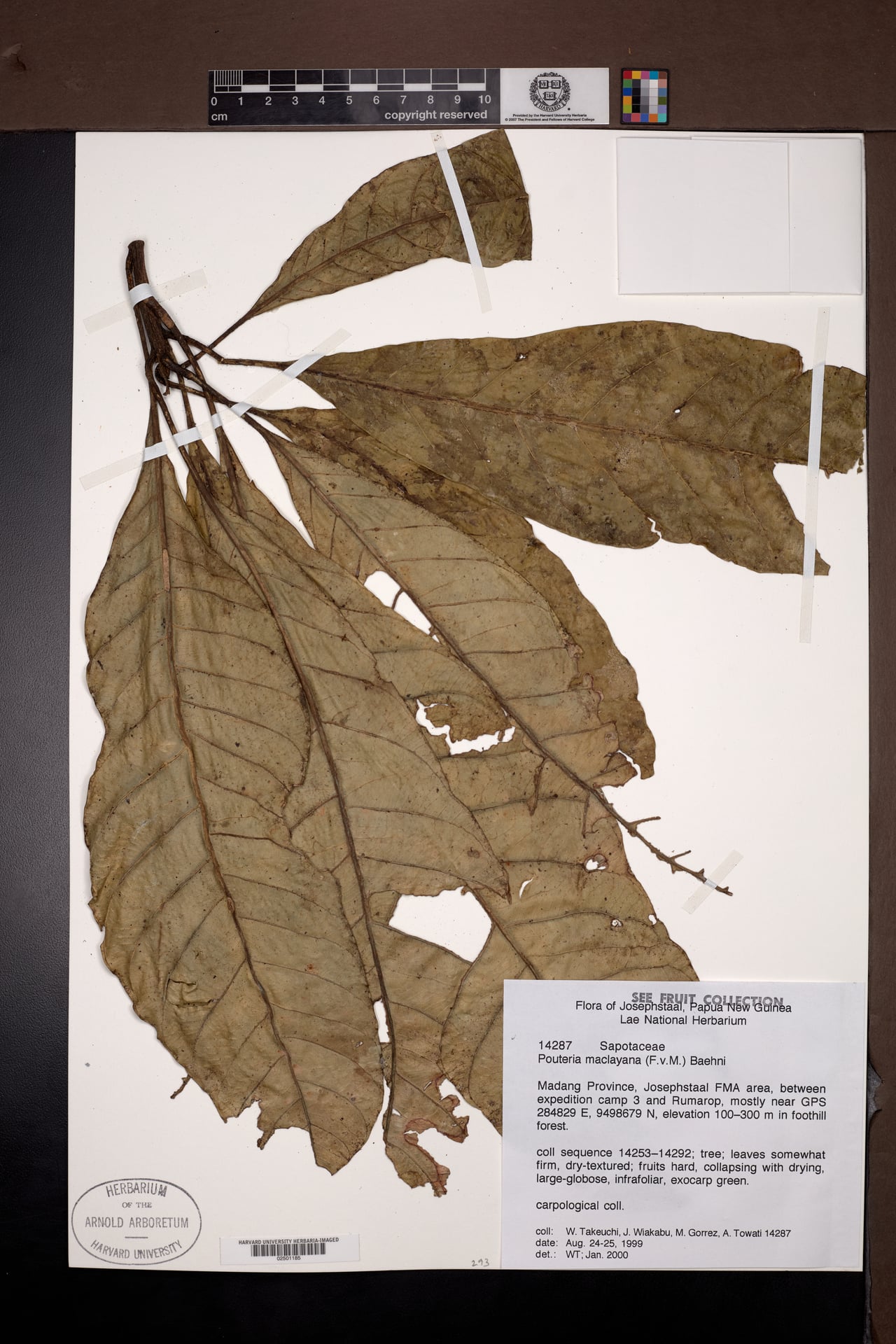
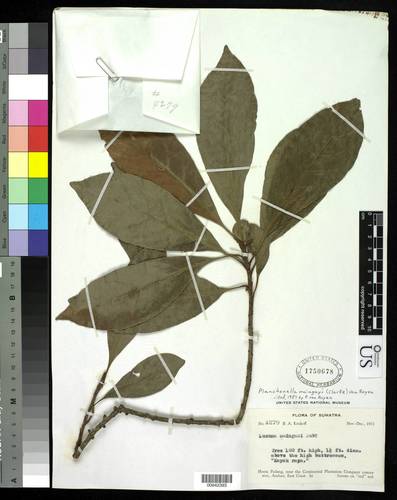
A tree. It grows to 60 m high. The trunk is 210 cm across. There can be buttresses 4 m high and 1 m wide. The bark is cracked and flaky. The twigs are 2-8 mm thick. Young twigs have brown hairs. The leaves are scattered along the twigs or clustered near the tips. They are leathery to papery. They are fattened oval shape. They are 5-22 cm long by 2.5-9 cm wide. The edge of the leaf is wavy. There are 10-28 pairs of secondary veins. These join in loops near the edge of the leaf. The flowers are yellow or greenish-white. There are 1-5 per cluster. These occur in the axils of leaves or on leaf scars. The fruit are oblong and 1.5-3.5 cm long by 0.8-1.6 cm wide. There is 1 seed inside. The fruit are edible.
Edible Uses
The fruit of Palaquium rostratum is edible. The seeds are locally turned into cooking oil. The timber is used in making furniture.
Traditional Uses
The ripe fruit are eaten. They are green and sweet. The seeds yield a fat suitable for cooking. It can be bitter.
This uses section is brief — help expand it
Distribution
A tropical plant. They grow in freshwater and peat swamps. They also grow in lowland and hill forests up to 1,500 m altitude. It is mostly on sandy soils but can be on clay or limestone soils.
Where It Grows
Asia, Brunei, Indochina, Indonesia, Malaysia, SE Asia, Singapore, Thailand,
Cultivation
Plants can be grown from seeds.
Other Uses
The reddish-brown wood is light in weight, durable and easily worked. An attractive timber, it is used for furniture, floors, boards, beams, canoes, house construction and panelling. We do not have any more specific information on the wood of this species, but it belongs to a group of timbers collectively called 'Nyatoh'. The general description of nyatoh wood is as follows:- The heartwood is a dark pink to a red-brown; it is clearly demarcated from the 4 - 9cm wide band of lighter-coloured sapwood. The texture is medium; the grain straight or interlocked, sometimes wavy. The wood is light in weight, soft to moderately hard; strong, somewhat durable, being resistant to dry wood borers, moderately resistant to fungi but susceptible to termites. It seasons somewhat slowly, with a high risk of checking and distortion; once dry it is stable in service. There is a very variable content of silica according to the species, but in general the wood has a high blunting effect so stellite-tipped and tungsten-carbide tools are recommended; nailing and screwing are good, but require pre-boring; gluing is correct. The wood has a range of applications, including for high class furniture and cabinet making, solid doors, panelling, joinery, parquet flooring, boat decking, light carpentry, turnery, moulding and veneer.
Synonyms
Also Known As
Balam bakulo, Balam perak, Balam puchung, Balam sudu, Ekur lempong, Getah hyato, Ki bangkong, Nagasari, Nyatoh, Nyatok bukit, Nyatok terung, Nyatu, Pohon nyatoh terung, Puntik, Semaram
References (12)
- Ann. Jard. Bot. Buitenzorg 5:39. 1886
- Argent, G et al, nd, Manual of the Larger and More important non Dipterocarp Trees of Central Kalimantan Indonesia. Volume 2 Forest Research Institute, Samarinda, Indonesia. p 586
- Burkill, I.H., 1966, A Dictionary of the Economic Products of the Malay Peninsula. Ministry of Agriculture and Cooperatives, Kuala Lumpur, Malaysia. Vol 2 (I-Z) p 1670
- Heyne, K., 1927, p 1239
- Menninger, E.A., 1977, Edible Nuts of the World. Horticultural Books. Florida p 33
Show all 12 references Hide references
- Milow, P., et al, 2013, Malaysian species of plants with edible fruits or seeds and their evaluation. International Journal of Fruit Science. 14:1, 1-27
- Moon, H. K., et al, 2010, Tropical Tree of Indonesia. Korea Forest Research Institute. p 257
- Slik, F., www.asianplant.net
- Soerianegara, I. & Lemmens, R. H. M. L., (Eds.) 1993, Timber trees: Major commercial timbers. Plant Resources of South-East Asia. Wageningen. No. 5(1). p 304
- Sukarya, D. G., (Ed.) 2013, 3,500 Plant Species of the Botanic Gardens of Indonesia. LIPI p 429
- Wickens, G.E., 1995, Edible Nuts. FAO Non-wood forest products. FAO, Rome. p152
- World Checklist of Useful Plant Species 2020. Royal Botanic Gardens, Kew