Chrysophyllum manaosense
(Aubreville) Pennington
Manaus starapple
iNaturalist· cc-by-nc
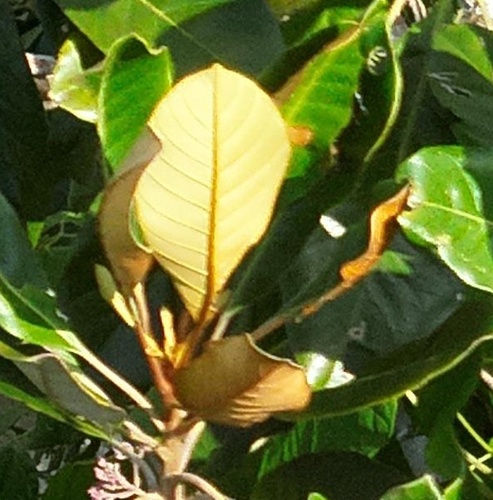
(c) Nils Servientis - Bivouac Naturaliste, some rights reserved (CC BY-NC)
iNaturalist· cc-by-nc
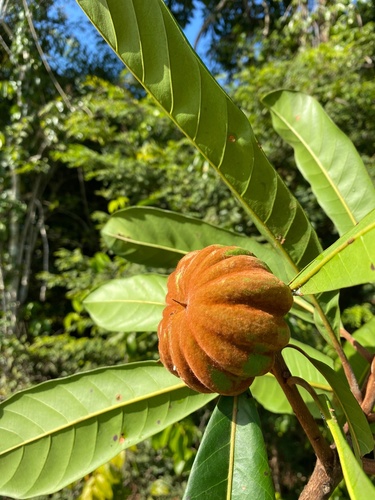
(c) Nils Servientis - Bivouac Naturaliste, some rights reserved (CC BY-NC)
iNaturalist· cc-by-nc
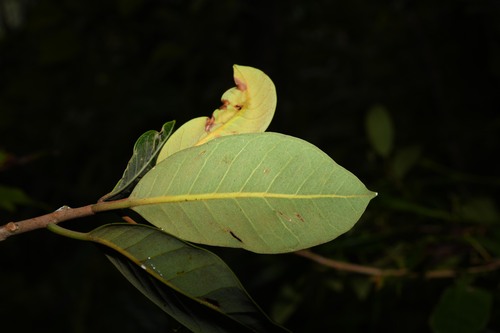
(c) Nils Servientis - Bivouac Naturaliste, some rights reserved (CC BY-NC)
Summary
Source: WikipediaChrysophyllum manaosense is a tree in the family Sapotaceae, native to tropical South America.
Description
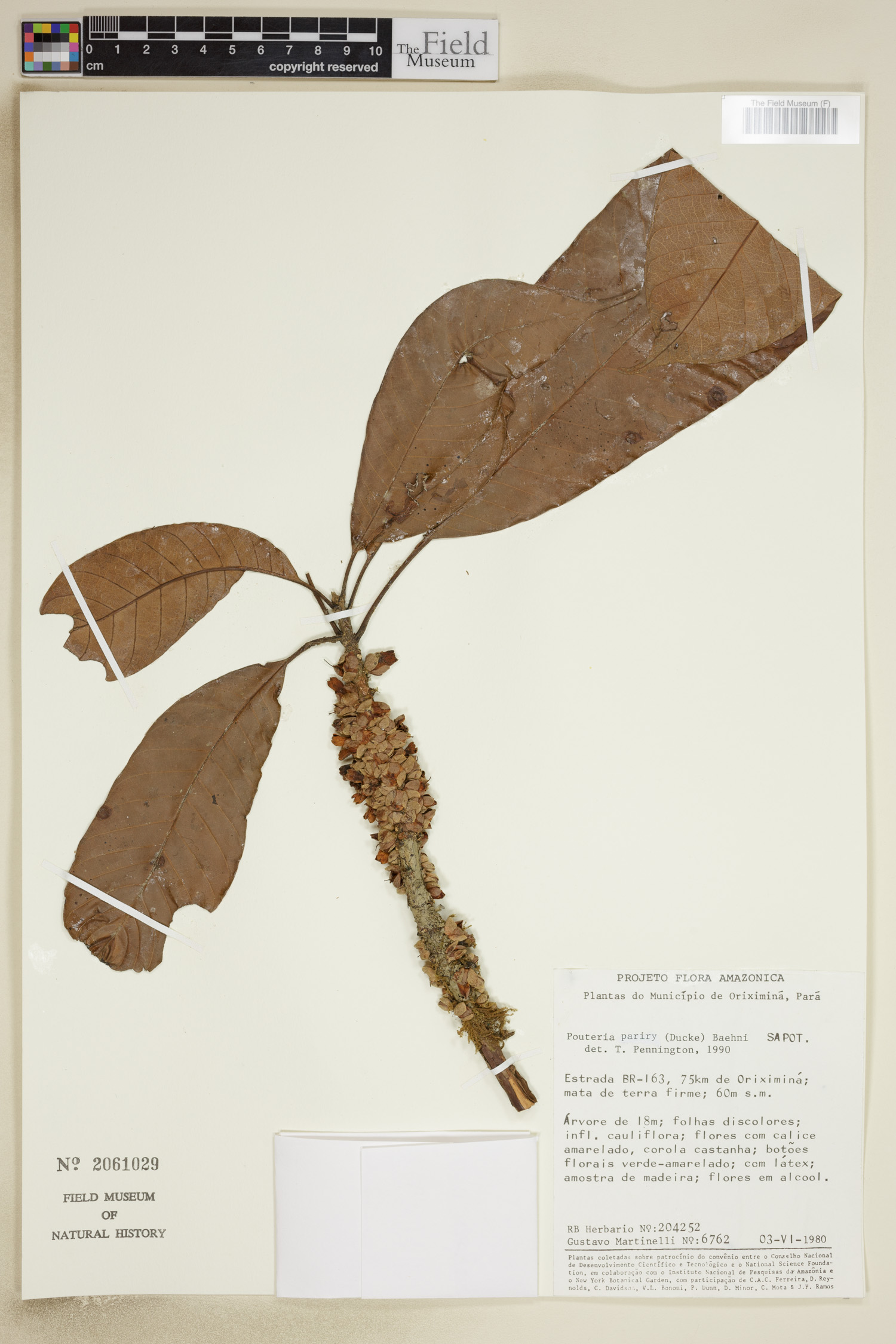
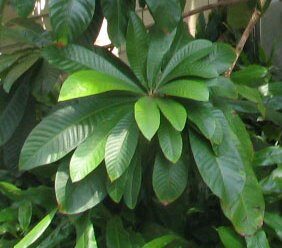
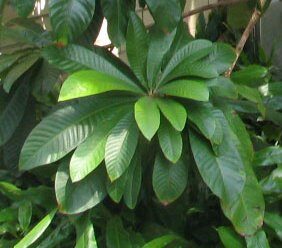
A tree. It grows 20 m tall. The trunk us 45 cm across. The young shoots have golden brown or rusty hairs. The leaves are clustered at the tips. They are arranged in spirals. They are 10-32 cm long by 4-10 cm wide. The flowers are in groups of 5-15. They are white. The fruit are 3-4 cm long by 3 cm wide. They are broadly oval. There are several seeds about 2 cm long.
Edible Uses
The fruit are sweet and eaten.
Traditional Uses
The fruit is sweet and is eaten.
This uses section is brief — help expand it
Distribution
A tropical plant. It grows up to 250 m above sea level.
Where It Grows
Amazon, Andes, Brazil, Colombia, Ecuador, Guianas, Guyana, Peru, South America*, Suriname,
Notes
There are about 80-150 Chrysophyllum species. They are mostly in tropical America. There are 44 species in tropical America.
Synonyms
Also Known As
Aviyu, Caimitillo, Caimo de montana, Meningoe, Meyebe, Nasotoa, Ontogamae, Pake awe, Sachacaimito
References (7)
- Grandtner, M. M. & Chevrette, J., 2013, Dictionary of Trees, Volume 2: South America: Nomenclature, Taxonomy and Ecology. Academic Press p 130
- Kermath, B. M., et al, 2014, Food Plants in the Americas: A survey of the domesticated, cultivated and wild plants used for Human food in North, Central and South America and the Caribbean. On line draft. p 225
- Lopez-Diago, D. & Garcia, N., 2021, Wild edible fruits of Colombia. Biota ColomBiana 22 (2) p 51
- Pennington, T.D., 1990, Sapotaceae in Flora Neotropica Monograph 52. New York Botanical Gardens. p 598
- Roa, J. A. G. & Boada, D. S. G., 2018, Fundación para el Fortalecimiento de la Fruticultura y Plantas Alimenticias no Convencionales en Colombia.
Show all 7 references Hide references
- Torre, de la, L., et al, 2008, Enciclopedia de las Plantas Útiles del Ecuador. Herbario QCA. Pontificia Universidad Católica del Ecuador. p 569
- Van Roosmalen, M.G.M., & Garcia, O. M., 2000, Fruits of the Amazonian Forest. Part 2: Sapotaceae. Acta Amazonica 30(2): 187-290