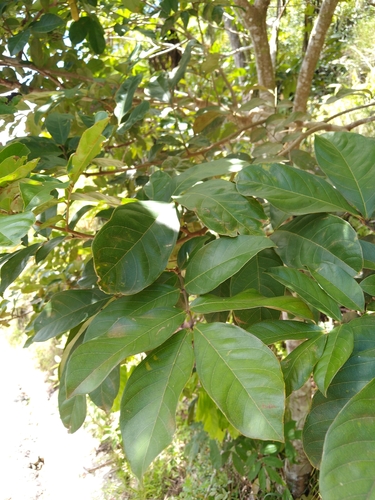
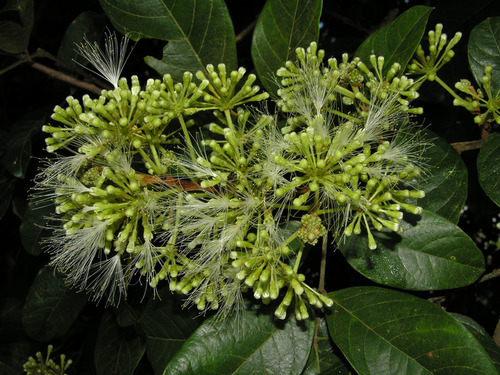
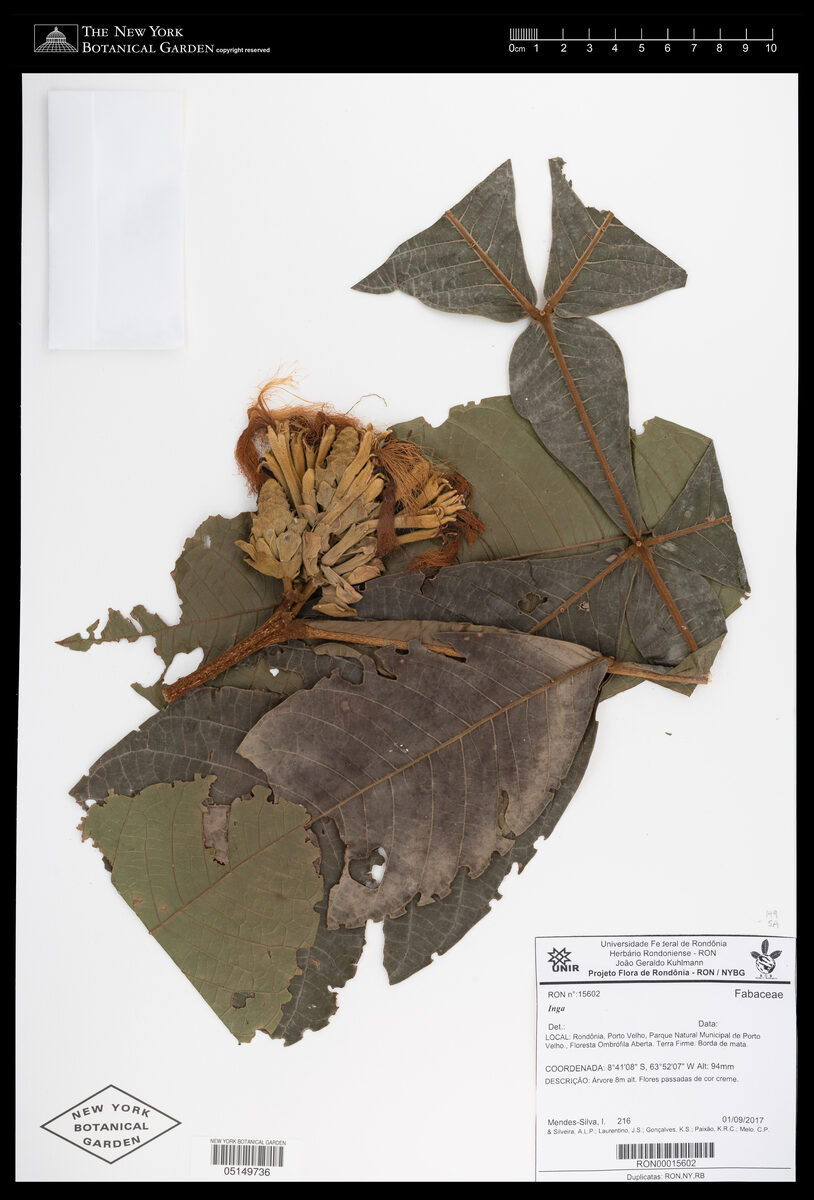
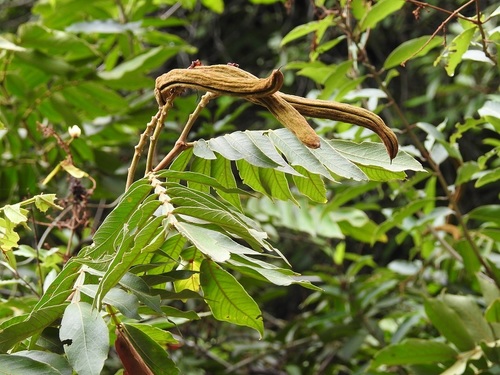
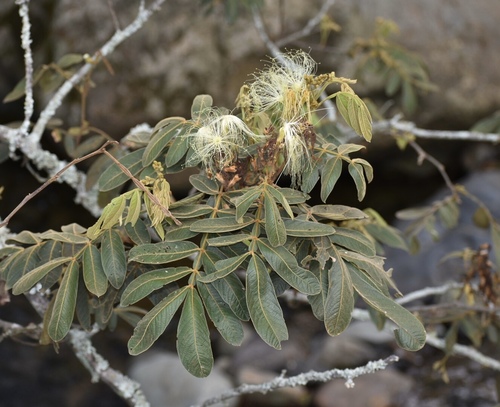
Pachyrhizus tuberosus
(Lam.) Spreng.
Amazonian yam bean
iNaturalist· cc-by-nc
(c) jorgepenaloza, some rights reserved (CC BY-NC)
gbif· cc-by-nc
Rapid Reference Collection (RRC) | Field Museum of Natural History - Keller Science Action Center
Summary
Source: WikipediaA perennial climbing vine reaching 6 meters tall, with hermaphroditic flowers appearing in July. Hardy to UK zone 10 and frost-tender. Thrives in light sandy to medium loamy soils with mild to alkaline pH. Requires full sun and moist conditions. Capable of nitrogen fixation.
Description
A tall climbing vine. It keeps growing from year to year. It has showy flowers. The roots are crunchy and turnip shaped.
This description is brief — help expand it
Edible Uses
The root can be eaten raw or cooked. It is thirst-quenching and nutritious, and serves as a source of starch used in custards and puddings. Individual roots can weigh up to 20kg. Young seed pods can be cooked and used like French beans, but must be thoroughly cooked to remove the toxic principle rotenone.
Traditional Uses
The roots can be eaten raw or cooked. The pods are boiled as a vegetable.
This uses section is brief — help expand it
Medicinal Uses
None known.
Known Hazards
In contrast to the root, the remainder of the plant is very poisonous; the seeds contain the toxin rotenone, which is used to poison insects and fish. Mature seeds have a high rotenone content. Commercial jícama cultivation considered using them as an insecticide source.
Distribution
A tropical plant. In the Andes in Peru it grows between 1,000-2,000 m above sea level.
Where It Grows
Amazon, Andes, Asia, Bolivia, Brazil, Caribbean, Central America, Colombia, Dominican Republic, Ecuador, Fiji, Guyana, Haiti, Jamaica, Pacific, Paraguay, Peru, Puerto Rico, South America, Sri Lanka, Trinidad & Tobago, Venezuela, West Indies,
Cultivation
Plants can be grown from seed. Seed can be soaked in warm water overnight to assist germination.
Propagation
Pre-soak seed for 12 hours in warm water, then sow in early spring in a warm greenhouse. Germination should occur within 2 weeks. Prick out seedlings into individual pots of rich soil as soon as they are large enough to handle and grow on quickly. Plant out after the last expected frosts, giving protection such as a cloche until plants are growing well. Root tubers can be divided in autumn — store in a cool but frost-free place over winter, pot up in the greenhouse in early spring, and plant out after the last expected frosts with cloche protection. Cuttings are also possible.
Other Uses
The plant contains rotenone, the active ingredient in the insecticide derris, giving it potential as an insecticide. Derris is relatively safe as it does not affect warm-blooded animals and breaks down into harmless substances within 24 hours of use. It does, however, kill some beneficial insects and is toxic to fish and amphibians.
Production
The longer the hot growing season the larger the root. The root is harvested after the plant has died back. Pods appear within 3 months.
Other Information
It is cultivated.
Synonyms
Also Known As
Ajipa, Jactupe, Jicama, Kapamo, Mexican water chestnut, Namu, Potato bean, Se'va, Xiquima, Yam bean
References (19)
- Bennett, B. C., 1990, Useful Plants of Amazonian Ecuador. US Agency for International Development. Fifth Progress Report. New York Botanical Gardens. p 39
- Cobley, L.S. (rev. Steele, W.M.) 2nd Ed., 1976, An Introduction to the Botany of Tropical Crops. Longmans. p 108
- Gouldstone, S., 1983, Growing your own Food-bearing Plants in Australia. Macmillan p 182
- Hermandez Bermejo, J.E., and Leon, J. (Eds.), 1994, Neglected Crops. 1492 from a different perspective. FAO Plant Production and Protection Series No 26. FAO, Rome. p 20
- ILDIS Legumes of the World http:www:ildis.org/Legume/Web
Show all 19 references Hide references
- Kermath, B. M., et al, 2014, Food Plants in the Americas: A survey of the domesticated, cultivated and wild plants used for Human food in North, Central and South America and the Caribbean. On line draft. p 602
- Lim, T. K., 2015, Edible Medicinal and Non Medicinal Plants. Volume 9, Modified Stems, Roots, Bulbs. Springer p 62
- Macmillan, H.F. (Revised Barlow, H.S., et al) 1991, Tropical Planting and Gardening. Sixth edition. Malayan Nature Society. Kuala Lumpur. p 326
- Menninger, E.A., 1977, Edible Nuts of the World. Horticultural Books. Florida p 97
- Plants for a Future database, The Field, Penpol, Lostwithiel, Cornwall, PL22 0NG, UK. http://www.scs.leeds.ac.uk/pfaf/
- Purseglove, J.W., 1968, Tropical Crops Dicotyledons, Longmans. p 281
- Syst. veg. 4(2):281. 1827
- Tapia, M. E., The role of under-utilised plant species with regard to increased food security and improved health of poor poeople, in mountain regions. IIAP-PNUD/Peru
- Terra, G.J.A., 1973, Tropical Vegetables. Communication 54e Royal Tropical Institute, Amsterdam, p 64
- Torre, de la, L., et al, 2008, Enciclopedia de las Plantas Útiles del Ecuador. Herbario QCA. Pontificia Universidad Católica del Ecuador. p 355
- USDA, ARS, National Genetic Resources Program. Germplasm Resources Information Network - (GRIN). [Online Database] National Germplasm Resources Laboratory, Beltsville, Maryland. Available: www.ars-grin.gov/cgi-bin/npgs/html/econ.pl (10 April 2000)
- van Wyk, B., 2005, Food Plants of the World. An illustrated guide. Timber press. p 273
- Wiersema, J. H. & Leon, B., 2013, World Economic Plants. A Standard Reference CRC Press. 2nd Ed. p 488
- Williams, C.N., Chew, W.Y., and Rajaratnam, J.A., 1989, Tree and Field Crops of the Wetter Regions of the Tropics. Longman, p 187