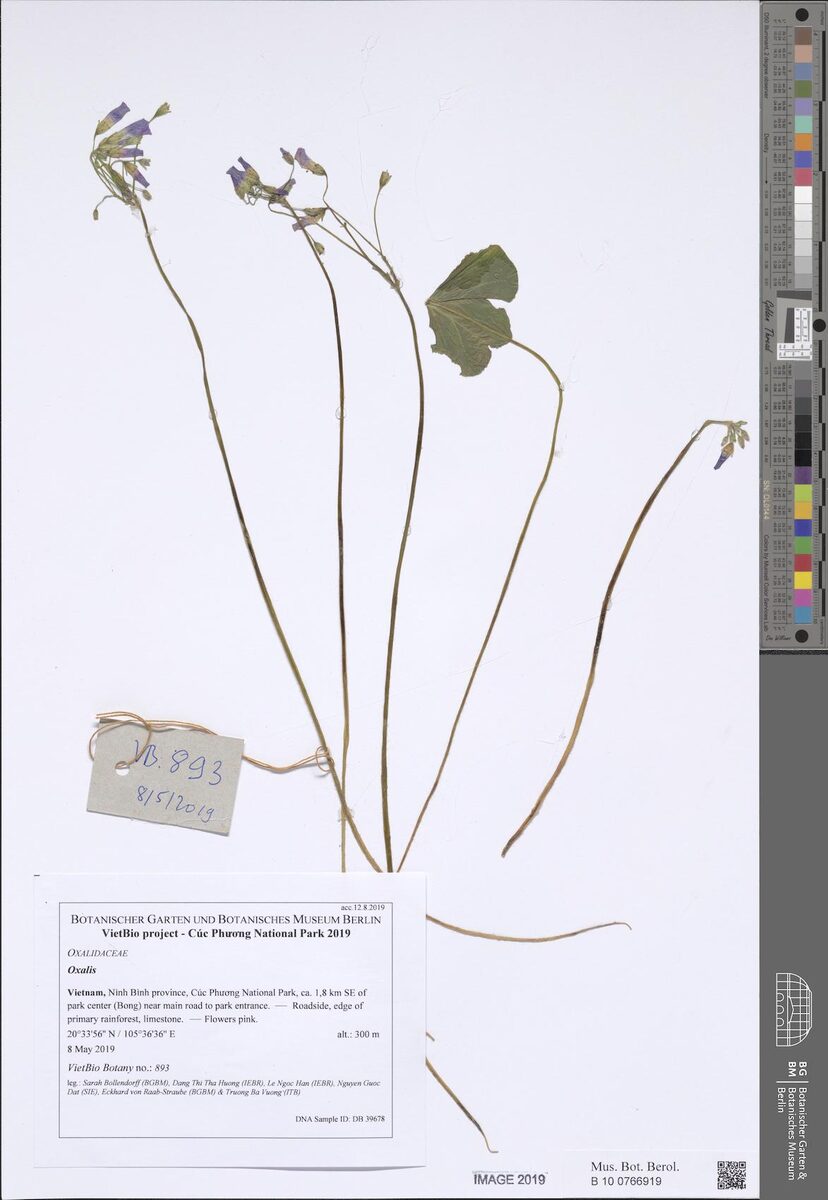
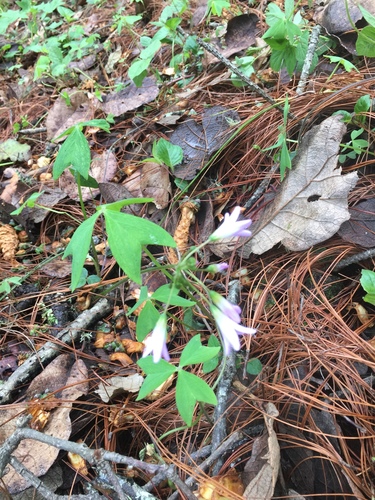
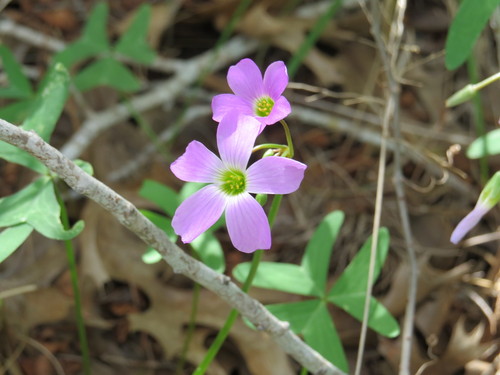
Oxalis acetosella
Linn.
Wood sorrel, Sheep sorrel
iNaturalist· cc-by-nc
(c) Татьяна Химера, some rights reserved (CC BY-NC), uploaded by Татьяна Химера
iNaturalist· cc-by-nc
(c) Татьяна Химера, some rights reserved (CC BY-NC), uploaded by Татьяна Химера
iNaturalist· cc-by-nc
(c) Vladimir Bryukhov, some rights reserved (CC BY-NC), uploaded by Vladimir Bryukhov
Summary
Source: WikipediaOxalis acetosella, the wood-sorrel or common wood-sorrel, is a herbaceous rhizomatous flowering plant in the family Oxalidaceae. The specific epithet acetosella refers to its sour taste. The common name wood-sorrel is often used for other plants in the genus Oxalis. In much of its range, most of Europe and parts of Asia, it is the only member of its genus and hence simply known as wood-sorrel. While 'common wood-sorrel' may be used to differentiate it from most other species, this name is also used for the North American Oxalis montana.
Description
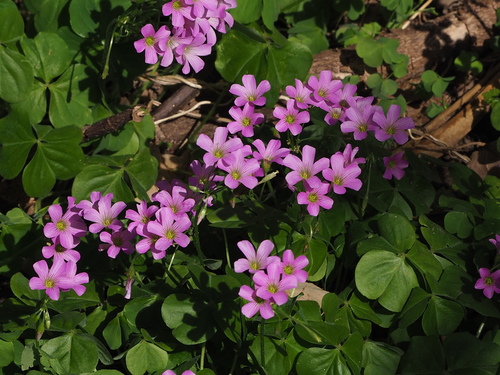
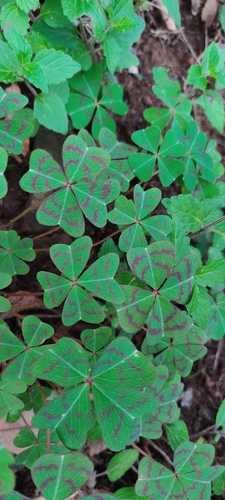
A low growing plant. It is 5-10 cm high. It keeps growing from year to year. The leaves are small and shamrock shaped. The leaves have 3 heart shaped leaflets. They are initially folded in the middle. The leaves fold up at night and in strong sun or heavy rain. The flowers have 5 petals and are white. The flowers are bell shaped and have fine purple veins. The seed husks are yellow.
Edible Uses
The leaves can be eaten raw or cooked, offering a delicious lemony flavour that makes them a refreshing, thirst-quenching snack and a welcome addition to salads, soups, and sauces. Use in moderation due to oxalic acid content. The flowers are edible raw and make a decorative addition to salads. The dried plant can also be used as a curdling agent for plant milks.
Traditional Uses
The leaves are added to salads. They are also used in soups and sauces. The dried leaves are used for tea. CAUTION: Because the leaves contain oxalic acid they should be eaten cautiously or cooked in several changes of water. The leaves can be used to curdle sheep's milk.
Medicinal Uses
The fresh or dried leaves are anodyne, antiscorbutic, astringent, diuretic, emmenagogue, expectorant, febrifuge, irritant, and stomachic. A decoction is used to treat fevers, both quenching thirst and allaying the fever itself. Externally, crushed leaves are applied directly to boils and abscesses, and have an astringent effect on wounds. Internal use requires some caution due to the oxalic acid content; the plant is contra-indicated for people suffering from gastritis or a calculus condition.
Known Hazards
The leaves contain oxalic acid, which gives them their sharp flavour. Perfectly all right in small quantities, the leaves should not be eaten in large amounts since oxalic acid can bind up the body's supply of calcium leading to nutritional deficiency. The quantity of oxalic acid will be reduced if the leaves are cooked. People with a tendency to rheumatism, arthritis, gout, kidney stones or hyperacidity should take especial caution if including this plant in their diet since it can aggravate their condition.
Distribution
It is native to northern temperate regions. It grows in damp and shady places. It is often on forest floors. In Pakistan it grows in shady places between 1,200-2,500 m altitude. It suits hardiness zones 3-10. In Yunnan.
Where It Grows
Africa, Asia, Australia, Balkans, Belarus, Bosnia, Britain, Bulgaria, Canada, Caucasus, China, Czech Republic, Estonia, Europe, Finland, France, Georgia, Himalayas, Hungary, Iceland, India, Ireland, Italy, Japan, Korea, Latvia, Lithuania, Luxembourg, Macedonia, Mediterranean, Mongolia, Myanmar, Nepal, New Zealand, North Africa, North America, Northeastern India, Norway, NW India, Pakistan, Poland, Romania, Russia, Scandinavia, SE Asia, Slovenia, Slovakia, South Africa, Southern Africa, Spain, Sweden, Switzerland, Turkey, Türkiye, USA,
Cultivation
Prefers moist shady conditions and a humus rich soil in shade or dappled sunlight[4, 9, 13, 27, 37, 200]. Dislikes very heavy and wet soils. Plants are hardy to about -25°c. A dainty woodland carpeter growing well in a woodland or wild garden. When well sited the plants can run aggressively and also self-sow. The plant flowers in early spring, but does not produce much fertile seed at this time. Most of the fertile seed is produced from cleistogamous flowers during the summer.
Propagation
Seed is best sown as soon as it is ripe in a cold frame. Prick out seedlings into individual pots when large enough to handle, then plant out in late spring or early summer. Division in spring is very easy — larger divisions can go directly into permanent positions. Smaller divisions are better potted up and grown on in light shade in a cold frame until well established before planting out in late spring or early summer.
Other Uses
The juice of the leaves removes iron mould stains from linen. Plants make a useful ground cover in woodland or under the shade of shrubs, spaced approximately 45cm apart each way.
Other Information
They are eaten especially by children.
Notes
There are about 500-800 Oxalis species. There are about 115 species in tropical America.
Nutrition
| Part | Moisture | kJ | kcal | Protein | Vit A | Vit C | Iron | Zinc |
|---|---|---|---|---|---|---|---|---|
| Leaves | 91.6 | 115 | 27 | 0.9 | — | — | — | — |
Synonyms
Also Known As
Amrul, Asprini, Carnero, Chalmori, Chari amilo, Cuckoo bread, Eki yonca, Eksi yonca, European wood-sorrel, Gaukesyre, Irish shamrock, Janese hapuoblikas, Janese kapstad, Kapusta, Kikikapsas, Kiskio kopustai, Mountain wood sorrel, Muavela, Pa-i-vi, Pak huku, Pan de koutu, Saksamaa oblikad, Sour grass, Suurklee, Tarrago de monte, Trevol, Tuolaibaba, Zaeshki kiselets, Zaiachii klever, Zakskabenes, Zajacia detalinka, Zajackova kapusta, Zajeczy, Zayacha kapusta
References (61)
- Abbet, C., et al, 2014, Ethnobotanical survey on wild alpine food plants in Lower and Central Valais (Switzerland). Journal of Ethnopharmacology 151 (2014) 624–634
- Ambasta, S.P. (Ed.), 2000, The Useful Plants of India. CSIR India. p 418
- Amer. Monthly Mag. & Crit. Rev. 266. 1818 (As Oxalis montana)
- Beckstrom-Sternberg, Stephen M., and James A. Duke. "The Foodplant Database." http://probe.nalusda.gov:8300/cgi-bin/browse/foodplantdb.(ACEDB version 4.0 - data version July 1994)
- Bodkin, F., 1991, Encyclopedia Botanica. Cornstalk publishing, p 751
Show all 61 references Hide references
- Bonet, M. A. & Valles, J., 2002, Use of non-crop food vascular plants in Montseny biosphere reserve (Catalonia, Iberian Peninsula). International Journal of Food Sciences and Nutrition (2002) 53, 225–248
- Bremness, L., 1994, Herbs. Collins Eyewitness Handbooks. Harper Collins. p 198
- Brickell, C. (Ed.), 1999, The Royal Horticultural Society A-Z Encyclopedia of Garden Plants. Convent Garden Books. p 735
- Bussman, R. W., et al, 2016, A comparative ethnobotany of Khevsureti, Samtskhe-Javakheti, Tusheti, Svaneti, and Racha-Lechkhumi, Republic of Georgia (Sakartvelo), Caucasus. Journal of Ethnobiology and Ethnomedicine (2016) 12:4
- Bussman, R. W., et al, 2021, Unity in diversity—food plants and fungi of Sakartvelo (Republic of Georgia), Caucasus. Journal of Ethnobiology and Ethnomedicine (2021) 17:72 p 9
- Cundall, P., (ed.), 2004, Gardening Australia: flora: the gardener's bible. ABC Books. p 965
- Denes, A., et al, 2012, Wild plants used for food by Hungarian ethnic groups living in the Carpathian Basin. Acta Societatis Botanicorum Poloniae 81 (4): 381-396
- Ertug, F, Yenen Bitkiler. Resimli Türkiye Florası -I- Flora of Turkey - Ethnobotany supplement
- Facciola, S., 1998, Cornucopia 2: a Source Book of Edible Plants. Kampong Publications, p 165
- Flora of Pakistan. www.eFloras.org
- Food Composition Tables for the Near East. http://www/fao.org/docrep No. 442
- Geng, Y., et al, 2016, Traditional knowledge and its transmission of wild edibles used by the Naxi in Baidi Village, northwest Yunnan province. Journal of Ethnobiology and Ethnomedicine. 12:10
- Girard, N. J., 2020, Sustainable Foraging of Wild Edible Plants in Norway. A Biocultural Approach. M. Sc. thesis Norwegian University. p 133
- Hedrick, U.P., 1919, (Ed.), Sturtevant's edible plants of the world. p 456
- Heywood, V.H., Brummitt, R.K., Culham, A., and Seberg, O. 2007, Flowering Plant Families of the World. Royal Botanical Gardens, Kew. p 239
- http://nordicfood lab/org/blog/2102/9/wild-edible-plants-an-overview
- http://www.botanic-gardens-ljubljana.com/en/plants
- Irving, M., 2009, The Forager Handbook, A Guide to the Edible Plants of Britain. Ebury Press p 308
- Jackes, D. A., Edible Forest Gardens (As Oxalis montana)
- Jardin, C., 1970, List of Foods Used In Africa, FAO Nutrition Information Document Series No 2.p 92
- Kalle, R. & Soukand, R., 2012, Historical ethnobotanical review of wild edible plants of Estonia (1770s-1960s) Acta Societatis Botanicorum Poloniae 81(4):271-281
- Kiple, K.F. & Ornelas, K.C., (eds), 2000, The Cambridge World History of Food. CUP p 434, 1883
- Kolosova, V., et al, 2020, Foraging in Boreal Forest: Wild Food Plants of the Republic of Karelia, NW Russia. Foods 2020, 9, 1015; p 18
- Luczaj, L., 2012, Ethnobotanical review of wild edible plants of Slovakia. Acta Societatis Botanicorum Poloniae 81(4):245-255
- Luczaj, L. et al, 2012, Wild food plant use in 21st century Europe: the disappearance of old traditions and the search for new cuisines involving wild edibles. Acta Soc Bot Pol 81(4):359–370
- Łukasz Łuczaj and Wojciech M Szymański, 2007, Wild vascular plants gathered for consumption in the Polish countryside: a review. J Ethnobiol Ethnomedicine. 3: 17
- Luczaj, L. et al, 2013, Wild edible plants of Belarus: from Rostakinski's questionnaire of 1883 to the present. Journal of Ethnobiology and Ethnomedicine 9:21
- Luczaj, L., et al, 2015, Wild food plants and fungi used by Ukrainians in the western part of the Maramureş region in Romania. Acta Soc Bot Pol 84(3):339–346
- Mabey, R., 1973, Food for Free. A Guide to the edible wild plants of Britain, Collins. p 79
- Martin, F.W. & Ruberte, R.M., 1979, Edible Leaves of the Tropics. Antillian College Press, Mayaguez, Puerto Rico. p 209
- Moerman, D. F., 2010, Native American Ethnobotany. Timber Press. p 373 (As Oxalis montana)
- Morley, B. & Everard, B., 1970, Wild Flowers of the World. Ebury press. Plate 14
- Murtem, G. & Chaudhrey, P., 2016, An ethnobotanical note on wild edible plants of Upper Eastern Himalaya, India. Brazilian Journal of Biological Sciences, 2016, v. 3, no. 5, p. 63-81.
- Nedelcheva A., 2013, An ethnobotanical study of wild edible plants in Bulgaria. EurAsian Journal of BioSciences 7, 77-94
- Ozbucak, T. B. et al, 2006, The Contribution of Wild Edible Plants to Human Nutrition in the Black Sea Region of Turkey. Ethnobotanical Leaflets 10: 98-103
- Ozbucak, T. B., et al, 2007, Nutrition Content of Some Wild Edible Plants in the Central Black Sea Region of Turkey. International Journal of Natural and Engineering Sciences 1:11-13
- Pardo-de-Santayana, M., et al, 2007, Traditional knowledge of wild edible plants used in the northwest of the Iberian Peninsula (Spain and Portugal): a comparative study. Journal of Ethnobiology and Ethnomedicine 2007, 3:27
- Paoletti, M.G., Dreon, A.L., and Lorenzoni, G.G., 1995, Pistic, Traditional Food from Western Friuli, NE Italy. Economic Botany 49(1) pp 26-30
- Pieroni, A., 1999, Gathered wild food plants in the Upper Valley of the Serchio River (Garfagnana), Central Italy. Economic Botany 53(3) pp 327-341
- Plants for a Future database, The Field, Penpol, Lostwithiel, Cornwall, PL22 0NG, UK. http://www.scs.leeds.ac.uk/pfaf/ (Also as Oxalis montana)
- Prakofjewa, J., et al, 2023, Boundaries Are Blurred: Wild Food Plant Knowledge Circulation across the Polish-Lithuanian-Belarusian Borderland. Biology 2023, 12, 571.
- Pruse, B., et al, 2021, Active Wild Food Practices among Culturally Diverse Groups in the 21st Century across Latgale, Latvia. Biology 2021, 10, 551.
- Rashid, A., Anand, V.K. & Serwar, J., 2008, Less Known Wild Plants Used by the Gujjar Tribe of District Rajouri, Jammu and Kashmir State. International Journal of Botany 4(2):219-244
- Redzic, S. J., 2006, Wild Edible Plants and their Traditional Use in the Human Nutrition in Bosnia-Herzegovina. Ecology of Food and Nutrition, 45:189-232
- Rexhepi, B., et al, 2018, Ethnobotanical Study of Wild Edible Plants in Pelagonia Region (Southwestern Macedonia) International Journal of Advances in Science Engineering and Technology, Vol. 6 (1) p 57
- Simkova, K. et al, 2014, Ethnobotanical review of wild edible plants used in the Czech Republic. Journal of Applied Botany and Food Quality 88, 49-67
- Singh, H.B., Arora R.K.,1978, Wild edible Plants of India. Indian Council of Agricultural Research, New Delhi. p 32
- Skinner, G. & Brown, 1981, C., Simply Living. A gatherer's guide to New Zealand's fields, forests and shores. Reed. p 29
- Soukand, R., et al, 2017, Multi-functionality of the few: current and past uses of wild plants for food and healing in Liubań region, Belarus. Journal of Ethnobiology and Ethnomedicine (2017) 13:10
- Sp. pl. 1:433. 1753 (type species)
- Stern, G., 1986, Australian Weeds. A Source of Food and Medicine. Harper & Row. p 226
- Svanberg, I., et al, 2012, Edible wild plant use in the Faroe Islands and Iceland. Acta Societatis Botanicorum Poloniae 81(4): 233-238
- Svanberg, I., 2012, The use of wild plants as food in pre-industrial Sweden. Acta Societatis Botanicorum Poloniae 81(4): 317-327
- Tardio, J., et al, Ethnobotanical review of wild edible plants in Spain. Botanical J. Linnean Soc. 152 (2006), 27-71
- Tsering, J., et al, 2017, Ethnobotanical appraisal on wild edible plants used by the Monpa community of Arunchal Pradesh. Indian Journal of Traditional Knowledge. Vol 16(4), October 2017, pp 626-637
- World Checklist of Useful Plant Species 2020. Royal Botanic Gardens, Kew