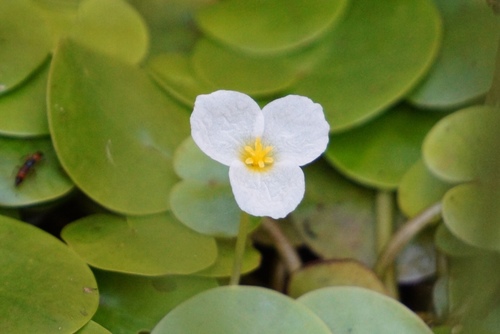
Ottelia alismoides
(L.) Pers.
Pond Lettuce
iNaturalist· cc0
no rights reserved, uploaded by 葉子
iNaturalist· cc-by-nc
(c) Alfonsus Toribio Eko Saputro, some rights reserved (CC BY-NC), uploaded by Alfonsus Toribio Eko Saputro
iNaturalist· cc-by-nc
(c) Ariyo Prasetyo, some rights reserved (CC BY-NC), uploaded by Ariyo Prasetyo
Summary
Source: WikipediaOttelia alismoides, commonly known as duck lettuce, is a species of aquatic plant native to Asia and northern Australia. Due to habitat loss and deterioration, it is endangered in China and Japan, although it is an invasive weed in America. Its genome has also been sequenced, resulting in a 6.45 Gb assembly to help study its unusual carbon metabolism mechanisms and aid in genetic conservation.
Description
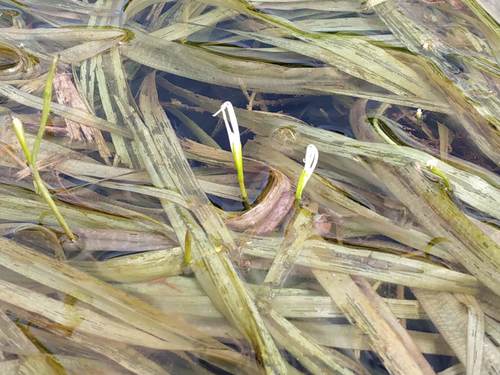
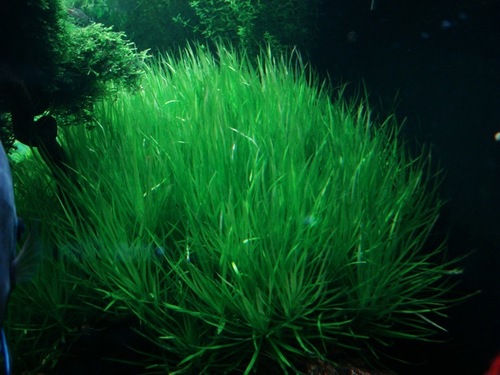
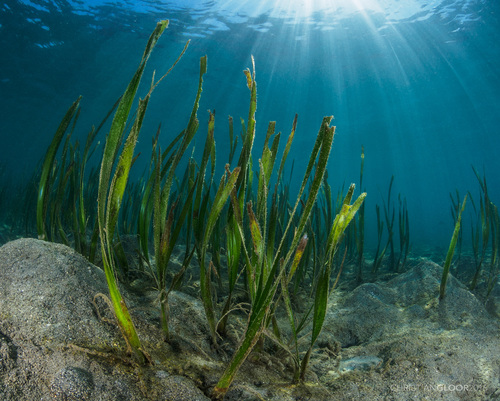
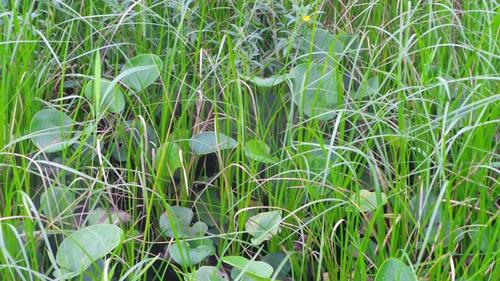
A herb growing in fresh water. It develops tufts and keeps growing from year to year. The clumps are 60 cm wide. The leaves are very variable and have short or long leaf stalks according to the depth of water. The leaf blade of leaves which are under water are long and those which are floating are rounded. The leaves can be 1 m long and the blade 15-20 cm long by 15-20 cm wide. The base of the leaf is heart shaped. The leaves are green to bronze. They have prominent veins. The leafy bract around the flower has 5-10 wings. The flowers are 5-6 cm across and white with darker veins. They have 3 petals. The flowers are on the surface. The fruit are oblong and 2.5 to 4 cm long.
Edible Uses
The mature fruit are eaten raw or cooked; the leaves and leaf stalks are cooked or eaten raw with fish sauce or blanched; and the flower buds are used as a vegetable. The leaves, stalks, and flowers have an attractive flavour, and ripe fruit are especially eaten by children.
Traditional Uses
The mature fruit are eaten raw. They are also eaten cooked. The leaves and leaf stalks are eaten after cooking. They are also eaten raw with fish sauce. They are blanched. The flower buds are used as a vegetable.
Medicinal Uses
The leaves are antibacterial, febrifuge and rubefacient. The plant is used in the topical treatment of haemorrhoids, and is applied to the arms and legs as a poultice against fever. In clinical trials, an extract of the plant cured two cases of bilateral tuberculosis of the cervical lymph glands within 3 months. The results suggest that the plant is a promising medicinal herb with an anti-tubercular effect. A study isolated the compounds otteliones A and B from the plant. These compounds showed a remarkable in vitro cytotoxicity against various cancer cell lines.
Distribution
It is a tropical and subtropical plant. It can grow in stagnant water. It grows in wetlands. It occurs throughout the Philippines in shallow lakes and slow running streams. It needs bright light and warm water. In Yunnan. In Calicut Uni BG.
Where It Grows
Africa, Asia, Australia, Bangladesh, Cambodia, Central America, China, East Timor, Egypt, Europe, Guatemala, Himalayas, India, Indochina, Indonesia, Italy, Japan, Korea, Laos, Malaysia, Mediterranean, Myanmar, Nepal, North Africa, North America, Northeastern India, Pacific, Pakistan, Papua New Guinea, PNG, Philippines, SE Asia, Solomon Islands, Sri Lanka, Thailand, Timor-Leste, USA, Vietnam,
Cultivation
Plants can be grown from seed. They are planted on mud or in shallow, warm water. It can also be grown by removing suckers.
Other Uses
The plants are used to improve the water quality in ponds by capturing floating mud particles.
Production
In northeastern India plants flower and fruit from September to March.
Other Information
The leaves, stalks, and flowers have an attractive flavour. The ripe fruit are eaten especially by children. It is sold in local markets in China. It is cultivated.
Notes
There are about 21-40 Ottelia species. They grow in the tropics. There is one species in tropical America.
Synonyms
Also Known As
Chowehan, Dragon's tongue herb, Duck lettuce, Echeng, Kalabua, Keladi ayer, Khar, Mizu-obako, Panicola, Panikela, Panikola, Panikundri, Phak hob hep, Santawaa phak, Santawah pak, Senguntepa, Shui-che-chien, Shui jie cai, Shyamkola, Slab chrawa, Tarabang
References (50)
- Ambasta, S.P. (Ed.), 2000, The Useful Plants of India. CSIR India. p 417
- Anderson, E. F., 1993, Plants and people of the Golden Triangle. Dioscorides Press. p 217
- Baishya, S. Kr., et al, 2013, Survey of Wild Edible Fruits of Dhubri District, Assam, India. Plant Archives Vol 13 (1): 155-158
- BARC, 2016, State of Biodiversity for Food and Agriculture in Bangladesh. Bangladesh Agricultural Research Council.
- Baro, D., Baruah, S. and Borthukar, S. K. 2015, Documentation on wild vegetables of Baksa district, BTAD (Assam). Scholars Research Library. Archives of Applied Science Research, 2015, 7 (9):19-27
Show all 50 references Hide references
- Brahma, S., et al, 2013, Wild edible fruits of Kokrajhar district of Assam, North-East India, Asian Journal of Plant Science and Research 3(6):95-100
- Brown, W.H., 1920, Wild Food Plants of the Philippines. Bureau of Forestry Bulletin No. 21 Manila. p 24
- Burkill, I.H., 1966, A Dictionary of the Economic Products of the Malay Peninsula. Ministry of Agriculture and Cooperatives, Kuala Lumpur, Malaysia. Vol 2 (I-Z) p 1641
- Chowdery, T., et al, 2014, Wild edible plants of Uttar Dinajpur District, West Bengal. Life Science Leaflets. 47:pp 20-36 http://lifesciencesleaflets.ning.com
- Chowdhury, M. & Mukherjee, R., 2012, Wild Edible Plants Consumed by Local Communities of Maldah of West Bengal, India. Indian J.Sci.Res.3(2) : 163-170
- Cowie, I, 2006, A Survey of Flora and vegetation of the proposed Jaco-Tutuala-Lore National Park. Timor-Lests (East Timor) www.territorystories.nt/gov.au p 48
- Cribb, A.B. & J.W., 1976, Wild Food in Australia, Fontana. p 136
- Cruz-Garcia, G. S., & Price, L. L., 2011, Ethnobotanical investigation of 'wild' food plants used by rice farmers in Kalasin, Northeast Thailand. Journal of Ethnobiology and Ethnomedicine 7:33
- Deka, N. & Devi, N., 2015, Wild edible aquatic and marshland angiosperms of Baka district, BTC area, Assam, India. Asian J. Plant Sci. Res. 5(1):32-48
- den Hartog, C., 1957, Hydrocharitaceae in Flora Malesiana 5(4) p 398
- Eiadthong, W., et al, 2010, Management of the Emerald Triangle Protected Forests Complex. Botanical Consultant Technical Report. p 51
- Elliot, W.R., & Jones, D.L., 1997, Encyclopedia of Australian Plants suitable for cultivation. Vol 7. Lothian. p 123
- Flora of Pakistan. www.eFloras.org
- Hossain, U. & Rahman, A., 2018, Study and quantitative analysis of wild vegetable floral diversity available in Barisal district, Bangladesh. Asian J. Med. Biol. Res. 2018, 4 (4), 362-371
- Hu, Shiu-ying, 2005, Food Plants of China. The Chinese University Press. p 283
- Jacquat, C., 1990, Plants from the Markets of Thailand. D.K. Book House p 101
- Japanese International Research Centre for Agricultural Science www.jircas.affrc.go.jp/project/value_addition/Vegetables
- Johnson, N., 2002, Environmental Change in northern Thailand: Impact on Wild Edible Plant Availability. Ecology of Food and Nutrition, 41: 5, 373-399
- Kachenchart, B., et al, 2008, Phenology of Edible Plants at Sakaerat Forest. In Proceedings of the FORTROP II: Tropical Forestry Change in a Changing World. Bangkok, Thailand.
- Kumar, S. A., Manus, D. & Mallika, M., 2018, Impact of non-timber forest products on Forest and in Livelihood Economy of the People of Adjoining Areas of Jalpaiguri Forest Division, West Bengal, India. Int. J. of Life Sciences, 2018; 6 (2):365-385
- Lazarides, M. & Hince, B., 1993, Handbook of Economic Plants of Australia, CSIRO. p 177
- Leach, G.J., & Osborne, P.L., 1985, Freshwater Plants of Papua New Guinea. UPNG Press, p 157
- Li, D. et al, 2017, Ethnobotanical survey of herbal tea plants from the traditional markets in Chaoshan, China. Journal of Ethnopharmacology. 205 (2017) 195-206
- Liu, Yi-tao, & Long, Chun-Lin, 2002, Studies on Edible Flowers Consumed by Ethnic Groups in Yunnan. Acta Botanica Yunnanica. 24(1):41-56
- Martin, F.W. & Ruberte, R.M., 1979, Edible Leaves of the Tropics. Antillian College Press, Mayaguez, Puerto Rico. p 99, 195
- Menisa, A. A., et al, 2012, Survey and characterization of Indigenous Food Plants in Ilocos Norte, Philippines. SEARCA Discussion Paper series No. 2011-2
- Mishra, N., et al, 2016, Indigenous knowledge in utilization of wetland plants in Bhadrak district, Odisha, India. Indian Journal of Natural Products and Resources. Vol. 7(1) pp. 82-89
- Monsalud, M.R., Tongacan, A.L., Lopez, F.R., & Lagrimas, M.Q., 1966, Edible Wild Plants in Philippine Forests. Philippine Journal of Science. p 482 (As Otellia alismoides)
- Pagag, K. & Borthakur, S.K., 2012, Wild edible wetland plants from Lakhimpur district of Assam, India. Pleione 6(2): 322 - 327
- Pasha, M. K. & Uddin, S. B., 2019, Minor Edible Fruits of Bangladesh. Bangladesh J. Plant Taxon. 26(2): 299–313
- Patiri, B. & Borah, A., 2007, Wild Edible Plants of Assam. Geethaki Publishers. p 140
- Phon, P., 2000, Plants used in Cambodia. © Pauline Dy Phon, Phnom Penh, Cambodia. p 482
- PROSEA handbook Volume 13 Spices. p 278
- Reis, S. V. and Lipp, F. L., 1982, New Plant Sources for Drugs and Foods from the New York Botanical Garden herbarium. Harvard. p 9
- Romanowski, N., 2007, Edible Water Gardens. Hyland House. p 112
- Sainty, G.R. & Jacobs, S.W.L., 1981, Waterplants of New South Wales. Water Resources Commission. NSW p 247
- Sainty, G., and Jacobs, S., 2003, Waterplants in Australia. A Field Guide. Sainty Books. p
- Singh, H.B., Arora R.K.,1978, Wild edible Plants of India. Indian Council of Agricultural Research, New Delhi. p 32
- Slocum, P.D. & Robinson, P., 1999, Water Gardening. Water Lilies and Lotuses. Timber Press. p 85
- Srichaiwong, P., et al, 2014, A Study of the Biodiversity of Natural Food Production to Support Community Upstream of Chi Basin, Thailand. Asian Social Science 10 (2):
- Stephens, K.M., & Dowling, R.M., 2002, Wetland Plants of Queensland. A field guide. CSIRO p 36
- Swapna, M. M. et al, 2011, A review on the medicinal and edible aspects of aquatic and wetland plants of India. J. Med. Plants Res. 5 (33) pp. 7163-7176
- Syn. pl. 1:400. 1805
- World Checklist of Useful Plant Species 2020. Royal Botanic Gardens, Kew
- Zhang, Y., et al, 2014, Diversity of wetland plants used traditionally in China: a literature review. Journal of Ethnobiology and Ethnomedicine. 10:72