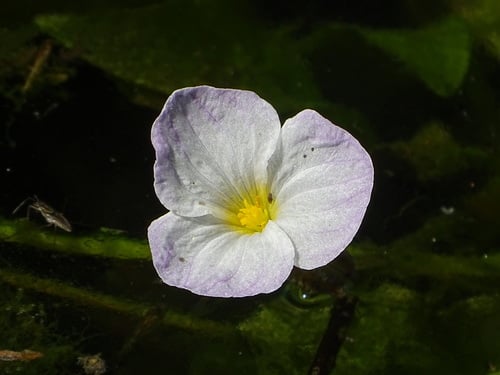
Hydrocharis morsus-ranae
L.
European frogbit
iNaturalist· cc-by-nc
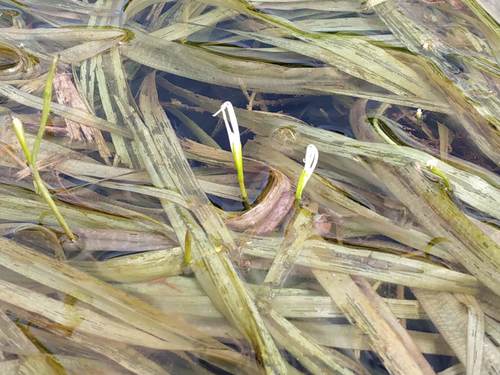
(c) Nick Bishop, some rights reserved (CC BY-NC), uploaded by Nick Bishop
iNaturalist· cc-by-nc
(c) Lukas Lattwein, some rights reserved (CC BY-NC)
iNaturalist· cc-by-nc
(c) Vladimir Travkin, some rights reserved (CC BY-NC)
Summary
Source: WikipediaHydrocharis morsus-ranae L. is a species of the genus Hydrocharis known by the common name European frog-bit. It is a free-floating flowering plant that bears small white flowers. "Morsus-ranae" means "frog bite" in Latin, and it is part of this species's scientific name because frogs might have been seen as biting on the leaves. European frog-bit is often mistaken for an American frog-bit (Limnobium spongia) due to their similar looks and floating freely. It usually displays invasive behavior in Canada and North America, having a major impact on native ecosystems. However, European frog-bit is efficient in accumulating high concentrations of heavy metals and chemicals, removing waste from water.
Description
A floating plant. It keeps growing from year to year and has stolons or horizontal stems. It is about 30-50 cm long. The leaves are circular. They are thick and heart shaped at the base. They are about 5 cm across. The leaf stalks have leaf like structures at the base. The flowers are separately male and female on the same plant. There are 1-4 flowers. The male spadix bract has a stalk while the female one does not. The fruit are rounded and with ribs. There are many seeds.
Edible Uses
Young shoots and leaves are eaten as a raw vegetable.
Traditional Uses
The young shoots and leaves are eaten as a raw vegetable.
This uses section is brief — help expand it
Distribution
A tropical plant. It grows in pools and marshes.
Where It Grows
Asia, Europe, Indochina, Luxembourg, North America, SE Asia, Slovenia, Thailand, USA,
Notes
There are 6 Hydrocharis species.
Also Known As
Pak tubtwaw, Phak tao, Tubtwawnaam, Yopae, žabji šejek
References (7)
- Jacquat, C., 1990, Plants from the Markets of Thailand. D.K. Book House p 101
- Morley, B. & Everard, B., 1970, Wild Flowers of the World. Ebury press. Plate 23
- Romanowski, N., 2007, Edible Water Gardens. Hyland House. p 59
- Somnasang, P., Moreno, G and Chusil K., 1998, Indigenous knowledge of wild hunting and gathering in north-east Thailand. Food and Nutrition Bulletin 19(4) p 359f
- Somnasang, P., et al, 2000, Knowing gathering and eating: Knowledge and attitudes about wild food in an Isan Village in north eastern Thailand. Journal of Ethnobiology 20(2):197-216
Show all 7 references Hide references
- Sp. pl. 2:1036. 1753
- Srichaiwong, P., et al, 2014, A Study of the Biodiversity of Natural Food Production to Support Community Upstream of Chi Basin, Thailand. Asian Social Science 10 (2):