Osmanthus fragrans
Lour.
Sweet olive, Sweet Osmanthus, Fragrant Olive
iNaturalist· cc0
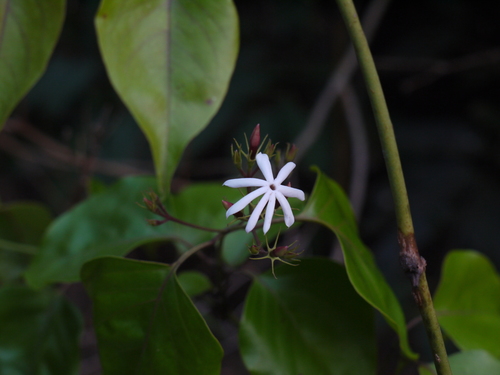
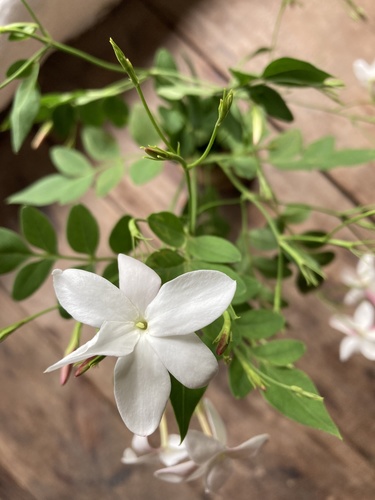
no rights reserved, uploaded by 葉子
iNaturalist· cc0
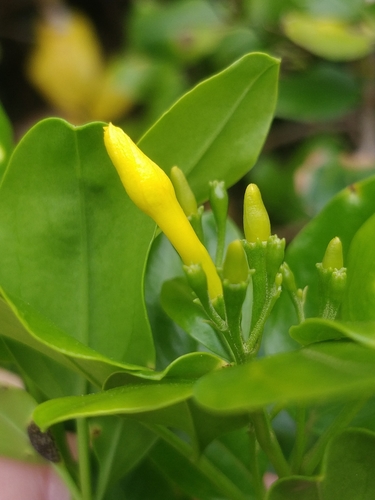
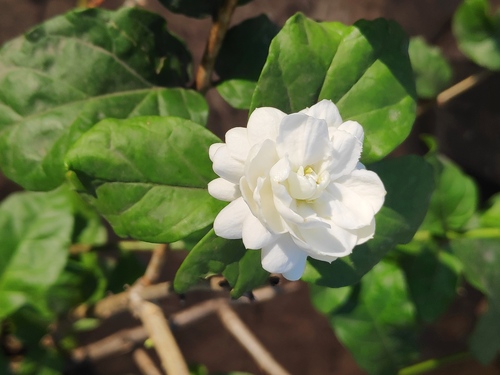
no rights reserved, uploaded by 葉子
iNaturalist· cc-by-nc
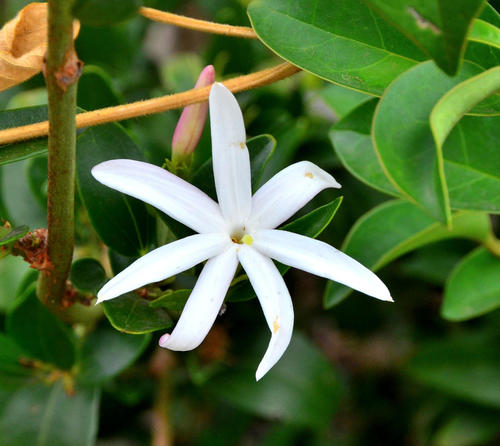
(c) Richard Joyce, some rights reserved (CC BY-NC), uploaded by Richard Joyce
Summary
Source: WikipediaOsmanthus fragrans (lit. 'fragrant osmanthus') is a species of flowering plant in the family Oleaceae. In English, it is sometimes referred to by the common names sweet osmanthus, sweet olive, tea olive, and fragrant olive. It is native to Assam, Cambodia, China, the Himalayas, Hainan, Japan, Myanmar, Taiwan, Nepal, Thailand, and Vietnam. In China it grows in the provinces of Guizhou, Sichuan, Hainan , and Yunnan. In China, it is the "city flower" of the cities of Hangzhou, Zhejiang; Suzhou, Jiangsu; and Guilin, Guangxi. In Japan, it is the "city tree" of Kitanagoya, Aichi Prefecture; Kashima, Saga Prefecture; Beppu, Ōita Prefecture; and the "town tree" of Yoshitomi, Fukuoka Prefecture.
Description
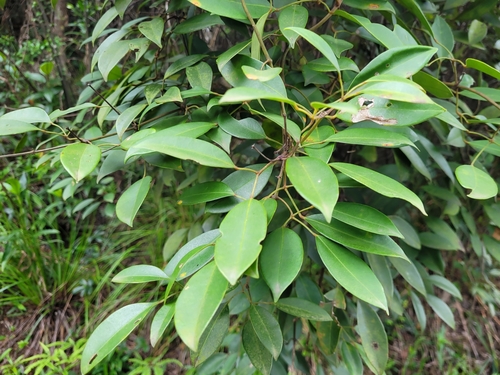
An evergreen shrub or small tree. It grows 3-5 m high and sometimes to 10 m high. The leaf stalk is 0.8-2 cm long. The leaf blade is narrowly oval and 5-9 cm long by 2-3 cm wide. It is leathery. The base is broadly rounded or wedge shaped and it narrows to a long tip. There are often teeth along the top edge. The veins are raised underneath. The flowers are in the axils of leaves. There are many flowers in a group. They are yellowish or orange. The flowers have a sweet scent. The fruit is a fleshy fruit with a hard covering over the seed. The fruit is purple black and oval. It is 1-1.5 cm across.
Edible Uses
The unripe fruits are preserved in brine in the same manner as olives. The highly fragrant flowers — which carry a scent of apricots — are used in Chinese cuisine and food preparation to impart a pleasant aroma to tea, wine, and sweet dishes such as lotus seed soup, pastries, and steamed pears. The flowers are also added to herbal medicines to mask unpleasant flavours.
Traditional Uses
The flowers have been used for scenting tea. They are also used to flavour wines, liqueurs, and sweets such as lotus seed soup, pastries and steamed pears. The unripe fruit are preserved in brine like olives. The fruit are eaten.
Medicinal Uses
The flowers are antitussive and are used in cosmetics for hair and skin, though their primary medicinal role is as a flavouring agent for other medicines. A decoction of the stem bark treats boils and carbuncles. A paste made from the stem or bark is applied in the treatment of boils, carbuncles, whooping cough, and retinitis. A decoction of the lateral roots is used for dysmenorrhoea, rheumatism, and bruises.
Distribution
It is a temperate to subtropical plant. It grows in S China. In Pakistan it grows in the temperate Himalayas between 1,200-2,200 m altitude. It suits hardiness zones 7-11. Melbourne Botanical gardens. Kyneton Botanical Gardens. In Yunnan.
Where It Grows
Asia, Australia, Bangladesh, China*, Hawaii, Himalayas*, India, Indochina, Indonesia, Japan, Korea, Laos, Myanmar, Nepal, Northeastern India, Pacific, Pakistan, SE Asia, Singapore, Slovenia, Taiwan, Tasmania, Thailand, USA, Vietnam,
Cultivation
Easily grown in any well-drained soil in sun or part shade, but flowering more freely in a sunny position. Thrives in chalky conditions. Dislikes unduly exposed positions, and requires shelter from freezing winds. Not very hardy outdoors in Britain, it succeeds on a wall in Cornwall or in a woodland garden in the milder areas of the country. The flowers are very fragrant. They are sometimes available in oriental stores, preserved in sweetened brine or as a sugary paste called 'cassia blossom jam'.
Propagation
Sow seed as soon as ripe in a cold frame. Stored seed germinates best after 3 months of warm stratification followed by 3 months of cold stratification. Germination typically takes 6–18 months. Prick seedlings out into individual pots when large enough to handle, overwinter in the greenhouse, and plant out in early summer. Cuttings of half-ripe wood can be taken at the end of July in a frame with bottom heat. Cuttings of nearly ripe wood, 7–12 cm with a heel, taken in September or October in a cold frame give a good percentage; plant out in spring 18 months later. Layering in spring or autumn is also effective — partially sever the layer the following late summer and plant out in autumn, achieving a high success rate.
Other Uses
An essential oil obtained from the flowers is used as a flavouring. The flowers are also used as an insect repellent for clothes.
Other Information
It is a well known spice plant. It is often cultivated for the perfume of the flowers.
Notes
There are about 15-30 Osmanthus species.
Synonyms
Also Known As
Dišeči oljkovec, Gui flower, Guihua, Kwai-fah, Kwei-hua, Mu xi, Pohon teh zaitun, Shiling, Silang, Thanlwin-thi, Tree Rhinoceros, Tungrung, Usugi-mokusei
References (29)
- Ambasta, S.P. (Ed.), 2000, The Useful Plants of India. CSIR India. p 416
- Arora, R. K., 2014, Diversity in Underutilized Plant Species - An Asia-Pacific Perspective. Bioversity International. p 106
- Bodkin, F., 1991, Encyclopedia Botanica. Cornstalk publishing, p 748
- Brickell, C. (Ed.), 1999, The Royal Horticultural Society A-Z Encyclopedia of Garden Plants. Convent Garden Books. p 732
- Chang Mei-chen, Qiu Lian-qing, Green, P.S., Oleaceae. Flora of China.
Show all 29 references Hide references
- Cundall, P., (ed.), 2004, Gardening Australia: flora: the gardener's bible. ABC Books. p 961
- Etherington, K., & Imwold, D., (Eds), 2001, Botanica's Trees & Shrubs. The illustrated A-Z of over 8500 trees and shrubs. Random House, Australia. p 503
- Facciola, S., 1998, Cornucopia 2: a Source Book of Edible Plants. Kampong Publications, p 163
- Fl. cochinch. 1:29. 1790
- Green, P. S., 2003, Synopsis of the Oleaceae from the Indian Sub-Continent. Kew Bulletin, Vol. 58, No. 2 (2003), pp. 257-295
- Hedrick, U.P., 1919, (Ed.), Sturtevant's edible plants of the world. p 455
- Hibbert, M., 2002, The Aussie Plant Finder 2002, Florilegium. p 215
- http://www.botanic-gardens-ljubljana.com/en/plants
- Hu, Shiu-ying, 2005, Food Plants of China. The Chinese University Press. p 627
- Kermath, B. M., et al, 2014, Food Plants in the Americas: A survey of the domesticated, cultivated and wild plants used for Human food in North, Central and South America and the Caribbean. On line draft. p 593
- Liu, Yi-tao, & Long, Chun-Lin, 2002, Studies on Edible Flowers Consumed by Ethnic Groups in Yunnan. Acta Botanica Yunnanica. 24(1):41-56
- Lord, E.E., & Willis, J.H., 1999, Shrubs and Trees for Australian gardens. Lothian. p 248
- Plants for a Future database, The Field, Penpol, Lostwithiel, Cornwall, PL22 0NG, UK. http://www.scs.leeds.ac.uk/pfaf/
- Ryan, S., 2008, Dicksonia. Rare Plants Manual. Hyland House. p 44
- Singh, V. B., et al, (Ed.) Horticulture for Sustainable Income and Environmental Protection. Vol. 1 p 217
- Staples, G.W. and Herbst, D.R., 2005, A tropical Garden Flora. Bishop Museum Press, Honolulu, Hawaii. p 443
- Sukarya, D. G., (Ed.) 2013, 3,500 Plant Species of the Botanic Gardens of Indonesia. LIPI p 426
- Tanaka,
- Upreti, K., et al, 2010, Diversity and Distribution of Wild Edible Fruit Plants of Uttarakhand. Bioversity Potentials of the Himalaya. p 179
- Valder, P., 1999, The Garden Plants of China. Florilegium. p 313
- Wiersema, J. H. & Leon, B., 2013, World Economic Plants. A Standard Reference CRC Press. 2nd Ed. p 484
- World Checklist of Useful Plant Species 2020. Royal Botanic Gardens, Kew
- Zeng, Y., et al, 2014, Evaluation of antioxidant activities of extracts from 19 Chinese edible flowers. SpringerPlus 2014, 3:315
- Zeven, A. C. & de West, J. M. J., 1982, Dictionary of cultivated plants and their regions of diversity. Wageningen. p 41