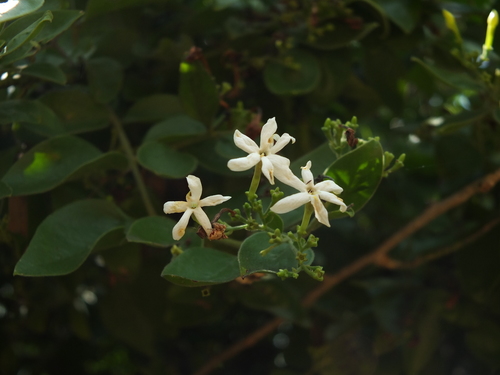
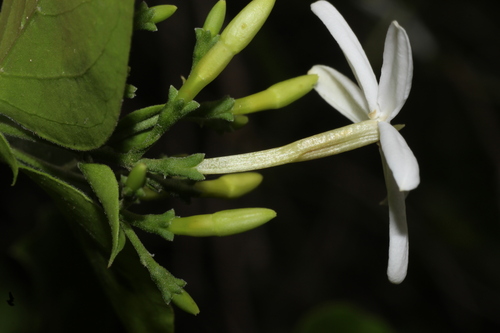
Fraxinus pennsylvanica
Marshall
Green Ash, Red Ash, Mexican ash
iNaturalist· cc-by
(c) Keith Kanoti, Maine Forest Service, USA, some rights reserved (CC BY)
iNaturalist· cc-by-nc
(c) michaelgold, some rights reserved (CC BY-NC), uploaded by michaelgold
iNaturalist· cc-by
(c) Nicholas A. Tonelli, some rights reserved (CC BY)
Summary
Source: WikipediaFraxinus pennsylvanica, the green ash or red ash, is a species of ash native to eastern and central North America, from Nova Scotia west to southeastern Alberta and eastern Colorado, south to northern Florida, and southwest to Oklahoma and eastern Texas. It has spread and become naturalized in much of the western United States and also in Argentina and Europe, from Spain to Russia. Other names more rarely used include downy ash, swamp ash, and water ash.
Description
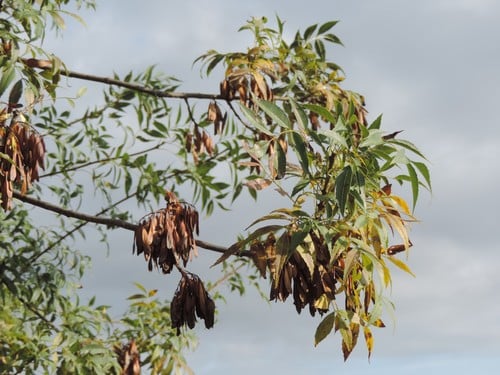
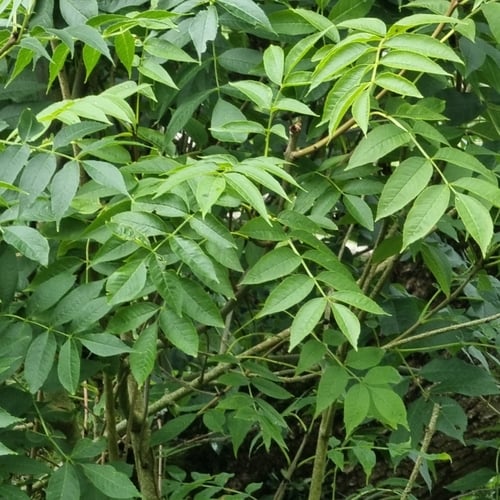
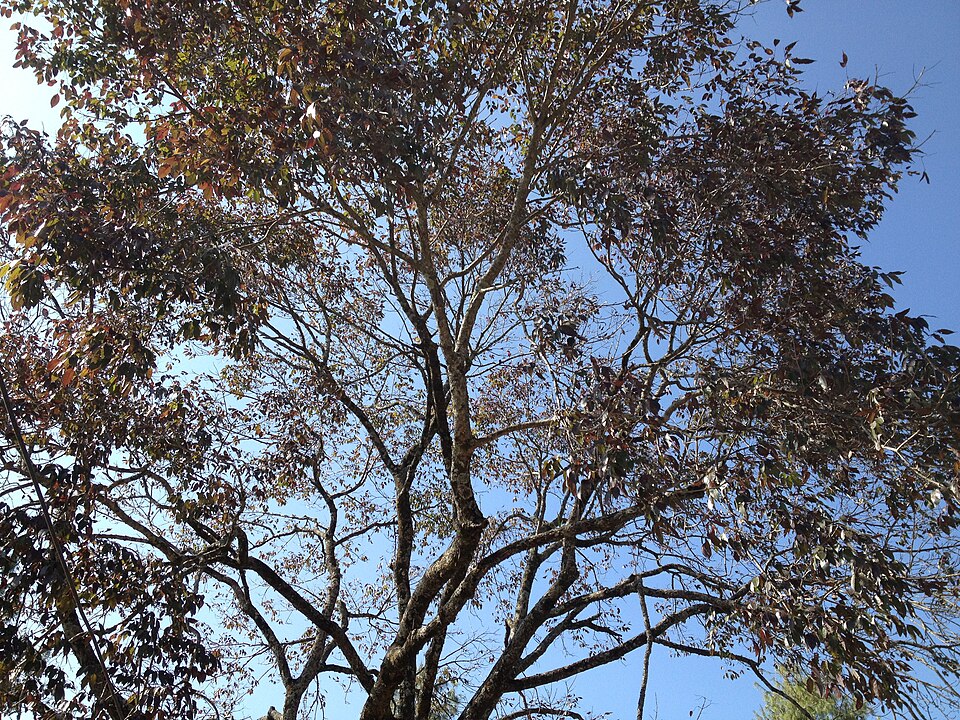
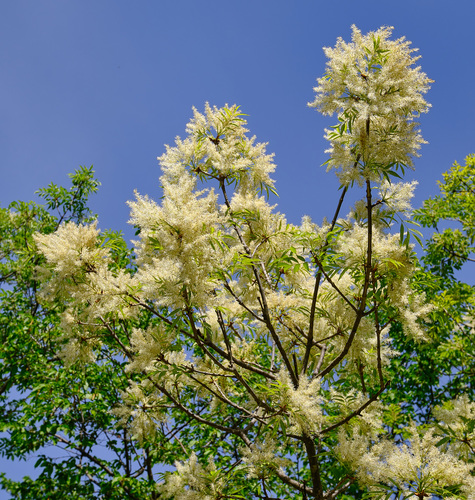
A medium sized tree. It grows to 21 m high. It spreads to a similar width. The trunk can be 60 cm across. The bark is greyish brown and often tinged with red on young branches. The leaves are green and divided into 5-9 leaflets. These are sometimes hairy. The leaflets are 10-15 cm long. They are oval but taper towards the point. They have teeth above the middle. The upper surface is yellowish-green and it is paler and hairy underneath. Leaves turn yellowish-brown in autumn. The leaf stalks are hairy with 2 narrow green wings. The buds are reddish brown. The flowers are of separate sexes on separate trees. The flower stalks are densely hairy. The fruit are 3-6 cm long. The wing encloses over one half of the seedcase.
Edible Uses
The inner bark (cambium layer) is cooked — it can be scraped away in long, fluffy layers and is said to taste like eggs. It can also be dried, ground into a powder, and used as a soup thickener or mixed with cereals when making bread.
Traditional Uses
The soft inner bark is scraped and cooked and eaten.
This uses section is brief — help expand it
Medicinal Uses
The bark and leaves are a bitter tonic. An infusion of the inner bark has been used to treat depression and fatigue. The root is diuretic.
Distribution
It is native to North America. Temperate. It does best with a moist soil. It often grows in the bottoms of river valleys. It can tolerate some shade. It can stand many weeks of flooding when dormant. In East Africa it grows between 1,500-2,800 m above sea level. It suits hardiness zones 4-10. Arboretum Tasmania.
Where It Grows
Africa, Argentina, Australia, Canada, East Africa, Korea, North America, South America, Tanzania, Tasmania, Uruguay, USA,
Cultivation
Prefers deep loamy soil, even if it is on the heavy side. Fraxinus pennsylvanica tolerates a broad range of temperatures and precipitation and is probably the most adaptable of all the ash species. It is a very cold-hardy plant, able to tolerate temperatures down to around -30°c when fully dormant Prefers a deep loamy soil, even if it is on the heavy side. Most members of this genus are gross feeders and require a rich soil. Plants succeed when growing in exposed positions and also in alkaline soils. They tolerate atmospheric pollution. A fast-growing tree. Plants have little tolerance of shade. Cultivated as a timber tree in C. and S.E. Europe where it is sometimes naturalized. The cultivar 'Patmore' is disease resistant. A recently introduced invasive pest, the Emerald Ash Borer has rapidly spread across much of N. America and is devastating the genus Fraxinus. The borer infests and feeds on all the North American ash species it has so far encountered. The nature of the infestation (larval feeding in the phloem) effectively girdles trees as small as 25mm in diameter, which is many years before reproductive maturity, leading to death within five years of infestation. The borer, therefore, causes virtually 100% mortality of Ash populations. The Ash species are unable to persist for very long through vegetative reproduction, and seeds only remain viable in the soil for at most 7 - 8 years, so regeneration after borer infestation is minimal or nonexistent. Furthermore, the borer persists in forests with low population densities after major ash population crashes, so the orphaned cohort of ash seedlings that remains is quickly infested as they reach a suitable size. A dioecious species - both male and female forms must be grown if fruit and seed are required. The cultivar 'Patmore' is disease resistant. Dioecious. Male and female plants must be grown if seed is required.
Propagation
Seed is best harvested green — fully developed but not yet dried on the tree — and sown immediately in a cold frame, where it usually germinates in spring. Stored seed requires cold stratification and should be sown as soon as possible in a cold frame. Prick seedlings into individual pots when large enough and grow on in a cold frame through their first winter. Plant out into permanent positions or a nursery bed in late spring or early summer the following year. Where sufficient seed is available, sow directly into an outdoor seedbed in autumn and grow on for 2 years before transplanting.
Other Uses
A fairly wind-resistant tree suitable for shelterbelt planting and reforestation projects. A red dye is extracted from the bark. Wood logs can be beaten with mauls to separate the growth layers, which are then cut into strips and woven into baskets. The wood is hard, heavy, reasonably strong, tough, elastic, brittle, and coarse-grained, weighing 44lb per cubic foot. Used for tool handles and furniture, though of poorer quality than F. americana — it is, however, often sold under that name.
Production
It is a fast growing tree. It lives for 100 years. It produces abundant seed crops almost every year.
Notes
There are about 65 Fraxinus species.
Synonyms
References (15)
- Arbust. amer. 51. 1785
- Beckstrom-Sternberg, Stephen M., and James A. Duke. "The Foodplant Database." http://probe.nalusda.gov:8300/cgi-bin/browse/foodplantdb.(ACEDB version 4.0 - data version July 1994)
- Brickell, C. (Ed.), 1999, The Royal Horticultural Society A-Z Encyclopedia of Garden Plants. Convent Garden Books. p 445
- Coombes, A.J., 2000, Trees. Dorling Kindersley Handbooks. p 230
- Cundall, P., (ed.), 2004, Gardening Australia: flora: the gardener's bible. ABC Books. p 612
Show all 15 references Hide references
- Dharani, N., 2002, Field Guide to common Trees & Shrubs of East Africa. Struik. p 115
- Etherington, K., & Imwold, D., (Eds), 2001, Botanica's Trees & Shrubs. The illustrated A-Z of over 8500 trees and shrubs. Random House, Australia. p 335
- Farrar, J.L., 1995, Trees of the Northern United States and Canada. Iowa State University press/Ames p 164
- Hibbert, M., 2002, The Aussie Plant Finder 2002, Florilegium. p 103
- Little, E.L., 1980, National Audubon Society Field Guide to North American Trees. Alfred A. Knopf. p 651
- Lord, E.E., & Willis, J.H., 1999, Shrubs and Trees for Australian gardens. Lothian. p 56
- Mbuya, L.P., Msanga, H.P., Ruffo, C.K., Birnie, A & Tengnas, B., 1994, Useful Trees and Shrubs for Tanzania. Regional Soil Conservation Unit. Technical Handbook No 6. p 278
- Moerman, D. F., 2010, Native American Ethnobotany. Timber Press. p 238
- Toupal, R. S. & Hollenback, K., 2009, An Ethnobotany of Indiana Dunes National Lakeshore: Plant Uses of the Ojibwa People. Bureau of Applied Research in Anthropology. University of Arizona
- Young, J., (Ed.), 2001, Botanica's Pocket Trees and Shrubs. Random House. p 394