Ornithogalum umbellatum
L.
Common Star of Bethlehem
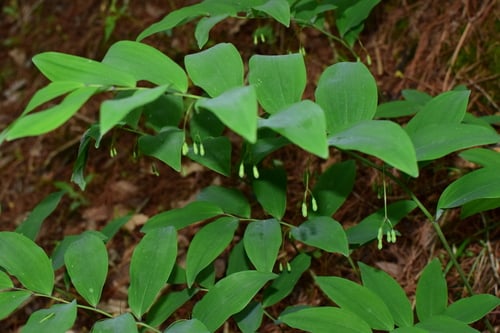
iNaturalist· cc-by-nc
(c) flowerfreak, some rights reserved (CC BY-NC), uploaded by flowerfreak
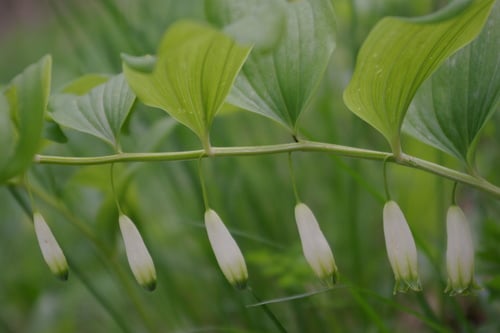
iNaturalist· cc-by-nc
(c) flowerfreak, some rights reserved (CC BY-NC), uploaded by flowerfreak
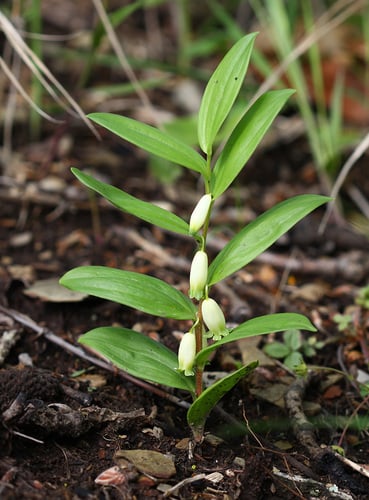
iNaturalist· cc-by-nc
(c) Еlena, some rights reserved (CC BY-NC), uploaded by Еlena
Summary
Source: WikipediaOrnithogalum umbellatum, the garden star-of-Bethlehem, grass lily, nap-at-noon, or eleven-o'clock lady, is a perennial bulbous flowering plant in the asparagus family (Asparagaceae). O. umbellatum is a relatively short plant, occurring in tufts of basal linear leaves, producing conspicuous white flowers, in a stellate pattern, in mid to late spring. The flowers open late in the day (hence some of its common names), but when closed have a green stripe on the outside. It is native throughout southern and central Europe, and north-western Africa. O. umbellatum is often grown as a garden ornamental, but in North America and other areas it has escaped cultivation and can be found in many areas, where it may be considered an invasive weed. Parts of the plant are considered poisonous, but are used in some regional cuisines. Essences are also sold as patent remedies. O. umbellatum has been depicted in art by artists such as Leonardo da Vinci, and folklore has suggested it originally grew from fragments of the star of Bethlehem, hence its horticultural name.
Description
A bulb plant. It grows 15-30 cm high and 8-10 cm wide. Normally there are several offsets forming tufts of leaves around the parent plant. The leaves are very narrow. They are 30 cm long. The leaves have a central silver stripe. The stout stems have numerous starry white flowers. They are tinted green at the centre. They have a green stripe on the back. The fruit is a capsule with 6 equal angles. The bulbs are very white. The bulbs are edible.
Edible Uses
The bulbs can be eaten raw or cooked, or dried and ground into a powder. They are considered palatable and wholesome by some accounts, though some caution is advised given the toxicity notes associated with this plant. The flowers can also be baked into bread.
Traditional Uses
The bulbs can be eaten raw or cooked. They are often roasted like chestnuts. Because they contain toxic components they are normally boiled with several changes of water, then eaten. They are crushed and mixed with cereal flour for bread. The flowers have been eaten baked in bread.
Medicinal Uses
A homeopathic remedy made from the bulbs is used in treating certain forms of cancer. The plant features in Bach flower remedies, where it is prescribed for the 'after effect of shock, mental or physical.' It is also one of five ingredients in the 'Rescue remedy.'
Known Hazards
The plant, especially the bulb and flowers, contains cardiac glycosides, specifically convallatoxin and convalloside which are toxic to humans and livestock. Symptoms of poisoning include nausea, salivation, vomiting, diarrhea, and shortness of breath, as well as pain, burning, and swelling of lips, tongue, and throat. Prolonged contact may lead to skin irritation.
Distribution
It is a temperate plant. It is frost hardy. It suits hardiness zones 5-10. Tasmanian Herbarium.
Where It Grows
Africa, Australia, Balkans, Bosnia, Britain, Canada, Croatia, Europe, France, Greece, Italy, Luxembourg, Mediterranean, Middle East, New Zealand, North Africa, North America, Portugal, Slovenia, Spain, Tasmania, Turkey, Türkiye, USA,
Cultivation
An easily grown plant, succeeding in an ordinary garden soil. Tolerates partial shade. Hardy to about -20°c. The dormant bulbs are very hardy and will withstand soil temperatures down to at least -10°c. A very ornamental plant, but it can be invasive where conditions suit it. It can be naturalized in short turf or thin grass below shrubs, though this should not be mown from the time the bulbs start to grow until they have set seed and the leaves are dying down.
Propagation
Seed is best sown as soon as ripe in a cold frame. Sow thinly and leave seedlings undisturbed through their first dormancy, applying liquid feed at intervals — especially in the second year. At the end of the second year, divide the bulbs and pot up 2–3 per pot. Grow on for one more year, then plant out into permanent positions while dormant. Seed can also be sown in a cold frame in early spring. Offsets can be divided in September/October; larger bulbs can go straight into permanent positions, while smaller ones are best potted and grown on for a year before planting out dormant in late summer.
Other Uses
None known.
Other Information
It is a famine food.
Notes
There are about 80 Ornithogalum species. A famine food cited in the Hebrew Old Testament (II Kings 6:25). It can become invasive. Also put in the family Liliaceae and Hyacinthaceae.
Nutrition
| Part | Moisture | kJ | kcal | Protein | Vit A | Vit C | Iron | Zinc |
|---|---|---|---|---|---|---|---|---|
| Bulb | 87 | 185 | 45.1 | 0.5 | — | 83.1 | 3.6 | 0.3 |
Also Known As
Bird's Milk, Dove's Dung, Pigeon Dung
References (23)
- Blamey, M and Grey-Wilson, C., 2005, Wild flowers of the Mediterranean. A & C Black London. p 478
- CALCOTT,
- Cundall, P., (ed.), 2004, Gardening Australia: flora: the gardener's bible. ABC Books. p 958
- Dashorst, G.R.M., and Jessop, J.P., 1998, Plants of the Adelaide Plains & Hills. Botanic Gardens of Adelaide and State Herbarium. p 158
- Ertug, F, Yenen Bitkiler. Resimli Türkiye Florası -I- Flora of Turkey - Ethnobotany supplement
Show all 23 references Hide references
- Facciola, S., 1998, Cornucopia 2: a Source Book of Edible Plants. Kampong Publications, p 144
- Guzelsoy, N. A., et al, 2017, Nutritional Properties of some Wild Edible Plant Species in Turkey. ANADOLU, J. of AARI 27(2) 2017, 39-45
- Hedrick, U.P., 1919, (Ed.), Sturtevant's edible plants of the world. p 452
- Hibbert, M., 2002, The Aussie Plant Finder 2002, Florilegium. p 215
- http://www.botanic-gardens-ljubljana.com/en/plants
- Joyce, D., 1998, The Garden Plant Selector. Ryland, Peters and Small. p 306
- Lazarides, M. & Hince, B., 1993, Handbook of Economic Plants of Australia, CSIRO. p 176
- Lim, T. K., 2015, Edible Medicinal and Non Medicinal Plants. Volume 9, Modified Stems, Roots, Bulbs. Springer p 61
- Luczaj et al, 2013, Wild vegetable mixes sold in the markets of Dalmatia (southern Croatia). Journal of Ethnobiology and Ethnomedicine. 8:2
- Luczaj, L. et al, 2014, Wild Food Plants of Dalmatia (Croatia). in A. Pieroni, C. L. Quave (eds.), Ethnobotany and Biocultural Diversities in the Balkans, p 142
- Mabey, R., 1973, Food for Free. A Guide to the edible wild plants of Britain, Collins. p 72
- Marinelli, J. (Ed), 2004, Plant. DK. p 464
- MOLDENKE,
- Plants for a Future database, The Field, Penpol, Lostwithiel, Cornwall, PL22 0NG, UK. http://www.scs.leeds.ac.uk/pfaf/
- Redzic, S. J., 2006, Wild Edible Plants and their Traditional Use in the Human Nutrition in Bosnia-Herzegovina. Ecology of Food and Nutrition, 45:189-232
- Skinner, G. & Brown, 1981, C., Simply Living. A gatherer's guide to New Zealand's fields, forests and shores. Reed. p 22
- Sp. pl. 1:307. 1753
- Tasmanian Herbarium Vascular Plants list p 70