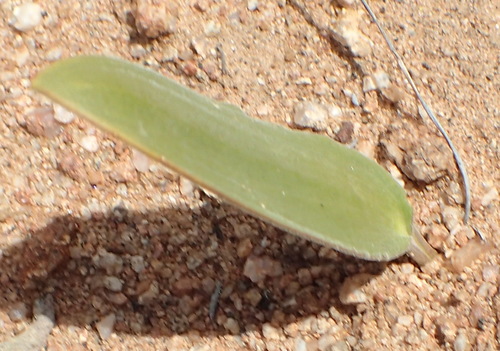
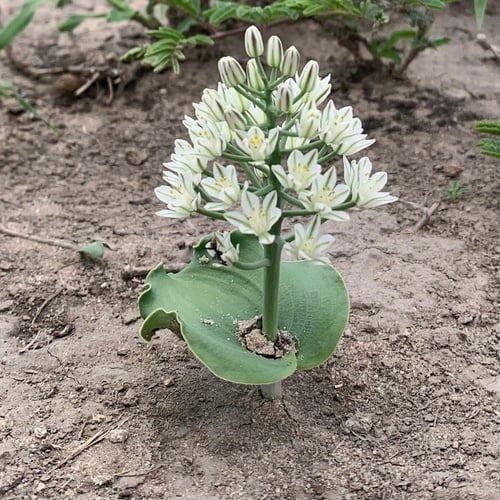
Ornithogalum pyrenaicum
L.
Bath Asparagus, Spiked Star of Bethlehem, French Asparagus, Prussian asparagus
iNaturalist· cc-by-nc-sa
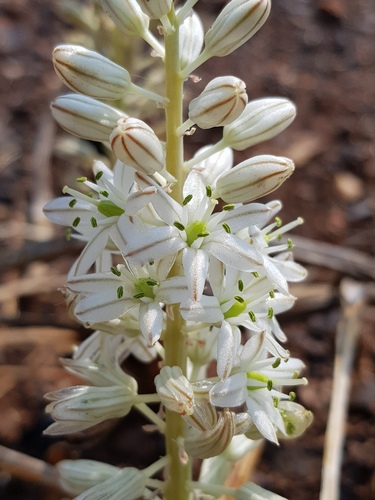
(c) douneika, some rights reserved (CC BY-NC-SA)
iNaturalist· cc-by-sa
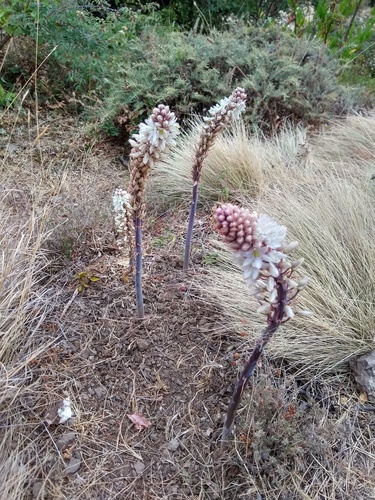
(c) dr.scott.mills, some rights reserved (CC BY-SA), uploaded by dr.scott.mills
iNaturalist· cc-by-nc
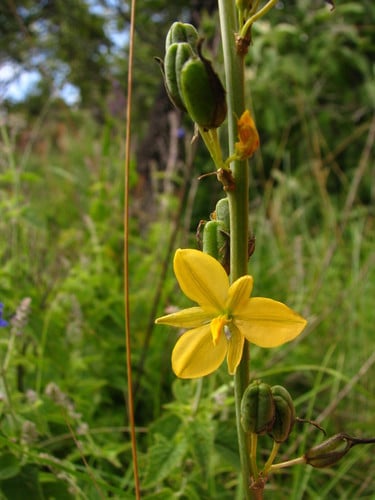
(c) guillaume_papuga, some rights reserved (CC BY-NC), uploaded by guillaume_papuga
Summary
Source: WikipediaOrnithogalum pyrenaicum, also called Prussian asparagus, wild asparagus, Bath asparagus, Pyrenees star of Bethlehem, or spiked star of Bethlehem, is a plant whose young flower shoots may be eaten as a vegetable, similar to asparagus. The common name Bath asparagus comes from the fact it was once abundant near the city of the same name in England.
Description
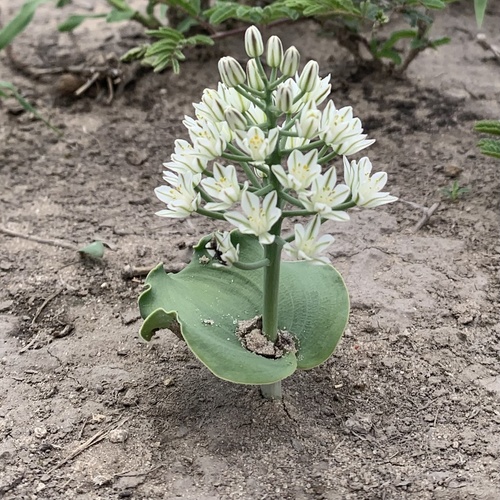
A medium to tall bulb plant. It keeps growing from year to year. The stems are slender and green and like asparagus in young bud. There are 5-8 narrow leaves. They have slight channels along them. They have a pale stripe down the middle. The flowers are pale yellowish-green. They are 13-17 mm long and star shaped. They are in long slender spike like clusters.
Edible Uses
The young, unexpanded flowering shoots are cooked and served like asparagus.
Traditional Uses
The young flowering shoots can be eaten like asparagus.
This uses section is brief — help expand it
Medicinal Uses
None known.
Known Hazards
Skin contact with the bulb can cause dermatitis in sensitive people. Any toxins in this plant are concentrated in the bulb.
Distribution
It is a temperate plant. It grows in open woodland and rocky places.
Where It Grows
Australia, Britain, Europe, France, Greece, Italy, Luxembourg, Mediterranean, Spain, Yugoslavia,
Cultivation
An easily grown plant, succeeding in ordinary garden soil, thriving in sun or shade. Succeeds in dry soils and, once established, is drought tolerant. Plants are hardy to about -20°c. Grows well in the wild garden. The flowering shoots used to be sold as a food crop in Bath market.
Propagation
Seed is best sown as soon as ripe in a cold frame. Sow thinly and leave seedlings undisturbed through their first dormancy, applying liquid feed at intervals, particularly in their second year of growth. At the end of the second year, divide bulbs and pot up 2–3 per pot. Grow on for a further year before planting out into permanent positions while dormant. Seed can also be sown in a cold frame in early spring. Offsets can be divided in September or October. Larger bulbs can go directly into permanent positions; smaller bulbs are best potted up and grown on for a year before planting out while dormant in late summer.
Other Uses
None known.
Notes
There are about 80 Ornithogalum species. Also put in the family Liliaceae and Hyacinthaceae.
References (13)
- Blamey, M and Grey-Wilson, C., 2005, Wild flowers of the Mediterranean. A & C Black London. p 479
- Bodkin, F., 1991, Encyclopedia Botanica. Cornstalk publishing, p 745
- Brickell, C. (Ed.), 1999, The Royal Horticultural Society A-Z Encyclopedia of Garden Plants. Convent Garden Books. p 729
- Facciola, S., 1998, Cornucopia 2: a Source Book of Edible Plants. Kampong Publications, p 144
- Hedrick, U.P., 1919, (Ed.), Sturtevant's edible plants of the world. p 452
Show all 13 references Hide references
- Irving, M., 2009, The Forager Handbook, A Guide to the Edible Plants of Britain. Ebury Press p 341
- Kayiran, S. D., & Ozkan, E. E., 2017, The ethnobotanical uses of Hyacinthaceae species growing in Turkey and a review of pharmacological activities. Indian Journal of Traditional Knowledge V ol. 16(2), April 2017, pp. 243-250
- Lazarides, M. & Hince, B., 1993, Handbook of Economic Plants of Australia, CSIRO. p 176
- Mabey, R., 1973, Food for Free. A Guide to the edible wild plants of Britain, Collins. p 115
- Paoletti, M.G., Dreon, A.L., and Lorenzoni, G.G., 1995, Pistic, Traditional Food from Western Friuli, NE Italy. Economic Botany 49(1) pp 26-30
- Plants for a Future database, The Field, Penpol, Lostwithiel, Cornwall, PL22 0NG, UK. http://www.scs.leeds.ac.uk/pfaf/
- Sp. pl. 1:306. 1753
- Turner, N. J. et al, 2011, Edible and Tended Wild Plants, Traditional Ecological Knowledge and Agroecology. Critical Reviews in Plant Sciences, 30:198-225