Hesperocallis undulata
A. Gray
Desert Lily
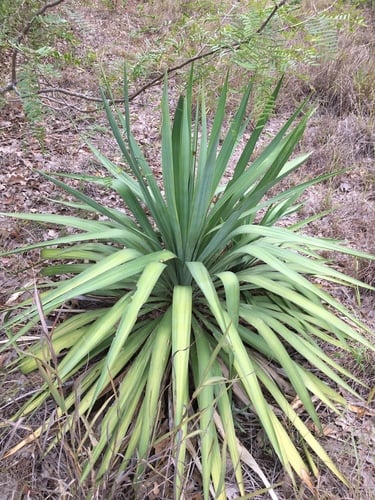
iNaturalist· cc-by-nc
(c) Eric Hough, some rights reserved (CC BY-NC), uploaded by Eric Hough
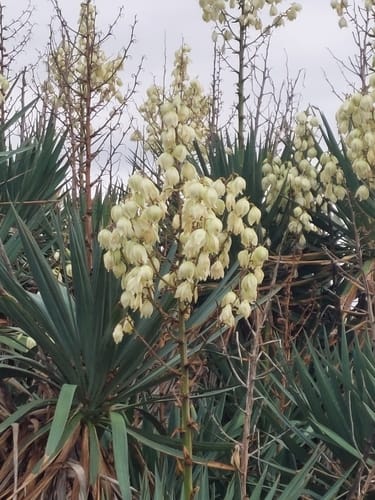
iNaturalist· cc-by-nc
(c) birgitknorr, some rights reserved (CC BY-NC), uploaded by birgitknorr
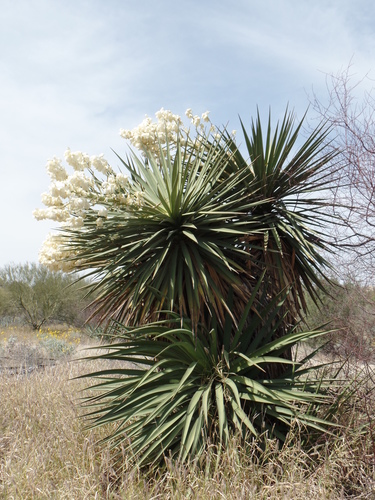
iNaturalist· cc-by-nc
(c) mesteve, some rights reserved (CC BY-NC)
Summary
Source: WikipediaA bulb-forming plant reaching 0.3 m tall with 0.2 m spread. Hardy to UK zone 9. Flowers February to March. Hermaphroditic and insect-pollinated. Requires full sun and well-drained light sandy to medium loamy soil with mildly acid to basic pH. Tolerates dry conditions and drought.
Description
A bulb-forming plant reaching 0.3 m tall with 0.2 m spread. Hardy to UK zone 9. Flowers February to March. Hermaphroditic and insect-pollinated. Requires full sun and well-drained light sandy to medium loamy soil with mildly acid to basic pH. Tolerates dry conditions and drought.
Edible Uses
The bulb can be eaten raw or cooked and has a garlic-like flavour. It is well suited to baking or boiling. Bulbs are quite large, reaching up to 5cm in diameter, and are typically found as deep as 50cm below the soil surface.
Traditional Uses
The bulb is eaten raw or cooked. It is baked or fried.
This uses section is brief — help expand it
Medicinal Uses
None known.
Distribution
It grows in warm temperate and subtropical places. It will grow in arid places.
Where It Grows
Central America, Mexico, North America, USA,
Cultivation
Requires a very well-drained soil in a sunny position. Plants are intolerant of temperatures below freezing, especially if this is coupled with wetness. The bulbs like plenty of moisture when in growth in the spring but must be kept dry when they are dormant. This species is not very hardy in Britain, it is best grown in a cold greenhouse or treated as a half-hardy annual, though they can succeed outdoors in very sheltered parts of south-west Britain. Plants are very difficult to induce into flower in Britain and are best grown in a greenhouse in almost pure sand with some leafmold. Water should be withheld in the summer. The flowers open in the evening and scent the air around them. Bulbs are often found at a great depth in the soil.
Propagation
Sow seed in late winter or as soon as it is ripe in deep pots filled with very free-draining compost in a greenhouse. Sow thinly to avoid the need for pricking out, and leave seedlings undisturbed for their first two growing seasons, watering very sparingly during dormancy but not allowing the compost to dry out completely. Once seedlings have completed their second growing season, divide young bulbs into individual deep pots and grow on in the greenhouse for at least another year before planting out during their dormant period.
Other Uses
This is a scented plant.
Notes
Also put in the family Liliaceae.
References (7)
- Beckstrom-Sternberg, Stephen M., and James A. Duke. "The Foodplant Database." http://probe.nalusda.gov:8300/cgi-bin/browse/foodplantdb.(ACEDB version 4.0 - data version July 1994)
- Brickell, C. (Ed.), 1999, The Royal Horticultural Society A-Z Encyclopedia of Garden Plants. Convent Garden Books. p 518
- Felger, R. S. 1980, Vegetation and Flora of the Gran Desierti, Sonora, Mexico. Desert Plants 2(2). Arizona-Sonora Desert Museum. p 9
- Hedrick, U.P., 1919, (Ed.), Sturtevant's edible plants of the world. p 342
- MacMahon, J.A., 1990, Deserts. Audubon Society Nature Guides. Knopf. p 384 Plate 98
Show all 7 references Hide references
- Moerman, D. F., 2010, Native American Ethnobotany. Timber Press. p 263
- Plants for a Future database, The Field, Penpol, Lostwithiel, Cornwall, PL22 0NG, UK. http://www.scs.leeds.ac.uk/pfaf/