Amelanchier bartramiana
(Tausch.) Roem.
Mountain serviceberry, Bartram shadblow
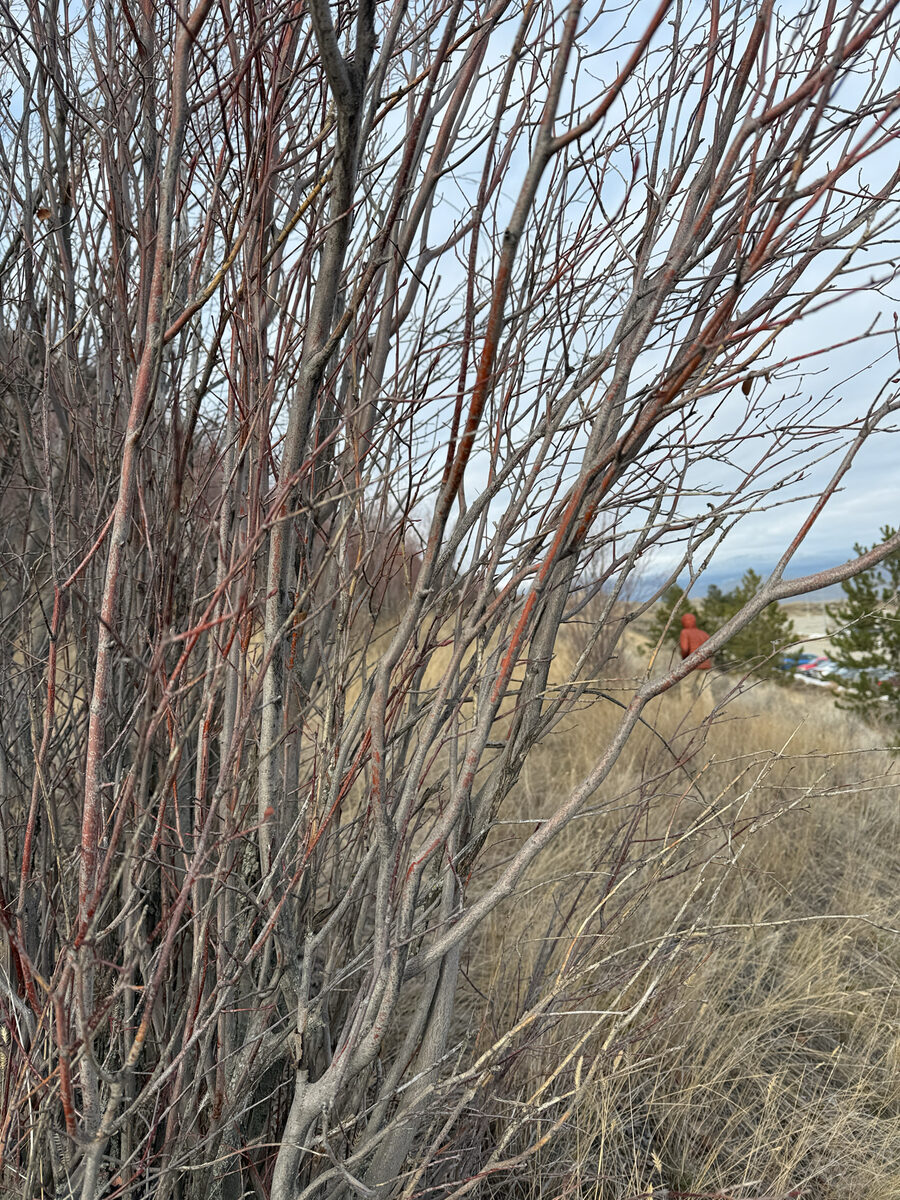
iNaturalist· cc-by-nc
(c) Andy Fyon, some rights reserved (CC BY-NC), uploaded by Andy Fyon
iNaturalist· cc-by-nc
(c) Jacques Ibarzabal, some rights reserved (CC BY-NC), uploaded by Jacques Ibarzabal
iNaturalist· cc-by-nc
(c) Christian Grenier, some rights reserved (CC BY-NC), uploaded by Christian Grenier
Summary
Source: WikipediaAmelanchier bartramiana is a species of serviceberry. Common names include mountain serviceberry, mountain shadbush, Bartram's serviceberry, mountain juneberry, Bartram juneberry, and the oblongfruit serviceberry. The leaves of A. bartramiana are either brown or green coloured, are egg-shaped and tapered at both ends with fine teeth almost to the base. It has 6–12 teeth while its lateral veins comes 10–16 pairs. Its petioles are 2–10 millimetres (0.079–0.394 in) long while its blades are ovate and elliptic. The flowers have five white petals, appearing singly or in clusters of up to four blossoms. The pomes are red, ripening to dark purple and are pear-shaped. The fruits are edible and can be eaten raw or cooked.
Description
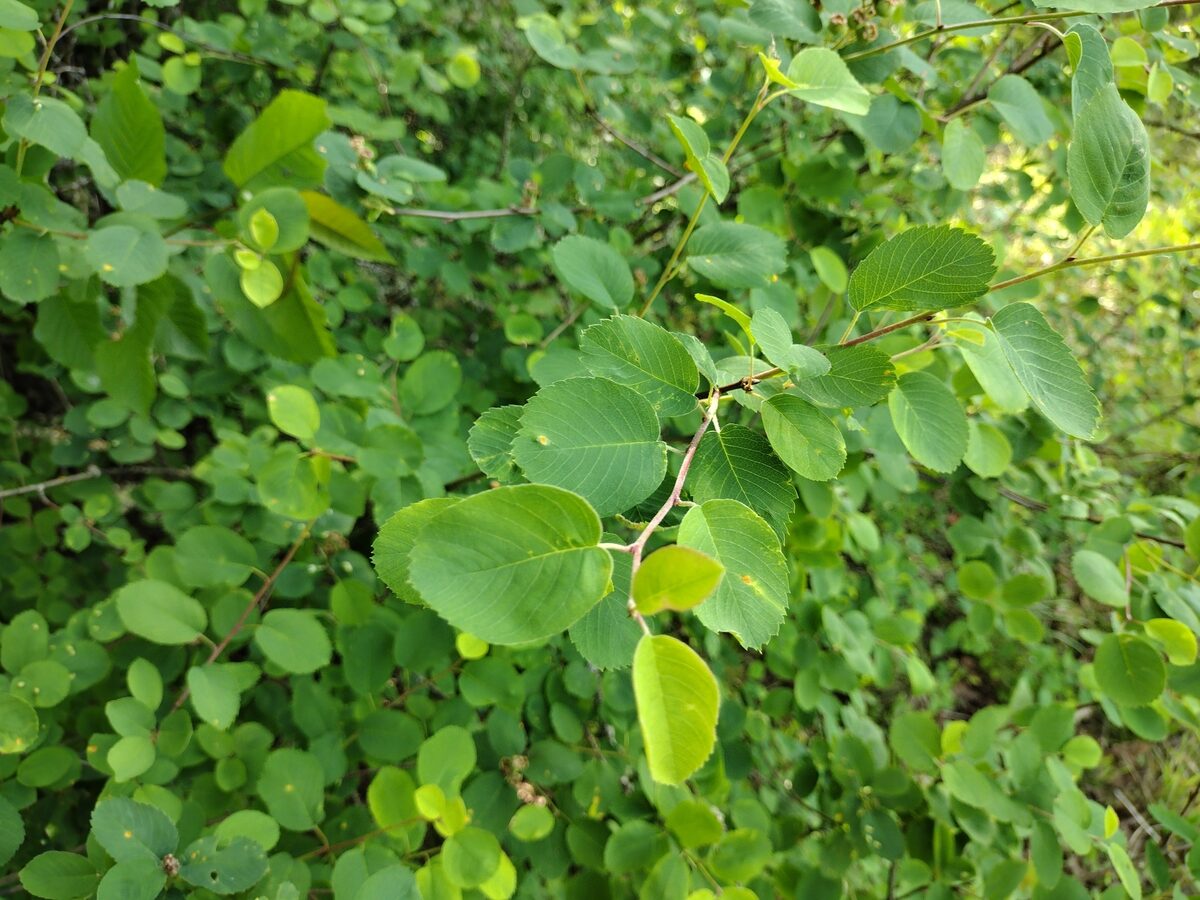
A shrub to 3 m high. The leaves are oval and 2.5-5 cm long. They are usually tapered at both ends. The leaves have fine teeth along the edge. The flowers occur in clusters of 1-3 in the axils of leaves. Fruit are oval or pear shaped and 15 mm long. They are dry and sweet.
Edible Uses
The fruit can be eaten raw or cooked. Unlike the round fruits typical of other serviceberries, this species produces oval or pear-shaped fruits about 15mm long. Reports vary on texture — some describe them as sweet but rather dry, while others find them sweet and juicy. They can be added to pancakes or dried for later use. Each fruit contains a few small seeds at the centre. The fruit is rich in iron and copper.
Traditional Uses
The fruit are eaten raw or cooked. They can be used in muffins or pancakes and in fruit sauces. The fruit are also dried for later use.
This uses section is brief — help expand it
Medicinal Uses
None known.
Distribution
It is a temperate plant. Plants are hardy to cold to -30°C. It grows on moist acid sites. It grows on bleak mountains bogs and swamps. It suits hardiness zones 5-8.
Where It Grows
Canada, North America, USA,
Cultivation
It can be grown from seed, layering or suckers. Seed can take 18 months to germinate and layers can take 18 months to form roots.
Propagation
Seed is best harvested green — when fully formed but before the seed coat hardens — and sown immediately in pots outdoors or in a cold frame. Stored seed obtained early in autumn can be given 4 weeks of warm stratification before overwintering outside, which should result in spring germination. Otherwise, germination can be very slow, potentially taking 18 months or more. Prick seedlings out into individual pots once large enough to handle and grow on in a sheltered outdoor position, planting out when they reach 20cm or taller. Where seed is plentiful, sow thinly in an outdoor seedbed and grow on for two years before transplanting to permanent positions in winter. Layering in spring takes around 18 months. Suckers can be divided in late winter, but they must have been growing for 2 years to have formed roots. Once rooted, they can be planted directly into permanent positions.
Other Uses
None known.
Notes
There are about 25-30 Amelanchier species.
Synonyms
References (9)
- Beckstrom-Sternberg, Stephen M., and James A. Duke. "The Foodplant Database." http://probe.nalusda.gov:8300/cgi-bin/browse/foodplantdb.(ACEDB version 4.0 - data version July 1994)
- Bircher, A. G. & Bircher, W. H., 2000, Encyclopedia of Fruit Trees and Edible Flowering Plants in Egypt and the Subtropics. AUC Press. p 23
- Etherington, K., & Imwold, D., (Eds), 2001, Botanica's Trees & Shrubs. The illustrated A-Z of over 8500 trees and shrubs. Random House, Australia. p 92
- Facciola, S., 1998, Cornucopia 2: a Source Book of Edible Plants. Kampong Publications, p 193
- Fam. nat. syn. monogr. 3:145. 1847
Show all 9 references Hide references
- Farrar, J.L., 1995, Trees of the Northern United States and Canada. Iowa State University press/Ames p 369
- Fisk, J. R. & Hoover, E., 2015, Wild Fruits of Minnesota. A Filed Guide. University of Minnesota p 8
- Jackes, D. A., Edible Forest Gardens
- Plants for a Future database, The Field, Penpol, Lostwithiel, Cornwall, PL22 0NG, UK. http://www.scs.leeds.ac.uk/pfaf/.
More from Rosaceae
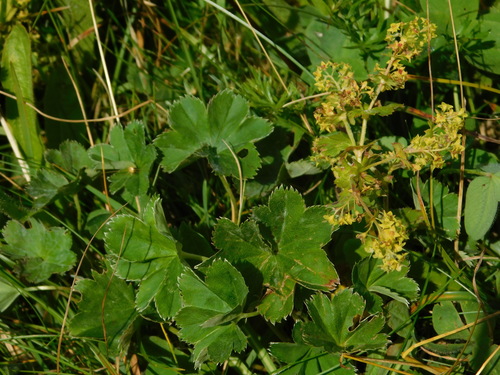
Alchemilla splendens
Glittering lady's mantle
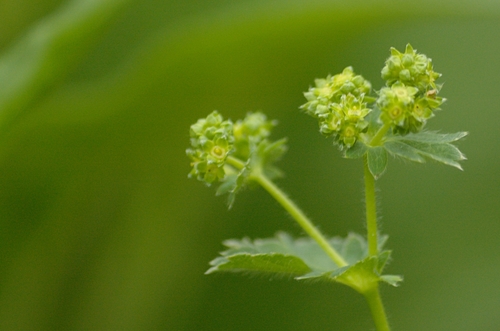
Alchemilla vulgaris
Lady's mantle
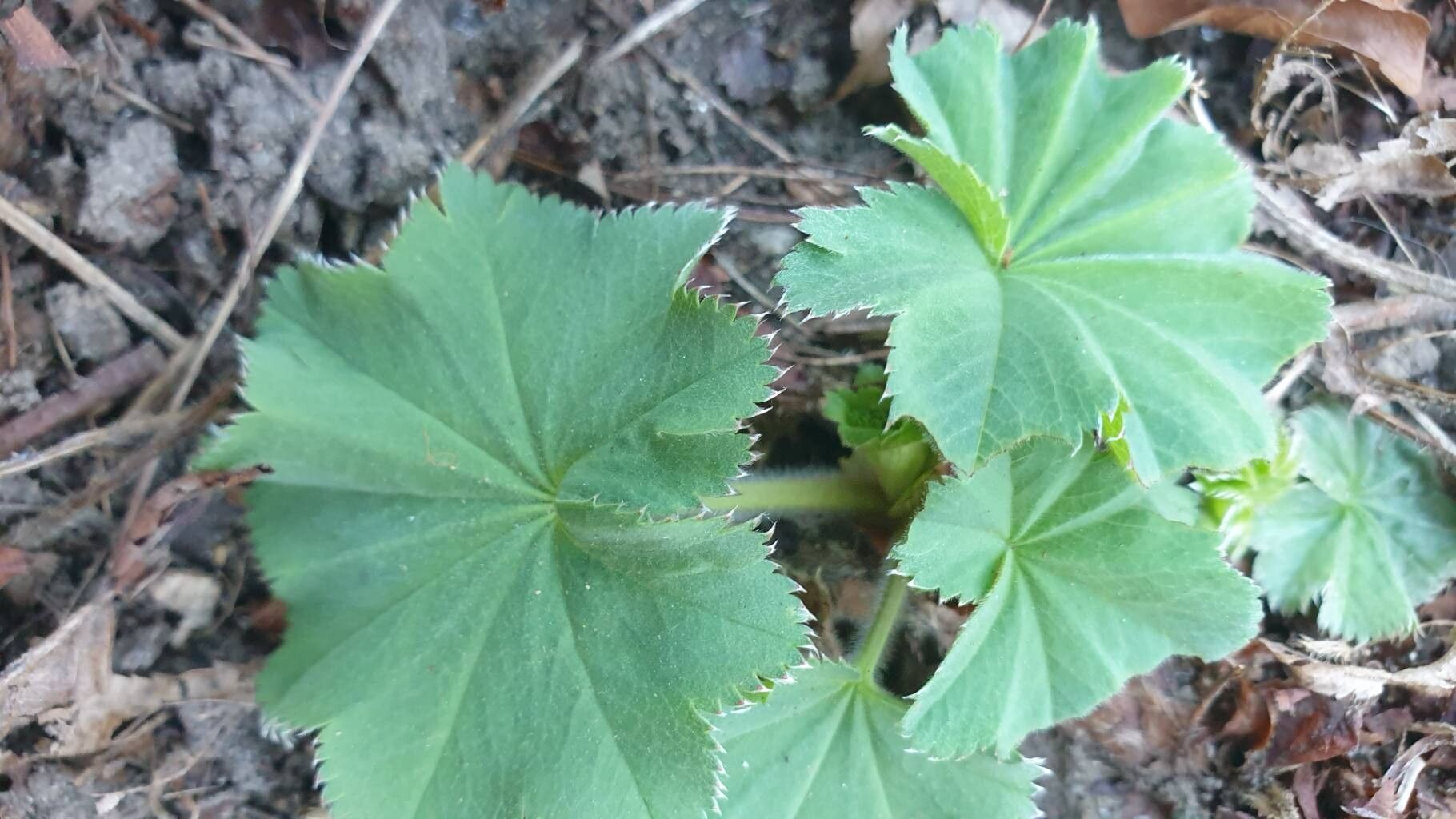
Alchemilla xanthochlora
Lady’s Mantle, Lion's foot
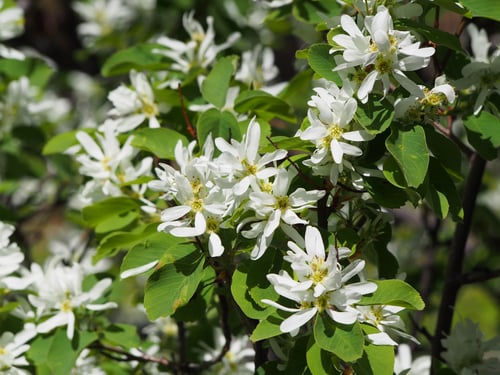
Amelanchier alnifolia
Saskatoon berry
Amelanchier alnifolia cusickii - (Fernald.)C.Hitchc.
Cusick's Serviceberry
Amelanchier alnifolia semiintegrifolia - (Hook.)Hitchc
Pacific Serviceberry